
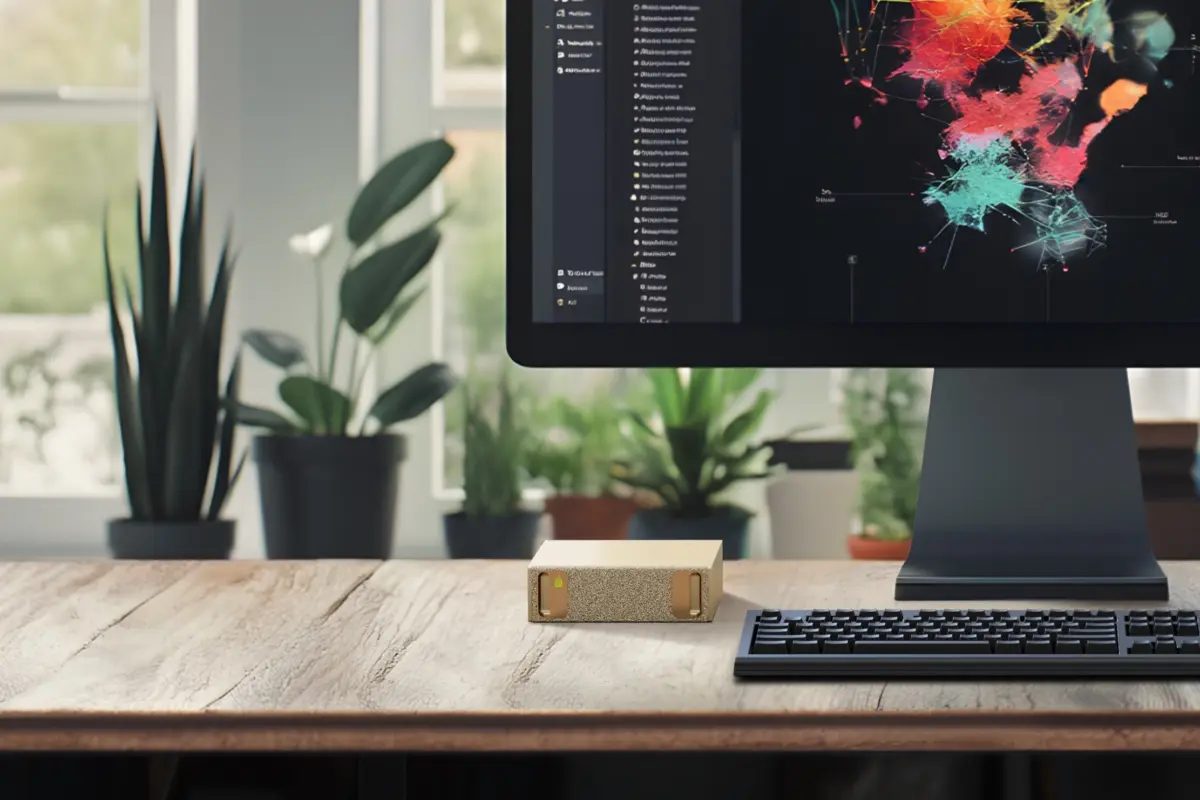
Graphics processing giant Nvidia has released a new, free software tool that empowers users to construct a unified artificial intelligence inferencing cluster by connecting disparate personal computers on the same local network, allowing them to be managed and accessed through a single, streamlined interface.
The utility, which has been launched as a public beta and is known as the Nvidia Personal AI router (PAIR), is designed to bridge devices running across different major operating systems. Whether a user is operating machines on Windows, macOS, or Linux, the software connects these various hardware nodes to process artificial intelligence inferencing workloads locally and privately, bypassing the need to route sensitive queries or data through external cloud-based servers.
While the hardware configuration is aimed primarily at home users and enthusiasts looking to maximize their local computing setups, industry observers note that the underlying concept could quickly find favor within the enterprise sector. Specifically, organizations could leverage the architecture to put spare or idle enterprise desktop compute capacity to productive use, turning everyday office hardware into a decentralized, ad-hoc resource for localized AI tasks without requiring massive capital investments in specialized server infrastructure.
The introduction of the Nvidia Personal AI router arrives at a time when the demand for artificial intelligence capabilities is surging across both consumer and commercial landscapes. Traditionally, running sophisticated large language models or other resource-intensive AI inferencing tasks requires high-end, dedicated hardware featuring powerful graphics processing units with substantial video memory. For individual users or small teams, acquiring and maintaining multiple high-performance workstations can be prohibitively expensive.
By contrast, many households and corporate environments already possess multiple computers distributed across rooms or offices—ranging from powerful desktop rigs and creative-focused workstations to secondary laptops. Often, these machines sit idle for significant portions of the day. The Nvidia PAIR beta addresses this distributed reality by pooling the collective processing power of these networked devices. Instead of relying on a single machine to shoulder the entire computational burden of an AI workload, the system can intelligently distribute the processing tasks across the available hardware linked to the local network.
The software’s cross-platform compatibility is a notable feature, recognizing that modern computing environments are rarely homogeneous. In many households and offices, users mix and match operating systems based on personal preference or specific software requirements, utilizing Windows for gaming or heavy productivity, macOS for creative design and development, and Linux for specialized technical tasks. By supporting all three major operating systems within a single bridging framework, Nvidia has removed traditional operating system barriers that usually complicate local networking and resource sharing.
Privacy represents another core pillar of the new tool’s design. As artificial intelligence becomes increasingly integrated into daily workflows, concerns regarding data privacy and the security of sensitive information sent to third-party cloud providers have grown increasingly prominent. Enterprises, legal practices, healthcare providers, and privacy-conscious individuals are frequently hesitant to transmit proprietary data, confidential documents, or personal information to external servers for processing.
By enabling localized AI inferencing clusters that operate entirely within a private network, tools like Nvidia PAIR offer a compelling alternative. Data never has to leave the local ecosystem of connected machines, ensuring that users retain absolute control over their information. This localized approach eliminates reliance on internet connectivity for AI processing, ensuring that workloads can continue uninterrupted even if the external internet connection drops, while simultaneously reducing latency for real-time applications.
For the enterprise market, the potential to harness idle desktop compute capacity represents a significant efficiency opportunity. Corporate offices typically feature rows of desktop computers that remain powered on but underutilized outside of standard business hours, or during periods when employees are away from their desks. Deploying a lightweight routing tool like PAIR could allow IT administrators to tap into this distributed reserve of processing power, creating a cost-effective, internal compute pool for running localized AI models, handling background data processing, or testing machine learning workflows without straining core data center resources.
As the software is currently rolling out in beta, Nvidia is likely to gather valuable feedback from early adopters, developers, and tech enthusiasts regarding its stability, performance scaling, and ease of configuration across complex network topologies. While the long-term roadmap for the Personal AI router will depend heavily on community response and real-world deployment outcomes, the initial release signals a growing industry focus on decentralized, user-controlled artificial intelligence infrastructure.