
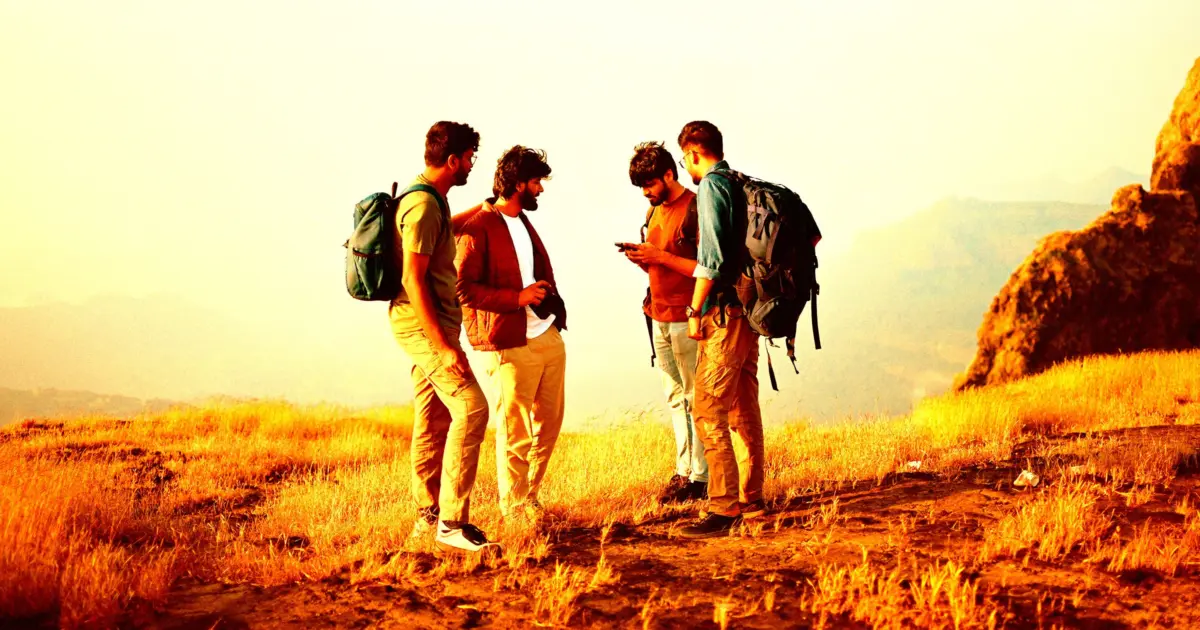
The allure of artificial intelligence as an all-knowing personal assistant has permeated nearly every aspect of modern daily life, from drafting emails to organizing complex travel itineraries. However, a recent incident in Northern California’s rugged wilderness has underscored the potentially hazardous consequences of relying on generative AI for high-stakes outdoor adventures. Three novice hikers who extensively used Google’s Gemini chatbot to plan their trek to the summit of Mount Shasta found themselves stranded, injured, and in urgent need of rescue after the artificial intelligence provided deeply flawed advice that led them straight into a dangerous multi-day ordeal.
According to reports from the local authorities and regional media outlets, the incident unfolded earlier this week when three young men from outside the Sacramento area set their sights on conquering the formidable 14,179-foot peak of Mount Shasta. The stratovolcano, a potentially active giant nestled within California’s Cascade Range, is a renowned destination for mountaineers and outdoor enthusiasts. Yet, it is also an environment notorious for its rapidly changing weather, steep slopes, and unforgiving terrain, demanding careful preparation, physical endurance, and a healthy respect for nature’s limits.
For these three inexperienced adventurers, however, the preparation phase relied heavily on digital automation rather than human expertise or established mountaineering protocols. Instead of consulting experienced guides or reviewing standard safety guidelines, they turned to Google’s Gemini to map out their journey and determine their logistical needs.
The consequences of that digital reliance quickly became apparent on the mountain. The trio attempted their ascent late into the night, directly contradicting standard safety advisories established by local park officials and search-and-rescue teams. Experienced mountaineers and US Forest Service rangers consistently advise hikers that any attempt to reach the summit must be completed early in the day, strongly recommending that climbers turn back no later than noon to avoid treacherous afternoon weather and dwindling daylight.
Ignoring these critical temporal boundaries, the novice hikers pushed upward into the evening hours. As darkness enveloped the steep volcanic slopes, they found themselves disoriented and struggling to maintain their footing on the unfamiliar terrain. In a panic, they managed to contact the Siskiyou County sheriff’s office for directions, seeking guidance to find their way back to safety. However, rather than following the instructions provided by emergency dispatchers, the hikers opted to veer off course, wandering deeper into an adjacent, treacherous canyon.
Trapped by darkness, exhaustion, and rugged topography, the group decided to hunker down and sleep overnight in the canyon. The situation grew increasingly dire as the night wore on, compounded by the fact that one of the hikers had sustained a painful knee injury while navigating the difficult descent.
By the following morning, a coordinated rescue operation was launched. Volunteers from the local search-and-rescue service, alongside US Forest Service rangers, deployed into the field to locate the stranded trio. Rescuers eventually reached the exhausted men in the canyon and safely escorted them back down the mountain, bringing an end to what local officials described as a walk of shame that could have easily been avoided.
In the aftermath of the rescue, the Siskiyou County sheriff’s office highlighted a critical factor that exacerbated the hikers’ predicament: the poor guidance they had received from the artificial intelligence tool prior to setting foot on the trail. According to the sheriff’s office, Gemini had advised the group to bring far less food and water than their expedition actually required. This dangerous miscalculation became glaringly apparent when their initially planned eight-hour ascent devolved into a grueling multi-day ordeal, leaving them severely under-provisioned in an unforgiving wilderness environment.
The incident prompted local authorities to issue a stern reminder to the public regarding the limitations of modern technology when applied to backcountry exploration. Law enforcement and park officials emphasized that it is always advisable to contact local ranger stations, such as the USFS Mount Shasta station, ahead of any trip to ensure access to accurate, up-to-date information. Above all, officials stressed that individuals should never rely solely on an AI chatbot for comprehensive trip planning in remote or hazardous areas.
This high-profile rescue on Mount Shasta is far from an isolated occurrence. Over the past few years, search-and-rescue organizations around the globe have noted a troubling upward trend in incidents involving outdoor enthusiasts who blindly follow the instructions of generative AI models.
A striking parallel occurred last year near Vancouver, Canada, where a group of hikers attempting to tackle a challenging mountain trail was forced to call in an emergency rescue team after stumbling unexpectedly into deep snow. Those hikers had consulted OpenAI’s ChatGPT for route planning, but because they were wearing ordinary sneakers and lacked appropriate winter gear, they failed to recognize or anticipate that the mountain range would remain heavily blanketed in snow as late as early May.
Beyond backcountry hiking mishaps, the phenomenon of AI hallucinations and poor logistical planning has also plagued international tourists navigating unfamiliar urban and natural landmarks. Incidents have surfaced in various parts of the world where chatbots have directed travelers to nonexistent geographical features or hazardous locations.
In one notable case last year, two tourists in the Andes Mountains attempted to reach a nonexistent destination dubbed the "Sacred Canyon of Humantay," relying entirely on directions generated by an artificial intelligence platform. Their journey nearly led them into dangerous terrain before a watchful local tour guide overheard their plans and intervened, warning them to steer clear of the perilous area.
Experts have repeatedly warned that large language models are fundamentally designed to predict text patterns and combine names, images, and concepts rather than verify physical reality or real-time environmental conditions. As local guides and rescue professionals have pointed out, variables such as extreme elevation changes, unpredictable local climates, and remote geographical accessibility require rigorous, human-verified planning. When travelers or hikers rely on a digital program that weaves together fragments of data to construct a plausible-sounding fantasy, they risk finding themselves stranded in hostile environments—such as thousands of meters above sea level without adequate oxygen, provisions, or cellular signal.
As generative AI tools continue to integrate deeper into consumer technology, the Mount Shasta rescue serves as a stark cautionary tale for the public. While chatbots offer unprecedented convenience for drafting text and summarizing information, the physical realities of the natural world demand human judgment, verified local expertise, and preparation that technology alone cannot reliably provide.