
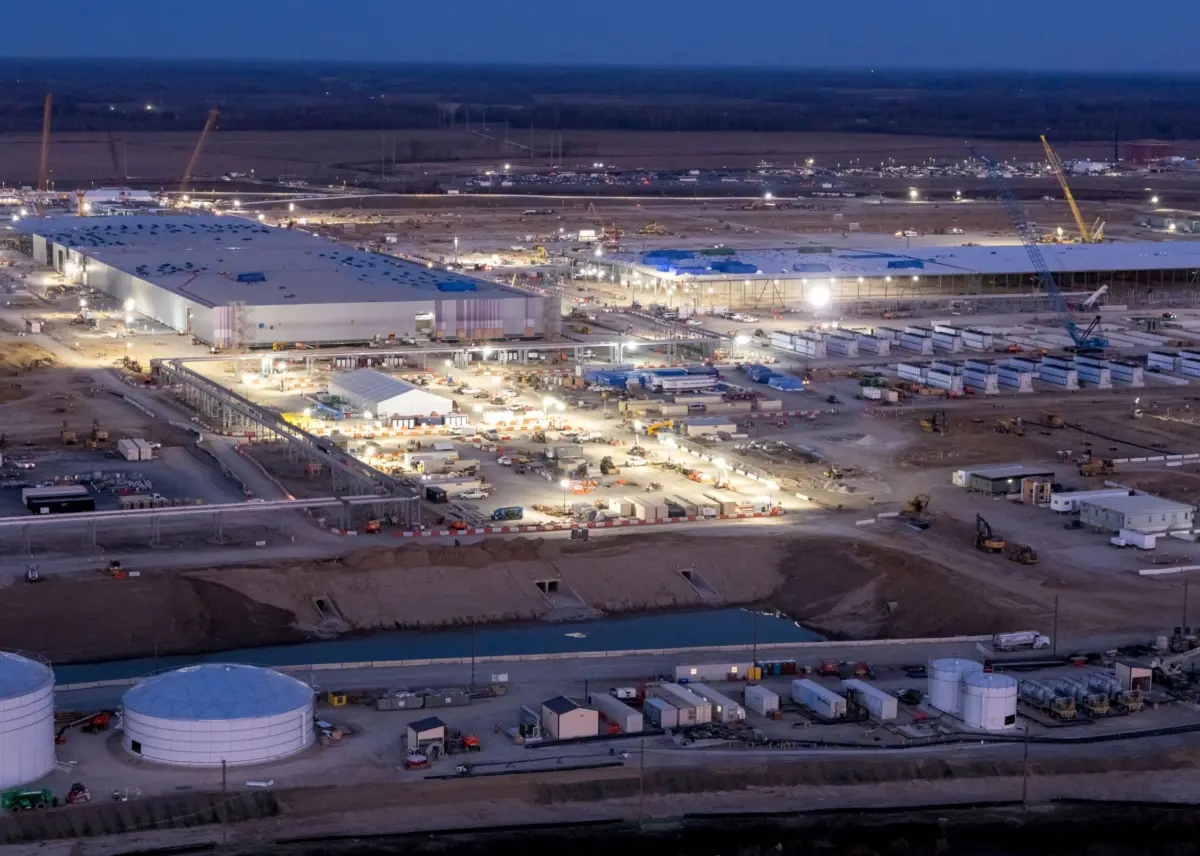
When Jessica Wachter, a finance professor at the University of Pennsylvania’s Wharton School, set out to evaluate the long-term economic impact of artificial intelligence, she immediately encountered a labyrinth of business and technical uncertainties. Rather than trying to guess how useful AI models will ultimately become or how widely they will be deployed, Wachter chose to anchor her research in a hard, indisputable fact: a handful of tech giants, commonly known as hyperscalers, are pouring colossal sums of money into the construction of massive AI data centers.
Instead of forecasting consumer adoption curves or technological breakthroughs, Wachter and her collaborator asked a fundamentally financial question. They wanted to determine how fast the earnings of these hyperscalers must grow by 2027—when their joint estimates suggest expenditures will peak at nearly $1.1 trillion—simply to justify their current outlays. It is a pragmatic, no-nonsense accounting approach designed to bring clarity to an unprecedented historical infrastructure buildout.
The implications of their findings are striking. To break even by 2030, after factoring in the cost of capital, an expected 15% return, and the rapid depreciation of physical assets, these companies will need to increase their productivity by a factor of 2.7. While Wachter notes that such a surge is not mathematically impossible—resembling the macroeconomic growth witnessed during the United States IT boom that began in the mid-1990s—she emphasizes the sheer scale of the challenge. Compressing a decade’s worth of economic expansion into just a few years leaves very little room for error.
The downside to falling short of these profit targets is severe. According to Wachter, who previously served as the chief economist for the Securities and Exchange Commission (SEC) and as director of its division of economic and risk analysis, companies that miss these marks risk falling behind on interest payments, potentially paving the way for corporate bankruptcies. In their research paper, Wachter and her coauthor deliver a stark warning: if a broad productivity boom fails to materialize, the current infrastructure frenzy will go down in history as the largest misallocation of capital ever recorded.
The Scale of the Buildout
It does not take a visionary to recognize that today’s heavy investments in artificial intelligence infrastructure carry profound financial risks. Hyperscalers are projected to spend roughly $750 billion this year alone, scattering massive, power-hungry data centers across landscapes nationwide. This historic spending spree shows no signs of decelerating. According to industry projections, total capital investments in AI by major players—including Alphabet, Microsoft, Amazon, Meta, and Oracle, which maintains a strategic partnership with OpenAI—could exceed $50 trillion over a four-year window.
This represents one of the largest capital deployments by any industry in human history. Yet, a fundamental imbalance troubles many financial analysts and regulators. While hyperscalers plan to commit trillions of dollars to infrastructure, total AI revenues are expected to hover between $150 billion and $200 billion this year, according to Gary Gensler, who led the SEC during the Biden administration and now teaches at the MIT Sloan School of Management.
The core challenge, Gensler points out, is that the current spending does not yet have commensurate revenues to back it up. The trillion-dollar question centers on whether these enormous investments will genuinely pay off in the future, safeguarding the financial health of the tech giants and, by extension, the broader American economy, where these outlays threaten to balloon toward 3% of gross domestic product.
Uncertainty surrounds the long-term profitability and utility of these multibillion-dollar facilities. Although AI models have achieved breathtaking technical progress over recent years, predicting future compute capacity requirements remains a guessing game. Technology could evolve to become significantly more efficient, thereby reducing its dependence on raw computational power. Alternatively, demand for AI products could taper off, or customers might migrate toward cheaper, open-source models that fulfill their business needs at a fraction of the cost.
These risks have amplified as major tech companies increasingly turn to debt markets to finance their data center expansions. Free cash flow—defined as operating cash flow minus capital expenditures—is projected to slip into negative territory for the group. Even Alphabet, historically renowned for generating and hoarding vast reserves of cash, reported that its impressive revenues of nearly $120 billion were entirely consumed by AI infrastructure spending during the second quarter, resulting in a free cash deficit of approximately $5.9 billion—its first shortfall since Google’s initial public offering in 2004.
While these liquidity shifts do not pose an immediate existential threat to companies with such deep pockets, the rising cost of borrowing is testing investor patience. If future demand for enterprise-scale computation falls short of expectations, these firms will remain legally obligated to service their debt. Furthermore, through complex financial mechanisms, these risks are quietly diffusing into the broader economy.
Productivity is Everything
To sustain their capital expenditures, hyperscalers must do far more than simply cover the initial construction costs. They must absorb rising capital costs as they borrow heavily, generate returns that satisfy demanding creditors, and account for the rapid depreciation of the high-end graphics processing units (GPUs) housed within their facilities. These specialized chips account for roughly 60% of data center costs, and their performance roughly doubles every two years. While this rapid technological cadence drives the sophistication of modern AI models, it also introduces a financial ticking time bomb. Owners of data centers coming online today will be forced to purchase billions of dollars in next-generation hardware before the decade is out just to remain competitive. Without those follow-up investments, current facilities risk becoming obsolete stranded assets—what Mihir Kshirsagar of Princeton’s Center for Information Technology Policy describes as financial hulks scattered across the landscape.
Consequently, AI companies must rapidly scale their revenues. However, revenue growth alone will not suffice; at some point, artificial intelligence must trigger widespread macroeconomic growth to justify the ongoing spending spree. Gensler characterizes these infrastructure investments as a complex parlay bet placed by the capital markets. Winning this wager requires three distinct outcomes: hyperscalers must pull in massive corporate revenues, AI must generate tangible productivity growth across the broader economy, and these twin achievements must occur while expensive frontier models successfully fend off cheaper, alternative technologies.
Each leg of this wager depends on the others while presenting unique hurdles. Stijn Van Nieuwerburgh, a finance professor at Columbia Business School, bases his calculations on estimates that approximately 183 gigawatts of planned AI compute capacity will be constructed between 2025 and 2032, with each gigawatt costing an estimated $41 billion. Assuming a conservative 10% return acceptable to mainstream investors, required annual revenues would need to reach roughly $3.7 trillion by 2032.

Achieving economy-wide productivity growth is the linchpin of this financial equation. While tech companies can temporarily boost revenues by selling subscriptions and tokens to businesses eager to experiment with AI, corporate clients will eventually demand proof of bottom-line benefits. In economic terms, customers must witness measurable productivity gains.
Economists remain watchful. Daron Acemoglu, an MIT economist and 2024 Nobel laureate, warns that if tangible productivity gains fail to materialize, public and investor sentiment will inevitably sour, choking off both investments and revenue growth. Broad economic data currently shows little direct evidence of AI-driven productivity increases, though corporate surveys tell a different story. In a recent poll of approximately 6,000 senior business executives across the US, the UK, Germany, and Australia, roughly 90% reported no productivity increases over the past three years. Nevertheless, these same executives anticipate a 1.45% productivity bump over the next three years, with US leadership anticipating an even higher 2.25% increase.
These anticipated gains come with potential social friction. Survey respondents indicated that their productivity boosts would likely be achieved by scaling sales while simultaneously reducing headcount. If AI drives corporate productivity by eliminating jobs, public backlash—already visible in grassroots resistance to data center construction—could intensify, complicating the path forward.
Financial Engineering and the Broader Economy
The financial stakes extend far beyond the balance sheets of Silicon Valley. According to Morgan Stanley, more than half of the $2.9 trillion that hyperscalers are expected to spend on data centers between 2025 and 2028 will be financed through external capital. This reliance on borrowing has prompted tech firms to engineer complex webs of financing that intertwine with the wider financial system.
Financial institutions find themselves directly or indirectly exposed to these data centers as lenders, debt guarantors, or backers of private credit funds. Van Nieuwerburgh notes that many individuals hold these risks unknowingly within their pension funds or life insurance policies, where exposure has been quietly distributed.
A striking example of this financial engineering is unfolding in Richland Parish, Louisiana, where Meta is constructing its Hyperion data center. Originally announced in late 2004 with an estimated cost of $10 billion for two gigawatts of compute capacity, the project was welcomed by local politicians as an economic boon. Entergy Louisiana, the state’s principal utility, moved swiftly to propose three natural gas-fired power plants to service the facility.
By the following autumn, projected costs had climbed to $30 billion, and the financing structure grew notably more complex. Meta transferred an 80% stake to private-credit firm Blue Owl Capital, forming a joint venture named Beignet to raise external capital. Meta subsequently signed a series of four-year leases with the joint venture—an arrangement the company describes as providing long-term strategic flexibility. To secure the agreement, Meta issued a residual value guarantee promising cash payments to cover facility values following any lease termination.
Further corporate layering involves subsidiaries and LLCs, where entities like Laidley LLC act as the landlord and operate the site, leasing the facilities to Meta’s wholly owned subsidiary, Pelican Leap LLC. The four-year lease terms intentionally mirror the expected operational lifespan of the data centers’ underlying GPUs. Van Nieuwerburgh points out that if Meta terminates these leases early, investors will be left holding empty buildings with no cash flow, forced to find alternative tenants for specialized mega-facilities.
Meanwhile, Meta has expanded the Richland Parish project to five gigawatts of compute capacity, pushing the total price tag to $50 billion. To meet this growing demand, Entergy now plans to build seven additional gas-fired power plants, bringing total local electricity generation capacity to roughly 7.5 gigawatts—approximately six times the electrical consumption of New Orleans.
This rapid expansion has sparked anxiety among local residents and consumer advocates regarding potential electricity rate hikes and the risk of stranded infrastructure costs if tech firms alter their long-term strategies. While Entergy points to 20-year purchase agreements from Meta, community watchdogs like Logan Burke of the Alliance for Affordable Energy question whether shifting corporate priorities could leave local ratepayers footing the bill for surplus power capacity.
After the Bubble
Predicting the exact timing of a market correction remains difficult, but economic history suggests that a day of reckoning for the AI boom is inevitable. While proponents argue that artificial intelligence is uniquely transformative and exempt from traditional economic cycles, veteran observers remain cautious.
Gensler notes that historical precedent points to eventual retrenchment, whether spending plates out next year or abruptly contracts later in the decade as firms realize they have built sufficient capacity. Yet, market corrections and technological revolutions do not always share the same fate. Past downturns, such as the bursting of the dot-com bubble in the early 2000s, inflicted severe financial pain, job losses, and corporate bankruptcies, yet left behind foundational infrastructure like fiber-optic networks that ultimately enabled the modern internet economy.
The current AI boom presents a novel challenge because corporate fortunes have become deeply intertwined with massive, highly centralized physical infrastructure. While the financial bubble surrounding hyper-scale spending may burst, the underlying technology will likely survive, shedding its current hubris to find more sustainable applications. The ultimate fate of trillions of dollars in physical data center assets, however, remains one of the most consequential gambles in modern economic history.