
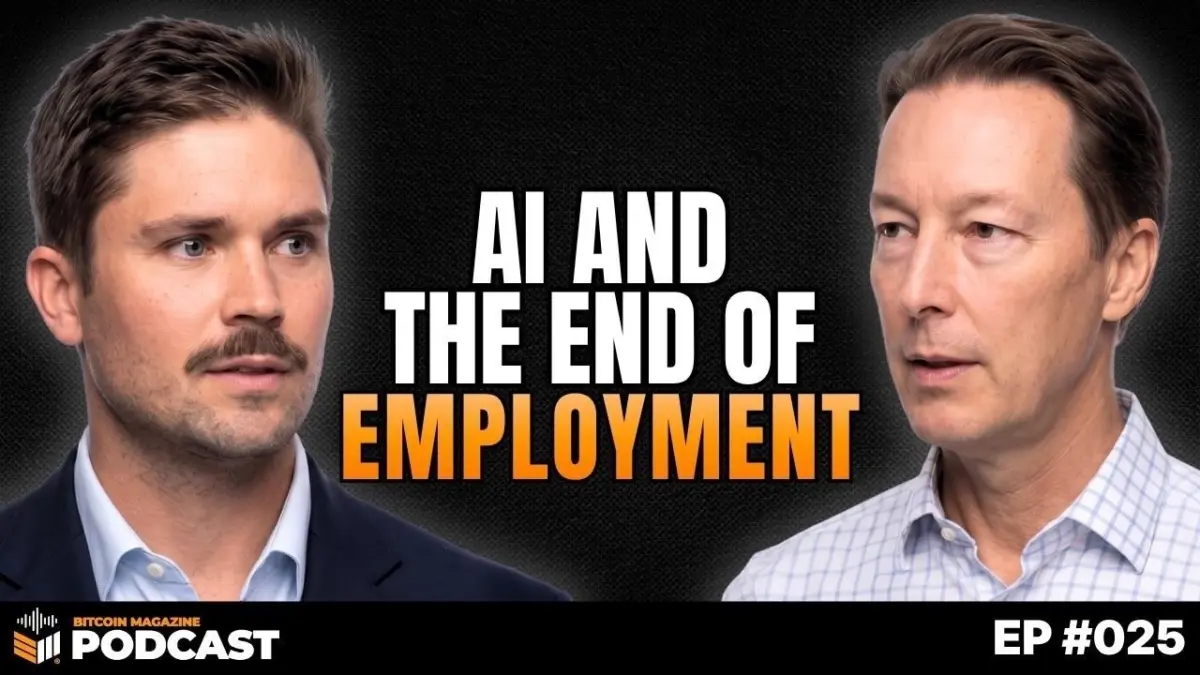
At the core of Bylund’s argument is a clear theoretical distinction between computational processing and the human act of entrepreneurship. While popular discourse frequently characterizes artificial intelligence as an emerging substitute for human thought, Bylund categorizes current AI models as sophisticated statistical engines. These systems function by analyzing vast datasets, recognizing underlying patterns, optimizing existing operations, and calculating probabilities based on recorded human activity. Although these capabilities allow artificial intelligence to achieve unprecedented levels of efficiency in executing routine tasks, the technology remains fundamentally constrained by its dependence on historical data.
In contrast, economic entrepreneurship operates beyond the realm of historical probability. From an Austrian economic perspective, the primary function of the entrepreneur is to act under conditions of genuine uncertainty and imagine a future state of affairs that does not yet exist. Entrepreneurs do not simply calculate optimal pathways from existing data; they identify unfulfilled human wants, anticipate subjective consumer preferences, and allocate scarce resources to satisfy those future desires. Because statistical engines can only analyze what has already occurred or been documented, they lack the subjective capacity to envision novel human values or exercise entrepreneurial judgment in an ever-changing world.
This functional limitation underscores an important economic distinction between technological invention and market innovation. As highlighted during the conversation, an invention represents a technical breakthrough or scientific discovery, whereas an innovation occurs when a technological advancement is successfully applied in the market to meet human needs. The historical development of Bitcoin offers a clear parallel for understanding the trajectory of artificial intelligence. Bitcoin was not merely a breakthrough in computer science and cryptography; its true impact derived from its practical economic innovation as a decentralized monetary network that solved structural market challenges outside traditional financial institutions. In the same manner, while artificial intelligence represents a major technical invention, its long-term economic value will depend entirely on how human entrepreneurs deploy it to create practical market solutions.
As statistical engines take on an increasing share of standardized analytical and manual tasks, the structural foundation of the global economy is poised for a significant transformation. Bylund explains that modern society is moving away from a traditional employment economy toward an entrepreneurship economy. For over a century, the employment economy has been organized around structured corporate hierarchies where workers sell standardized labor in exchange for predictable wages. In this model, job roles are largely defined by routine tasks and structured outputs that can be managed from the top down.
However, as artificial intelligence automates these standardized functions, the traditional model of wage labor faces structural disruption. In an emerging entrepreneurship economy, the primary source of economic value shifts away from executing repetitive tasks toward individual initiative and value creation. Rather than relying on rigid organizational positions, individuals will increasingly operate as independent economic agents, using AI tools as leverage to expand their personal capabilities, address specific market demands, and create customized products or services. In this environment, technological tools serve not as replacements for human effort, but as force multipliers for human ingenuity.
This transition from an employment-based framework to an entrepreneurial model has major implications for employment markets and value creation. While technological shifts historically prompt fears of mass unemployment, economic history demonstrates that automation tends to shift human effort toward higher-value activities. When routine cognitive and physical tasks become cheaper and more efficient through machine automation, human capital is freed to address previously unmet market demands. Value creation in an AI-augmented economy will ultimately depend on uniquely human qualities, including subjective judgment, creative vision, empathy, and the willingness to accept economic risk.
As technological progress alters the structure of labor and business, legacy political and regulatory frameworks face increasing challenges. The discussion examines whether government regulatory institutions possess the capacity to keep pace with the speed of AI development. Traditional state regulation relies on bureaucratic processes, public consultations, and legal frameworks that are inherently slow and backward-looking. Regulators typically formulate policy based on past events and established industry structures, making them fundamentally ill-suited for overseeing fast-moving technologies like artificial intelligence that iterate at an exponential rate.
When state institutions attempt to impose rigid regulatory mandates on rapidly changing technologies, the resulting policies often fail to achieve their stated objectives. Instead of protecting consumers or guiding development effectively, slow-moving regulations tend to introduce distortionary barriers, penalize dynamic experimentation, and create administrative delays that lag behind technological realities. The mismatch between technological speed and regulatory slowness highlights the limitations of attempting to manage complex, fast-evolving technological ecosystems through centralized oversight.
The tension between rapid technological advancement and state control extends into broader economic domains, including remote work, international capital flows, and the future of money. The widespread adoption of digital communication tools and remote work environments has increasingly detached labor from physical geography, allowing workers to offer services globally regardless of national borders. This geographic decentralization of labor intersects directly with financial regulation and capital controls. As individuals operate in a borderless digital market, state mechanisms designed to restrict capital movements and control national currencies face persistent technological challenges. The growth of digital labor networks, alongside decentralized monetary alternatives, demonstrates how market actors can bypass localized regulatory hurdles and assert financial sovereignty.
To explain how value is generated across these digital and physical networks, Bylund emphasizes a foundational principle of market economics: the dynamics of voluntary exchange. Contrary to mercantilist or zero-sum perspectives that view trade as a contest producing a winner and a loser, every voluntary transaction produces two winners. Value is inherently subjective, meaning that individuals only participate in an exchange if they value what they are receiving more than what they are giving up. Whether individuals trade physical goods, remote services, or digital currencies, both parties enter the agreement with the expectation of improving their circumstances. This core principle demonstrates why open, voluntary market interactions remain the most reliable mechanism for generating widespread economic prosperity.
These contrasting economic principles also inform global geopolitical rivalries, particularly the strategic competition between the United States and China. The discussion frames this geopolitical dynamic through the interaction between individual initiative and state control. Centralized economic systems often rely on state-directed industrial policy, massive subsidies, and national planning to direct resources toward political objectives. While state control can channel capital into specific large-scale projects, it inherently encounters the knowledge problem, as central authorities lack the dispersed, real-time information held by individual market participants. Economic systems rooted in individual liberty, property rights, and decentralized market signals remain better equipped to foster long-term innovation and adapt to unforeseen disruptions.
Despite the historical benefits of open markets, political systems frequently adopt protectionist policies driven by special interest lobbying. The conversation cites long-standing economic interventions, such as strategic steel stockpiles and domestic sugar subsidies, as classic examples of protectionism in practice. These policies are rarely implemented for the benefit of the general public; instead, they are the result of political pressure exerted by established industry groups seeking to avoid market competition. By using state power to restrict imports or subsidize domestic producers, protectionist policies distort price signals, burden consumers with higher costs, and lock resources into inefficient sectors.
This pattern of corporate lobbying and state protection is currently emerging within the artificial intelligence sector itself. Major AI firms, including industry leaders such as OpenAI and Anthropic, have actively engaged with legislative bodies to shape emerging AI regulations and safety guidelines. While these policy discussions are frequently conducted under the banner of public safety and risk management, Bylund warns of the dangers of regulatory capture. Established market leaders often favor comprehensive regulatory frameworks because they possess the legal and financial infrastructure required to absorb compliance costs. In contrast, smaller startups, independent developers, and open-source initiatives are often unable to manage heavy regulatory burdens. By constructing high entry barriers through government mandates, dominant incumbents can protect their market share, limit potential competition, and restrict the growth of open-source technological alternatives.
Ultimately, the perspectives shared by Per Bylund provide a comprehensive economic framework for analyzing the technological transformations driven by artificial intelligence. While automated systems will continue to enhance operational efficiency, reconfigure traditional employment structures, and challenge legacy regulatory bodies, they do not diminish the essential role of human action. Because artificial intelligence remains a statistical engine grounded in past data, the responsibility for envisioning the future, discovering new sources of value, and driving economic progress continues to rest with the human entrepreneur.