
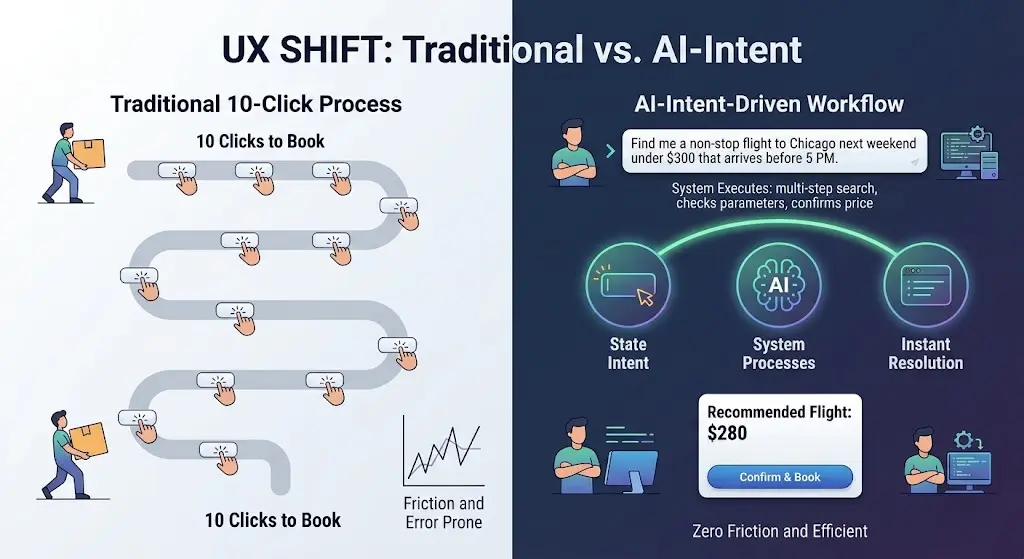
The digital landscape is undergoing a profound structural evolution, slowly moving away from traditional menus, multi-step forms, and endless clicking toward intuitive experiences shaped entirely around human intent. For user experience (UX) designers, navigating this technological shift requires a fundamental re-evaluation of their core responsibilities. Instead of focusing exclusively on designing visible, static interfaces, designers must now learn to guide transparent, intent-driven artificial intelligence experiences that handle complex tasks in the background.
Ever since the commercialization of the Graphical User Interface, pioneered by systems like the Xerox Star and popularized by the original Apple Macintosh, digital software has relied heavily on point-and-click interactions. For decades, if a user wanted to book a trip, buy a pair of shoes, or research a health symptom, they were expected to navigate a labyrinth of user interfaces. People became accustomed to clicking through menus, adjusting range sliders, filling out multi-step forms, dealing with intrusive cookie pop-ups, and opening dozens of browser tabs simply to cross-reference basic information. Consequently, users frequently found themselves spending more time managing software mechanics rather than actually achieving their underlying personal or professional goals.

That long-standing digital contract is now officially changing. Driven by rapid advances in artificial intelligence and sophisticated large language models, a new generation of web tools is pioneering a radical philosophy known as Intent-Driven Design. Rather than expecting human users to learn complex menus and click through elaborate sales funnels, these modern platforms operate by capturing high-level human goals and silently executing the grunt work behind the scenes.
This vision builds directly upon established human-computer interaction concepts, echoing Golden Krishna’s influential premise that "the best interface is no interface," alongside Don Norman’s foundational principles of human-centered design. The ultimate goal of modern web design is shifting away from building prettier buttons or flashy animations toward eliminating the interface entirely as users currently understand it. Understanding this transformation is critical for UX professionals witnessing these industry-wide changes firsthand.
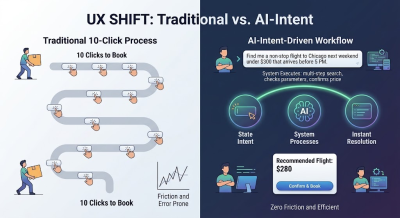
To fully grasp where web design is heading, it is necessary to examine the friction that users have accepted as normal for generations. Consider the traditional workflow of booking a flight online, which remains intentionally hyper-interactive. A user must visit an aggregator site, enter departure and arrival cities into form fields, select dates from a calendar dropdown, specify passenger counts, apply filters for stops and baggage, sort through dozens of fluctuating price listings, review airline policies, and finally input payment details across multiple verification screens.
This represents a classic point-and-click UI paradigm. In this traditional model, the computer acts as a passive container of data, while the human acts as the active orchestrator, manually inputting parameters, interpreting raw outputs, and executing each micro-step along the way. Intent-driven design flips this dynamic entirely. Instead of forcing individuals to navigate the mechanical steps of how to find a flight, the interface asks a straightforward question: What are you trying to accomplish? When a user expresses a clear goal—such as requesting a non-stop flight to Chicago for the coming weekend under three hundred dollars that arrives before five in the afternoon—the software reads that intent, executes the multi-step search query behind the scenes, compares the options, and presents a single actionable resolution. The ten tedious clicks dissolve into one clear intent outcome.
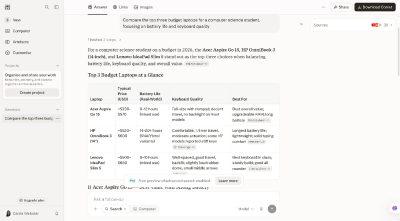
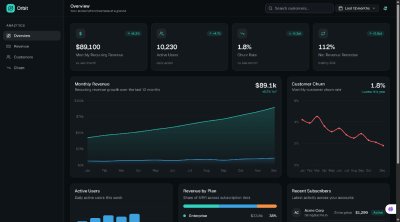
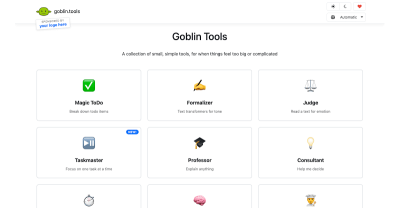
This shift is not merely a theoretical vision of the distant future; some of today’s most accessible web platforms already allow users to experience intent-capturing systems in action. Traditional search engines like Google were historically built as directories where users typed keywords and received a list of blue links, leaving the actual work of opening multiple tabs, skimming long articles, and manually assembling answers to the individual. Platforms like Perplexity AI now allow users to perform instant intent-based searches that synthesize comprehensive results without requiring multiple open tabs. Similarly, while creating a website traditionally meant using visual builders, drawing rectangles, picking hexadecimal color codes, and writing cascading style sheets in tools like Figma, platforms such as Vercel v0 allow users to test generative interface builders directly on their home pages. By simply describing a desired layout, the system generates functional dashboard user interfaces on the fly. Another example is Goblin.tools, a single-page suite of AI tools designed to break down overwhelming tasks into manageable checklists, bypassing the need to manually construct Kanban boards or assign micro-deadlines.
When traditional menus, sidebars, and forms are removed, maintaining usability requires adherence to new design pillars. Designers pioneering this space rely on high-level goals, generative user interfaces, and autonomous execution by background AI agents. Invisible interfaces do not always wait for a direct command; instead, they leverage context to anticipate user needs. Guided by industry standards such as Apple’s Human Interface Guidelines on contextual and ambient design, modern systems read environmental metadata—including device state, location, and past interaction patterns—to trigger proactive actions.
Furthermore, computing is shifting from command-based interaction to outcome-specification, enabling generative user interfaces where layouts are rendered dynamically based on what the user is trying to accomplish in that exact moment. If an individual expresses a desire to compute complex financial data, the interface generates a dynamic calculator widget on demand, which then recedes once the goal is completed. To ensure safety and user comfort, these intent-driven interfaces adapt Jakob Nielsen’s usability heuristics regarding user control and error recovery by shifting the safety net from prevention to easy reversibility. Because autonomous agents take actions on behalf of the user, products prioritize frictionless rollback mechanisms, prominent undo buttons, and transparent audit logs over intrusive warning modals.
Despite the benefits of removing interface friction, stripping away visual controls introduces significant product design challenges. When software acts on inferred intent rather than direct point-and-click commands, designers must navigate critical ethical and technical pitfalls. When a website makes decisions autonomously, it can quickly feel patronising or invasive if clear boundaries are not maintained. Industry frameworks from organizations like the Center for Humane Technology emphasize that product designers must guard against manipulative defaults. Designers are required to strike a delicate balance by automating routine execution while explicitly prompting users for high-stakes confirmations regarding financial transactions, public publishing, or privacy settings.
Another major hurdle is the black box problem. In a traditional user interface, unexpected results can typically be diagnosed by checking filters or selected dates. With intent-driven interfaces, troubleshooting becomes more complex. To address this challenge, guidelines from research groups advocate for transparent feedback loops where the system explicitly states its interpretation of a request so users can calibrate trust and correct misinterpretations instantly.
For UX designers exploring how their craft is evolving in the age of artificial intelligence, it has become essential to re-evaluate foundational design elements. Rather than designing static buttons and rigid forms, professionals must learn to map and present dynamic, generative components that adapt fluidly to user intent. By mastering ambient feedback, inline prompts, and transparent AI status indicators, designers can ensure that screenless, agent-driven tools remain intuitive, ethical, and deeply human-centered.
For decades, the digital industry evaluated software success through engagement metrics like time spent in applications, click-through rates, and page views per session, deliberately engineering websites to maximize interaction volume. The philosophy championed by advocates of the humane technology movement turns these traditional metrics upside down. The ultimate test of a modern digital product is no longer how visually captivating its buttons happen to be, but rather how effectively the software solves a problem and gets completely out of the user’s way. The digital economy is officially entering an era where web applications will be measured by their ability to render complex interfaces entirely obsolete.