
Fifteen years after its initial market debut in 2011, AWS Elastic Beanstalk is entering a major new era. Originally built to simplify the deployment of full-stack applications across languages like Java, .NET, Python, Node.js, PHP, Ruby, and Go, the platform has grown to become a cornerstone of application management on Amazon Web Services. Over the years and through countless deployments, organizations have leaned on Elastic Beanstalk to handle the heavy lifting of infrastructure operations, allowing developers to concentrate entirely on writing business logic. Now, AWS is deepening that long-standing trust by completely rebuilding the operational engine of the service to meet the evolving complexities of modern cloud architectures.
In a significant announcement today, AWS unveiled a comprehensive reinvention of Elastic Beanstalk designed to take full, continuous operational responsibility for production environments throughout the entire lifecycle of an application. Whether development teams bring raw source code, Dockerfiles, or fully packaged container images, Elastic Beanstalk automatically provisions and manages the underlying infrastructure. AWS handles the continuous burden of deploying, scaling, patching, monitoring, and maintaining the workload, ensuring that operational responsibility remains with the platform for as long as the application runs.
This evolution is built on a foundation of modern platform capabilities rolled out over recent months. The revamped Elastic Beanstalk incorporates AI-powered environment analysis designed to automatically diagnose underlying health issues and suggest targeted fixes. To streamline development workflows, AWS introduced an official GitHub Action that allows software teams to deploy straight from their existing continuous integration and continuous deployment pipelines using a single YAML configuration file. Furthermore, the underlying infrastructure has been redesigned to support OpenTelemetry-based observability, advanced traffic-splitting deployments complete with automated rollbacks, event-driven autoscaling, centralized secrets management through AWS Secrets Manager, and out-of-the-box HTTPS enforcement via AWS Certificate Manager.

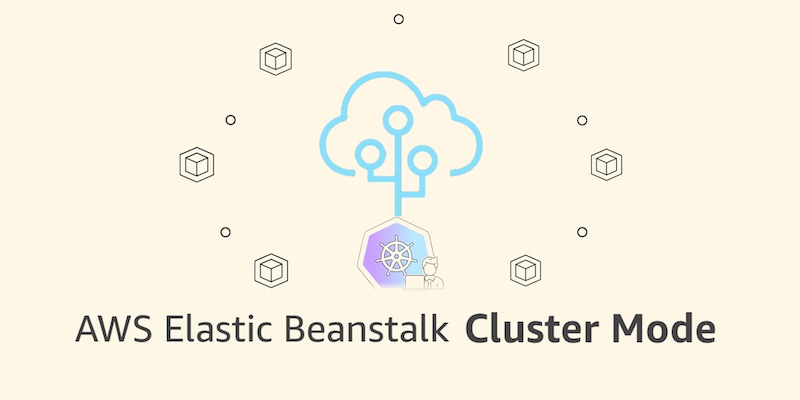
Building directly upon these advancements, the next chapter of AWS Elastic Beanstalk arrives with the official introduction of a fully managed Cluster Mode. This new operational mode is specifically engineered for engineering organizations and enterprises that manage a broad portfolio of microservices and applications. Instead of running each individual application in complete isolation—which often drives up resource overhead and operational friction—teams can now deploy multiple applications that share a common, unified infrastructure layer powered by Amazon Elastic Kubernetes Service (Amazon EKS).
The new Cluster Mode is fully managed and operates under a single operational baseline. Because multiple applications share resources efficiently within this shared ecosystem, the per-application cost naturally decreases as the overall software portfolio expands, all without introducing extra operational complexity. Whether an engineering organization oversees a modest fleet of ten applications or a sprawling enterprise portfolio of a hundred distinct services, developers and operators can manage them through a unified experience, maintaining consistent operational guarantees across every deployed stack.
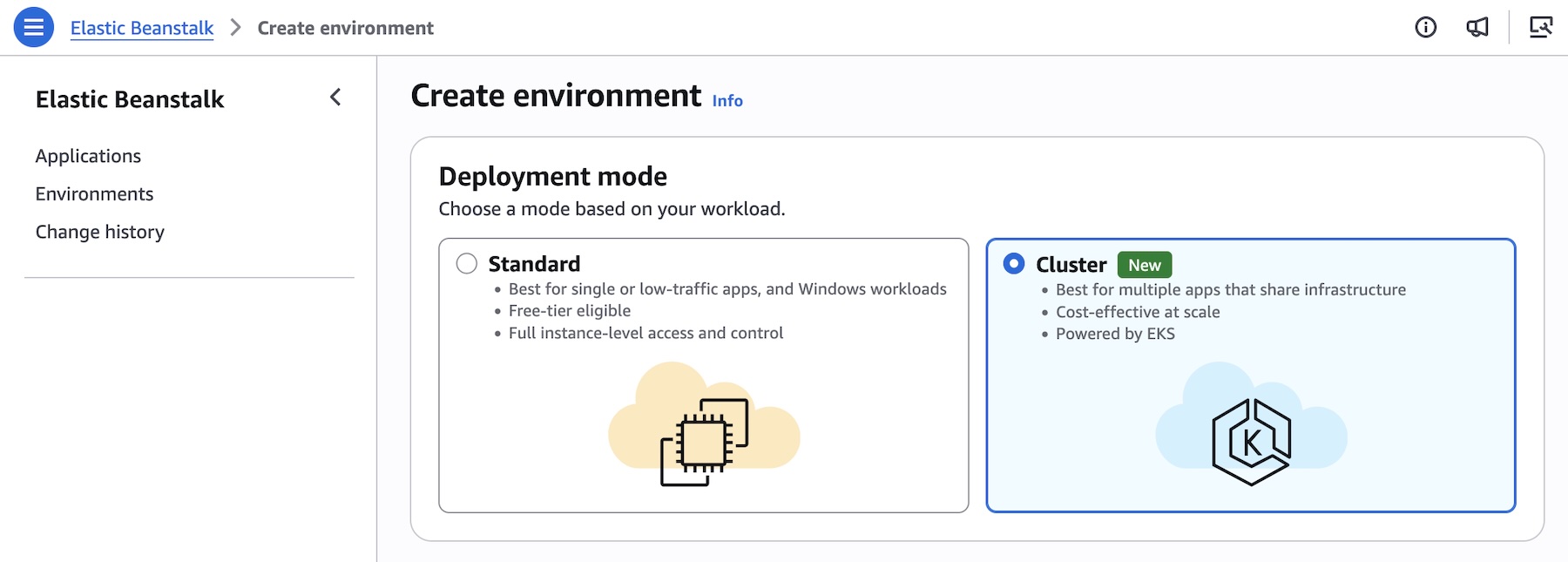
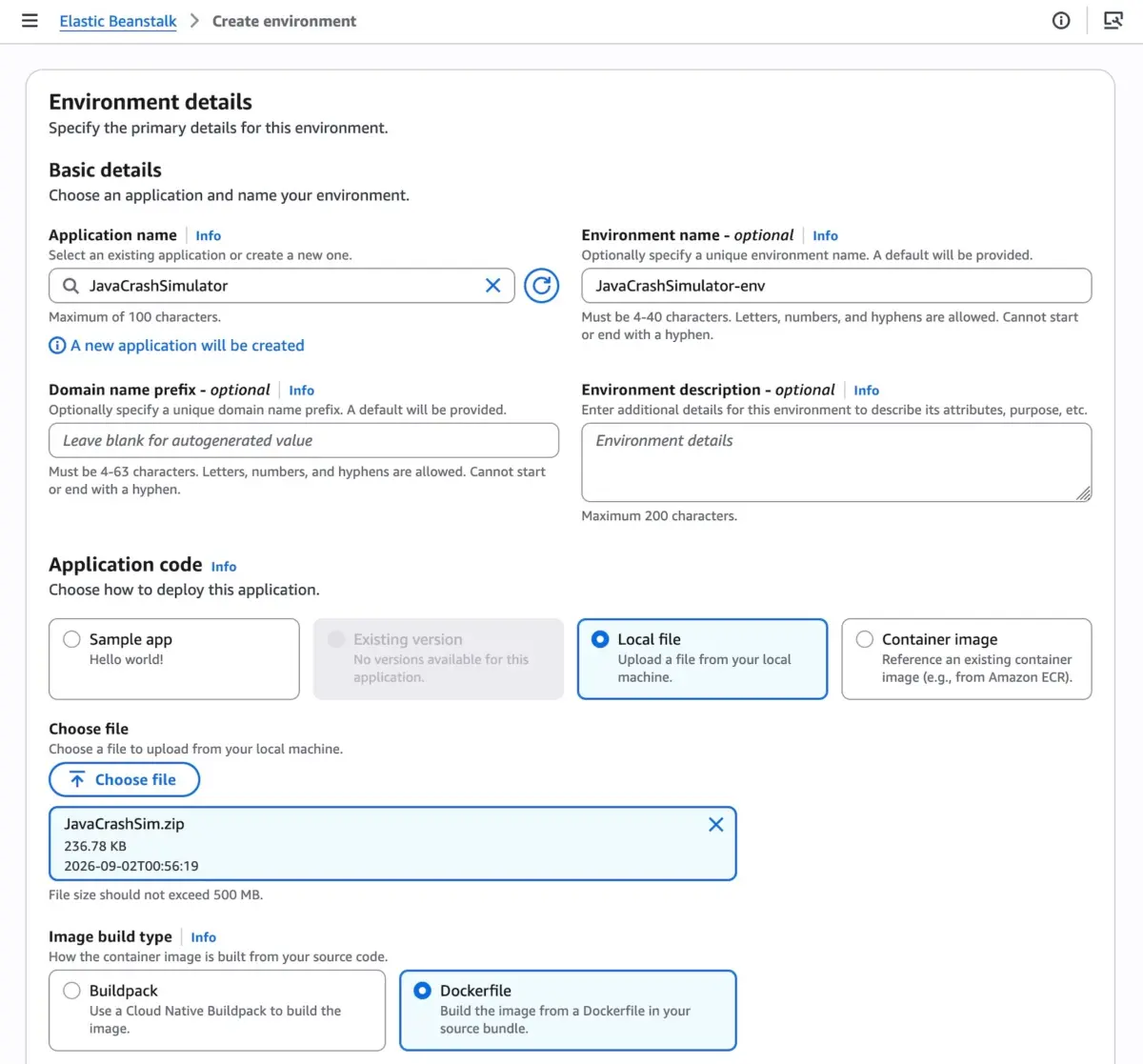
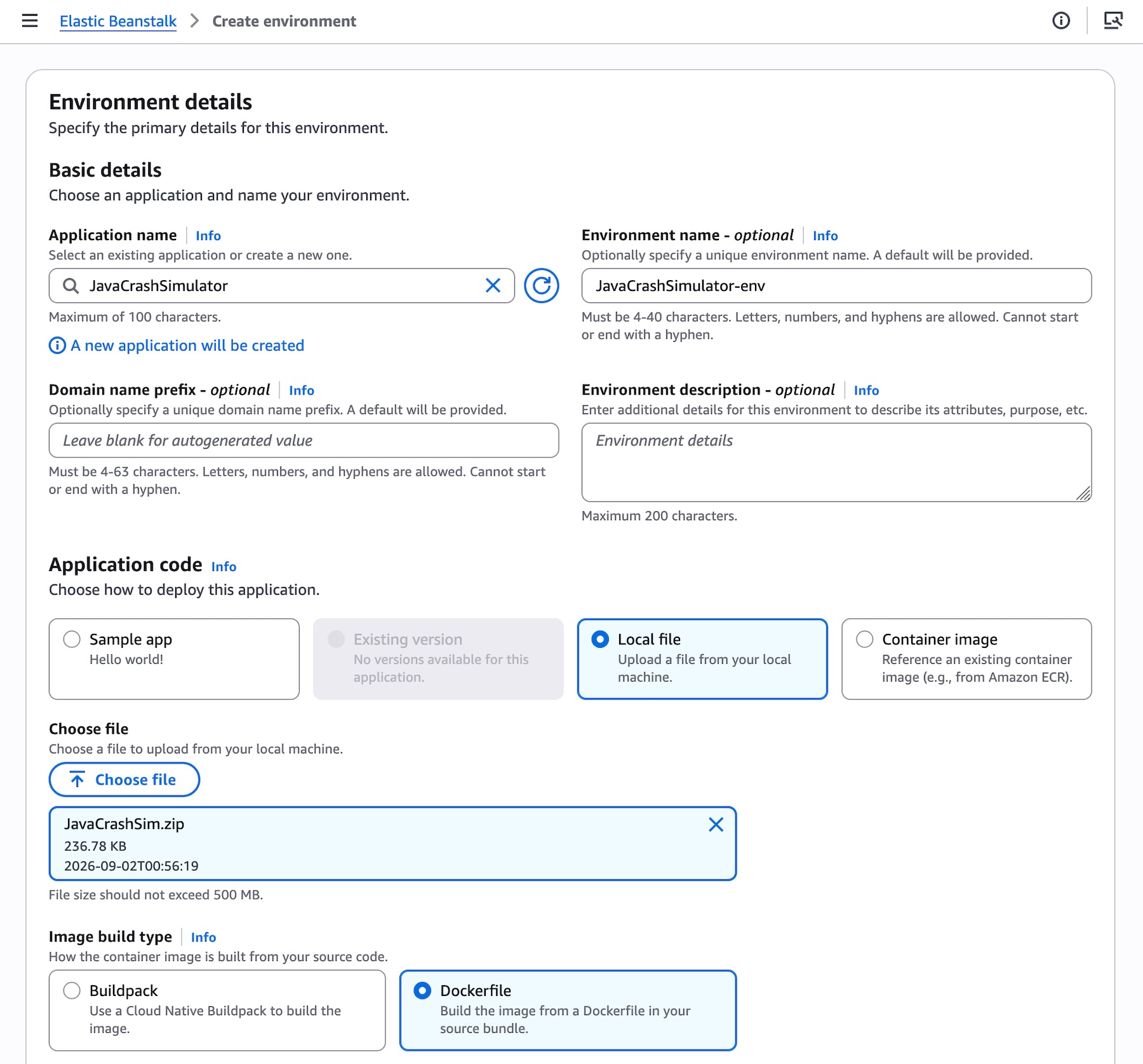
The mechanics of getting started with Cluster Mode have been integrated directly into the existing AWS management ecosystem. Administrators can access the Elastic Beanstalk console, initiate a new environment, and simply select the cluster deployment type. The system accepts source code, Dockerfiles, or container images, allowing teams to specify local files and container build options with minimal friction. While the initial creation of an underlying EKS cluster for a new set of subnets takes roughly ten minutes, subsequent deployments execute much faster by intelligently reusing the established cluster infrastructure.
In addition to the console experience, operations teams can leverage the AWS Command Line Interface, the specialized EB CLI, or standard AWS Software Development Kits to automate their workflows. Organizations managing complex multi-service architectures—such as distributed microservice applications comprising distinct frontend, cart, payment, and shipping services—can register pre-built container images stored in Amazon Elastic Container Registry as distinct application versions. They can then configure tailored parameters for each service, such as routing public internet traffic exclusively to frontend components via an Application Load Balancer while assigning appropriate internal health-check endpoints, CPU allocations, memory limits, and autoscaling thresholds.
Crucially, the traditional Elastic Beanstalk Standard mode, which is powered by Amazon Elastic Compute Cloud, remains fully supported. Standard and Cluster Mode environments are designed to run side by side within the same Elastic Beanstalk application structure. This architectural flexibility enables engineering teams to migrate their existing workloads over to Cluster Mode one environment at a time, entirely at their own preferred pace. Built-in validation checks automatically verify compatibility before any alterations are made, ensuring that no team is forced into a disruptive or premature migration. Meanwhile, Standard Mode remains available for legacy or specialized workloads that are better suited to traditional EC2 instances.
AWS Elastic Beanstalk Cluster Mode is generally available starting today across all AWS Regions where Elastic Beanstalk is currently supported. Organizations looking to check regional availability, review future capability roadmaps, or integrate API queries and troubleshooting documentation can utilize the AWS MCP Server and associated plugins alongside their preferred artificial intelligence development tools.
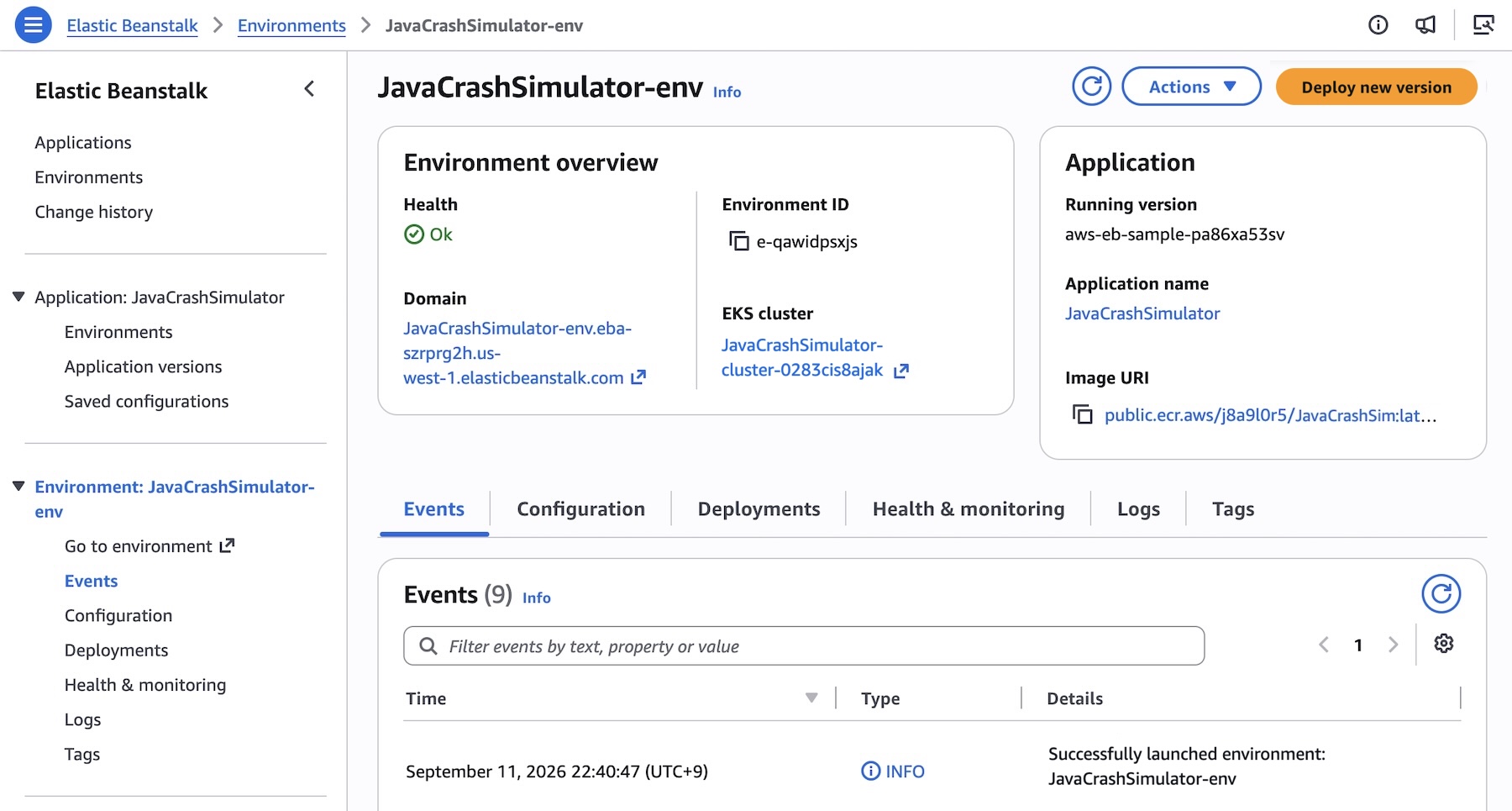
There is no additional service fee charged specifically for using Elastic Beanstalk Cluster Mode. Customers simply pay for the underlying AWS resources consumed by their applications, including the standard EKS control plane fee, EKS Auto Mode compute resources, Amazon ECR storage, and Amazon CloudWatch monitoring metrics. AWS noted that Elastic Beanstalk Cluster Mode is not eligible for the AWS Free Tier. Further pricing details and technical documentation are available through the official AWS Elastic Beanstalk pricing and documentation pages, while user feedback and community discussions are actively welcomed through AWS re:Post and traditional support channels.