
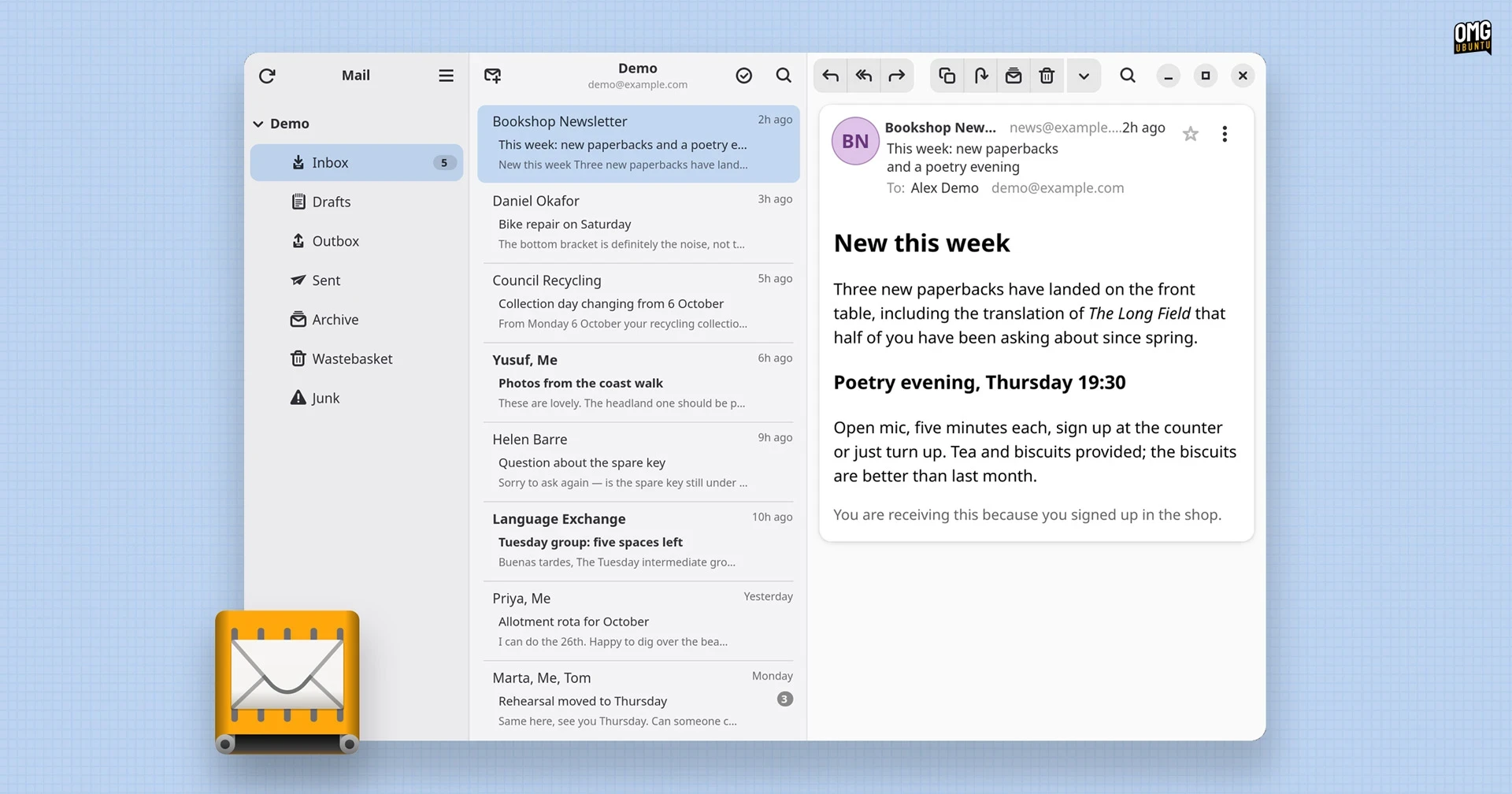
The landscape of open-source email clients for the Linux desktop is experiencing an unexpected renaissance. Following hot on the heels of other recent projects inspired by beloved legacy software, a new contender called Convey has officially entered the ecosystem. Built upon the foundational source code of the classic GNOME mail application Geary, Convey arrives as a self-described hard fork designed to drag a much-missed piece of Linux software kicking and screaming into the modern era. Complete with a rewritten GTK4 and libadwaita user interface, updated security libraries, and crucially, native support for Microsoft 365 accounts, the project aims to breathe new life into a workflow that many open-source enthusiasts thought had been left behind.
The timing of Convey’s arrival is notable. It comes to light not long after discussions surrounding another new Linux email client, Postcard, which also draws heavy inspiration from Geary. However, while Postcard serves primarily as a respectful tribute to the design ethos of the original client, Convey takes a far more aggressive developmental approach. By classifying itself as a hard fork rather than a casual homage, Convey functions as an unofficial continuation of the Geary lineage. Despite its direct connection to the codebase, the project’s official Flathub listing is careful to clarify that it is entirely independent, noting explicitly that it is not affiliated with or endorsed by the GNOME Foundation.
To understand why a fork of Geary generates such interest within the Linux community, it helps to look back at its origins. When Geary first launched back in 2012, it introduced a breath of fresh air to desktop computing. At a time when Linux email management was largely dominated by heavy, complex groupware suites, sluggish performance, dated interfaces, and notoriously fiddly configuration processes, Geary offered a streamlined, lightweight alternative. Perhaps its most defining feature at the time was its adoption of webmail-like conversation threading. Rather than displaying every single reply as an individual, fragmented message in an inbox, Geary grouped an entire back-and-forth exchange into a single, cohesive thread.
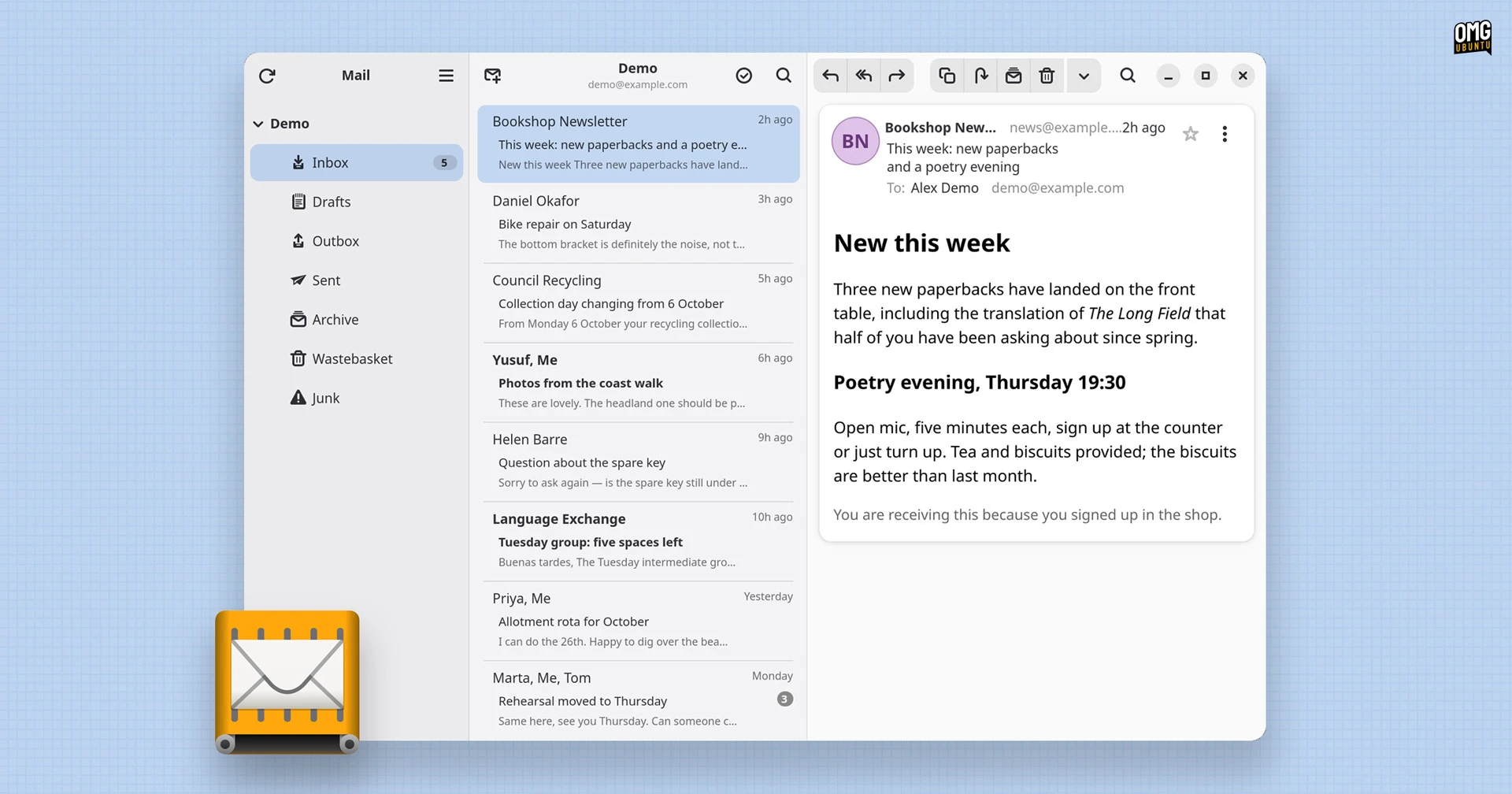
While webmail-style conversation threading has since become an absolute standard across virtually all desktop and mobile communication tools, it was a genuinely novel concept for a native Linux email client over a decade ago. Now, in 2026, while the unique selling proposition of conversation threading is long gone, Convey sensibly continues to stick with the core format. Furthermore, the new client retains Geary’s tried-and-true three-pane layout, ensuring that users familiar with traditional desktop mail clients can transition over without facing a steep learning curve or having to relearn basic muscle memory.
Yet, the primary motivation behind Convey is not merely to copy the past, but to fix the technological stagnation that has affected its predecessor. The most immediately striking update is the complete porting of the user interface to GTK4 and libadwaita. This transition does more than simply give the application a fresh, modern aesthetic that blends seamlessly with contemporary desktop environments like GNOME. By embracing the libadwaita framework, Convey natively inherits modern system features, improved window scaling, and significantly enhanced keyboard shortcut integration, making the overall application feel much more responsive and native to modern Linux distributions.
Beneath the visual overhaul, the developers behind Convey have also modernized the application’s underlying architecture. The client has updated its plugin architecture to interface properly with newer versions of core GNOME security and cryptographic libraries, addressing the security concerns that naturally accumulate when software goes unmaintained for extended periods. Perhaps most importantly for enterprise and institutional users, Convey has introduced a Microsoft Graph backend. This vital addition finally brings seamless support for Outlook and Microsoft 365 accounts to the application, opening the door for users who are locked into corporate or educational ecosystems that rely heavily on Microsoft’s proprietary authentication and infrastructure standards.
Even with these modernizations, the project exists in the shadow of a beloved piece of software that many users are reluctant to let go of entirely. It is worth noting that the original Geary client is not technically dead. It remains available to install through various repositories and continues to function for basic day-to-day use. However, it is no longer actively maintained. The last official stable release, version 46, arrived in May 2024, and even prior to that milestone, development velocity had slowed down to a trickle. For a long time, users hoping for modern protocol support or a refreshed interface had little reason to expect official updates from the original maintainers.
Can it stand out against other new mail apps?
The broader Linux desktop ecosystem has witnessed a noticeable uptick in the creation of new email clients over the past twelve months. This mini-boom has coincided with the rise of modern AI coding assistants, which have made it significantly easier for independent developers to bootstrap, refactor, and maintain complex software projects. Interestingly, an examination of Convey’s public code repository reveals signs of AI-assisted development, even though neither its GitLab repository nor its Flathub listing explicitly highlights the fact.
Whether aided by artificial intelligence or driven by traditional open-source dedication, Convey undeniably stands apart from the crowded field of generic electron-based mail apps by virtue of its robust lineage. But looking forward, the ultimate question facing the project is what comes next. Geary originally achieved massive popularity because it offered a lightweight, simple-to-use email client during an era when the Linux desktop lacked agile, fast communication tools.
The software landscape has evolved dramatically since those early days, and user expectations regarding integration, notifications, and security have shifted accordingly. As Convey establishes its place on Flathub and begins welcoming its first wave of users, the community will be watching closely to see whether the project has truly hard-forked Geary in spirit and vision, or whether it will ultimately serve as a purely cosmetic ancestry update. For now, it offers a deeply welcome revival of a classic favorite, giving Linux users a renewed reason to manage their mail directly from the desktop.