
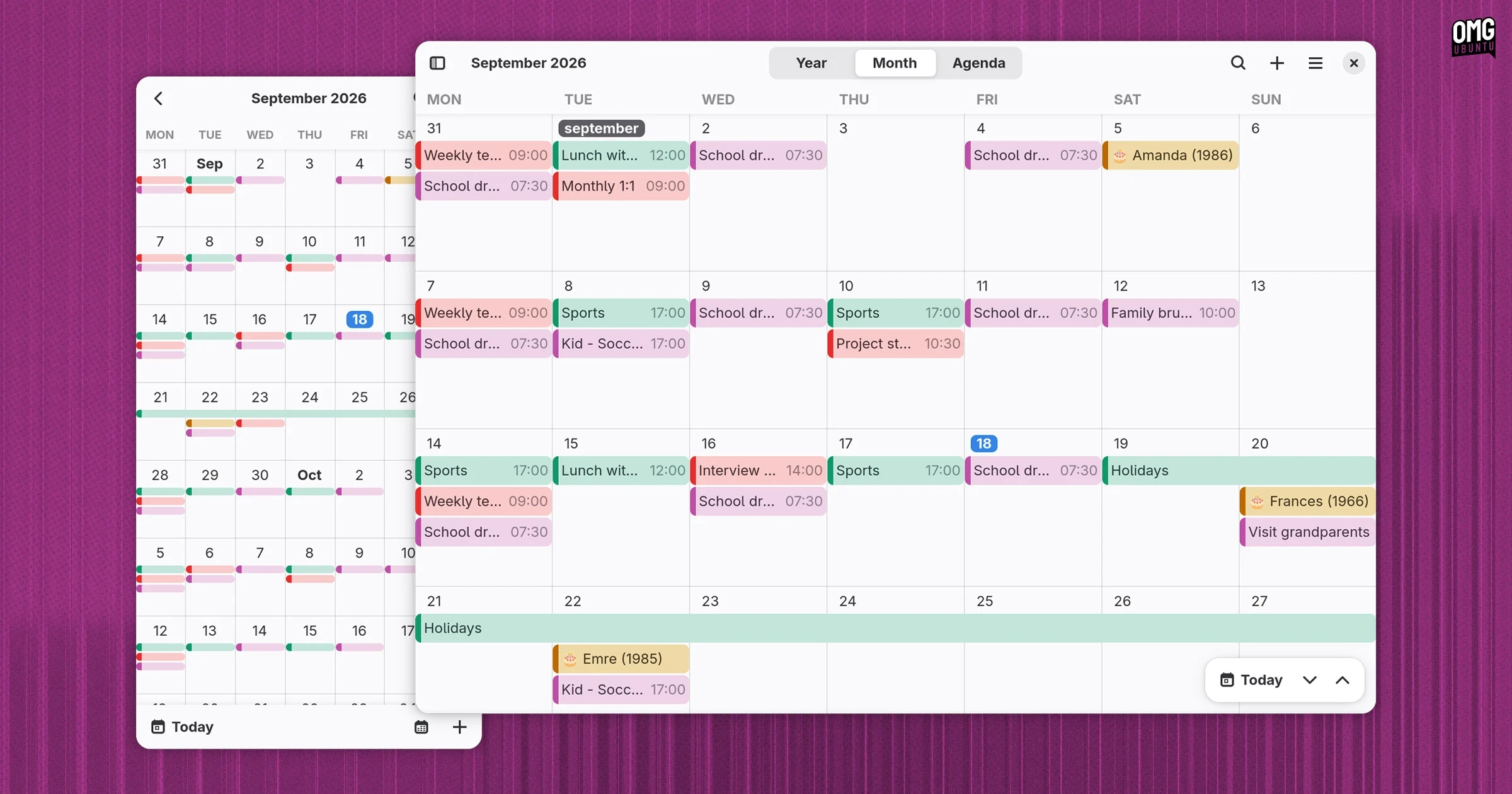
Linux users searching for a fresh way to manage their schedules now have a new option to test. Era, a modern calendar application written in Rust specifically for the GNOME desktop environment, has officially entered its beta phase and is now available for installation via Flathub.
Promising a combination of high performance and a sleek aesthetic, Era enters a Linux ecosystem where calendar applications have historically remained steady, if unremarkable. While desktop environments like GNOME and Linux Mint continue to refine their native productivity tools, third-party developers are finding creative ways to leverage modern programming languages and modular backends to deliver alternative experiences.
At first glance, Era bears a striking visual and structural resemblance to GNOME’s native Calendar app. This similarity is hardly a coincidence, as there are only so many ways to lay out a traditional grid of numbers and date boxes while leaving sufficient visual space for colorful event labels. Both applications share a fundamental goal: providing a clean, distraction-free environment where users can track their daily obligations without wrestling with a convoluted user interface.
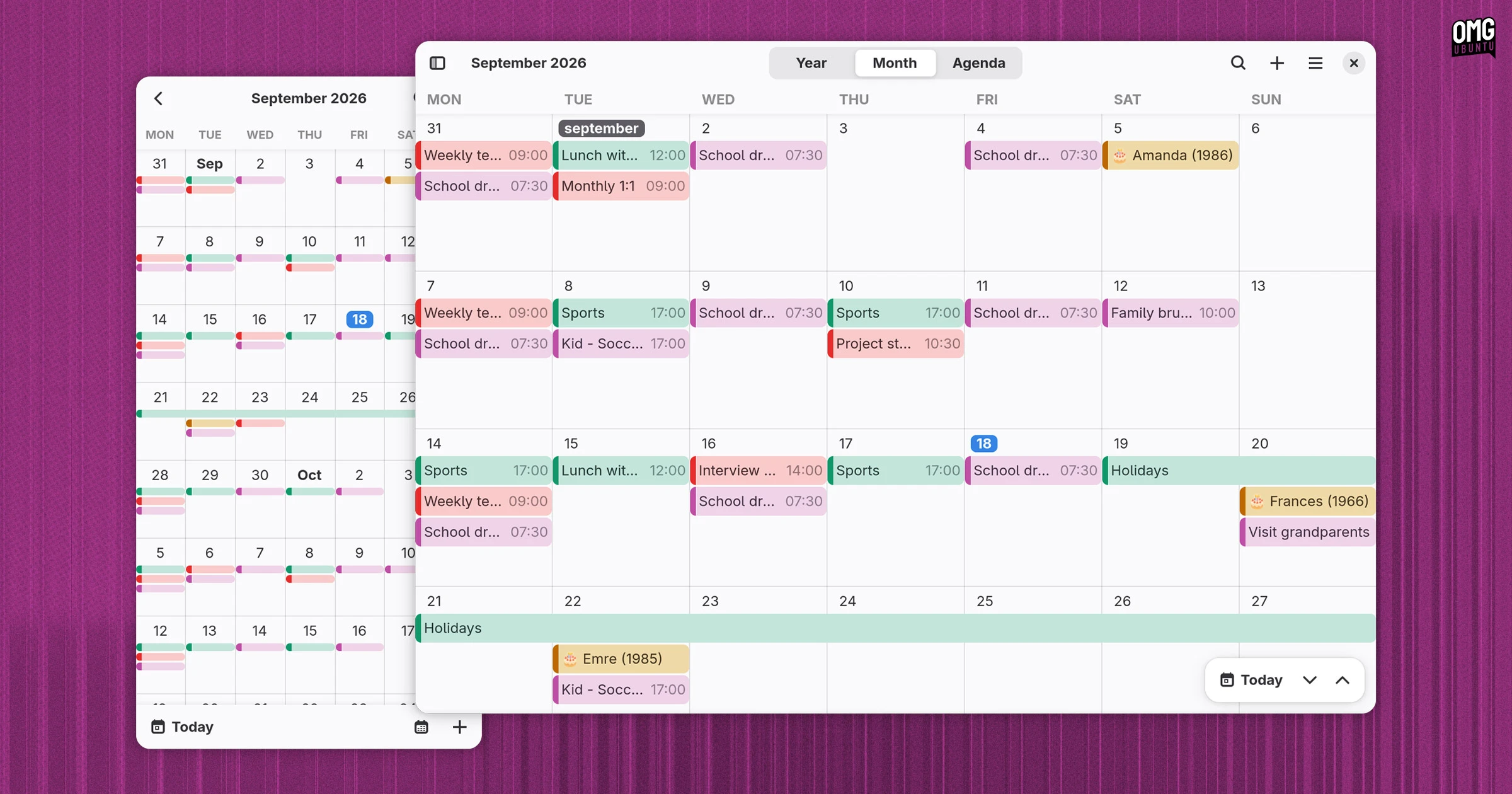
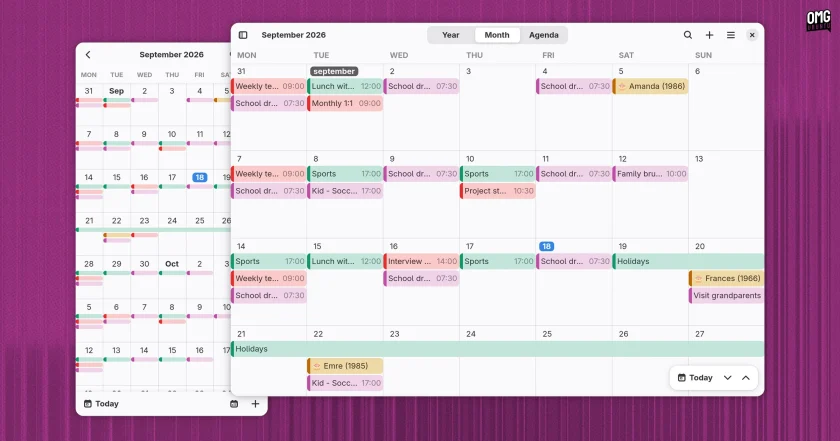
Functionally, Era covers familiar ground for anyone accustomed to desktop time-management utilities. Users can effortlessly browse across dates, add new appointments, edit existing entries, and execute quick searches through their historical or upcoming schedules. The application supports synchronization with various online calendar providers, while also accommodating local data storage and the importation of standard .ics calendar files. Navigation is split between dedicated Year, Month, and Agenda views, supplemented by a toggleable sidebar designed to streamline the management of multiple individual calendars.
When it comes to managing details, the application’s event editor provides a comprehensive set of fields. Users can assign descriptive names, specify exact start and end times, adjust durations, configure repetition rules for recurring meetings, and designate specific physical locations or conference call venues. This ensures that the beta release is already capable of handling standard daily productivity workflows rather than serving merely as a stripped-down proof of concept.
Design and Architecture Under the Hood
The user interface of Era adheres closely to contemporary GNOME design standards. Built using GTK4 and libadwaita, the app presents a polished, highly adaptive layout that feels entirely at home within the broader GNOME ecosystem. In fact, its visual fidelity is high enough that casual users might easily mistake it for a core component of the desktop environment itself.
Particularly noteworthy is how the UI handles different window sizes. When expanded to a wide window, the main calendar view incorporates thoughtful overlay buttons that enhance navigation. At the same time, the interface scales down gracefully, maintaining a high level of usability and readability even when restricted to smaller window widths or mobile form factors.
Beneath its polished graphical exterior, however, Era features a more complex and forward-thinking backend architecture. Like the native GNOME Calendar, Era relies on Evolution Data Server (EDS) for its underlying data synchronization and management needs. However, rather than communicating with EDS directly, Era routes its calls through an intermediate abstraction layer known as Clepsydre.
This architectural choice introduces a significant degree of flexibility. By decoupling the core application logic from the underlying data provider through Clepsydre, the backends become hot-swappable. This design not only isolates data handling but also opens up intriguing possibilities for future platform expansions, potentially simplifying ports to alternative operating systems such as Android down the road.
The Linux Calendar Landscape
The arrival of Era comes at an interesting time for open-source desktop software. While calendars rarely command the same level of excitement as major desktop environment overhauls or GPU drivers, the tooling around them is quietly evolving. Era is not the only recent newcomer aiming to capture the attention of Linux users; other projects, such as the calendar application recently introduced by Linux Mint under its XApps initiative, demonstrate a persistent demand for alternative productivity tools tailored to specific desktop philosophies.
For now, Era remains in its beta stage of development. The project’s official description on Flathub notes that the application is designed to "grow with you," suggesting that its feature set and internal architecture will continue to mature based on user feedback and developer contributions. For Linux enthusiasts eager to test out new GTK4 software, explore alternative Rust-based utilities, or simply try out a fresh take on desktop scheduling, the beta version of Era is available to download and install directly from Flathub.