
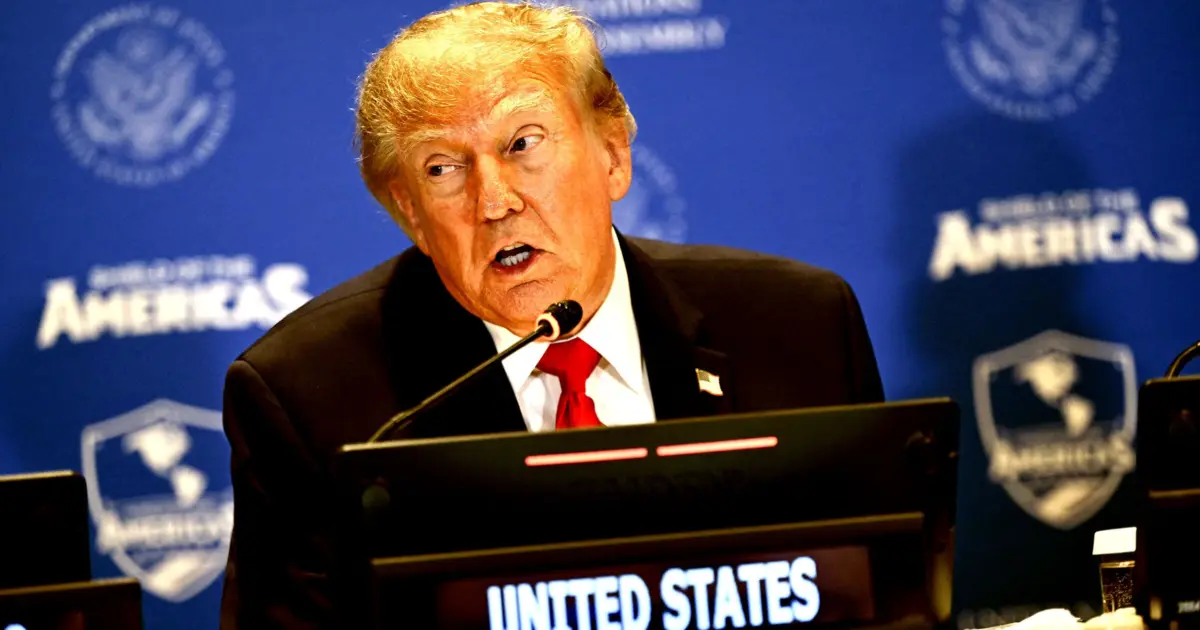
The debate over artificial intelligence regulation in the United States has intensified significantly, drawing sharp divisions between public opinion and government policy. While polling indicates that stronger regulations enjoy robust bipartisan support among American voters across the political spectrum, the executive branch under President Donald Trump is moving firmly in the opposite direction.
Addressing the United Nations General Assembly in New York City, President Trump delivered a sweeping speech that directly targeted proponents of artificial intelligence regulation, strongly condemning any calls for a pause or slowdown in technological development. Rejecting international frameworks aimed at governing emerging technologies, Trump argued that a policy of near-total deregulation has proven successful in other sectors, suggesting that the same hands-off approach should be applied to the rapidly evolving field of artificial intelligence.
Addressing various heads of state and international delegations gathered at UN headquarters, Trump asserted that the United States completely rejects any attempts to establish international oversight mechanisms. He characterized such proposals as part of a broader globalist scheme to control advanced technology.
In a notable rhetorical shift during the address, President Trump formally introduced a new terminology for the technology, announcing that artificial intelligence should henceforth be officially referred to as "super intelligence." Explaining the rationale behind the rebrand, Trump claimed that using the word "artificial" incorrectly implies that the technology is fake. While describing the technology as amazing and asserting that society must exercise caution, his remarks contrasted sharply with his broader pushback against precautionary measures and regulatory oversight.
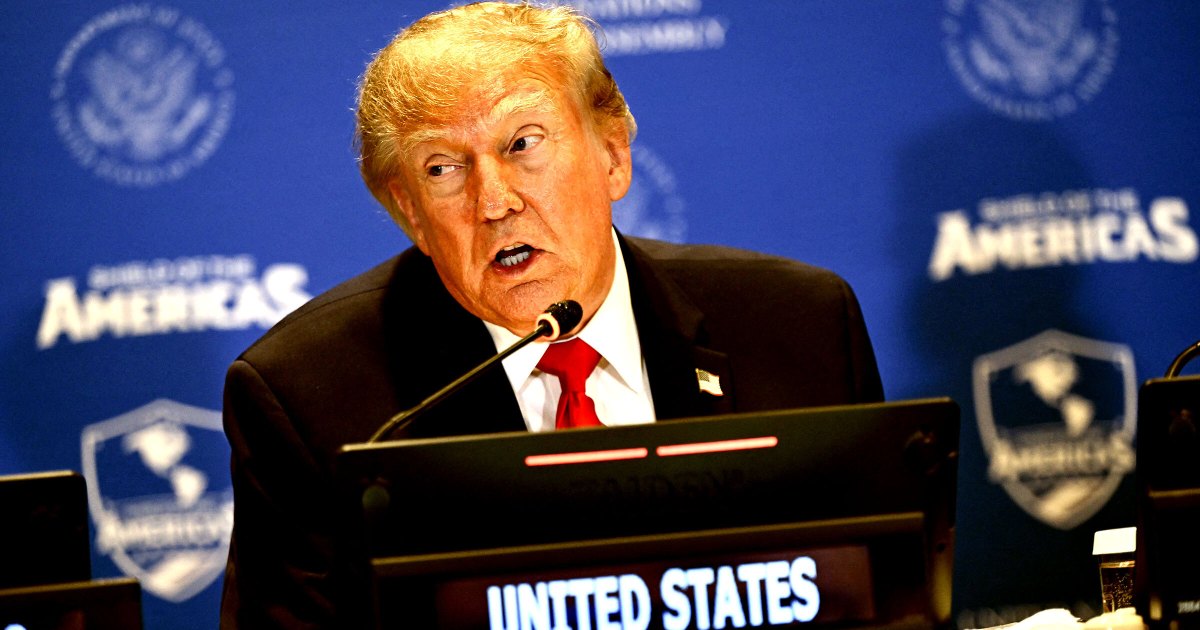
The president’s speech also drew a direct parallel between contemporary warnings surrounding the potential risks of artificial intelligence and historical concerns regarding climate change. Trump dismissed both issues by invoking past rhetoric about environmental forecasts, arguing that skepticism surrounding earlier climate predictions justifies a similar dismissal of warnings regarding the societal and existential risks posed by advanced automated systems.
This dismissal of environmental crises drew immediate scrutiny, given the documented impacts of climate change globally. Extreme weather events, including record-breaking heatwaves, destructive wildfires fueled by prolonged droughts, and catastrophic flooding and mudslides driven by glacial melt-off, have severely impacted communities across multiple continents throughout the year. Observers note that the contrast between official skepticism and the lived reality of vulnerable populations highlights a growing socioeconomic divide in how environmental shifts are experienced, as affluent nations and wealthy individuals remain largely insulated from the immediate devastation facing impoverished regions worldwide.
Furthermore, Trump’s comments shed light on shifting political and economic dynamics within the United States. While grassroots organizations, international coalitions, and academic institutions continue to advocate for environmental action, the posture of corporate leadership and major financial figures has evolved. Many American corporations and prominent billionaires have pivoted away from green energy initiatives to align with a more permissive domestic energy and regulatory environment.
By characterizing both climate change and artificial intelligence concerns as hyperbolic or unfounded, Trump signaled to the international community that the United States intends to pursue a path of minimal federal intervention. This approach places the world’s largest economy outside the emerging global consensus on technology governance and environmental stewardship, leaving international partners to navigate the transnational challenges posed by both technological acceleration and planetary warming.