
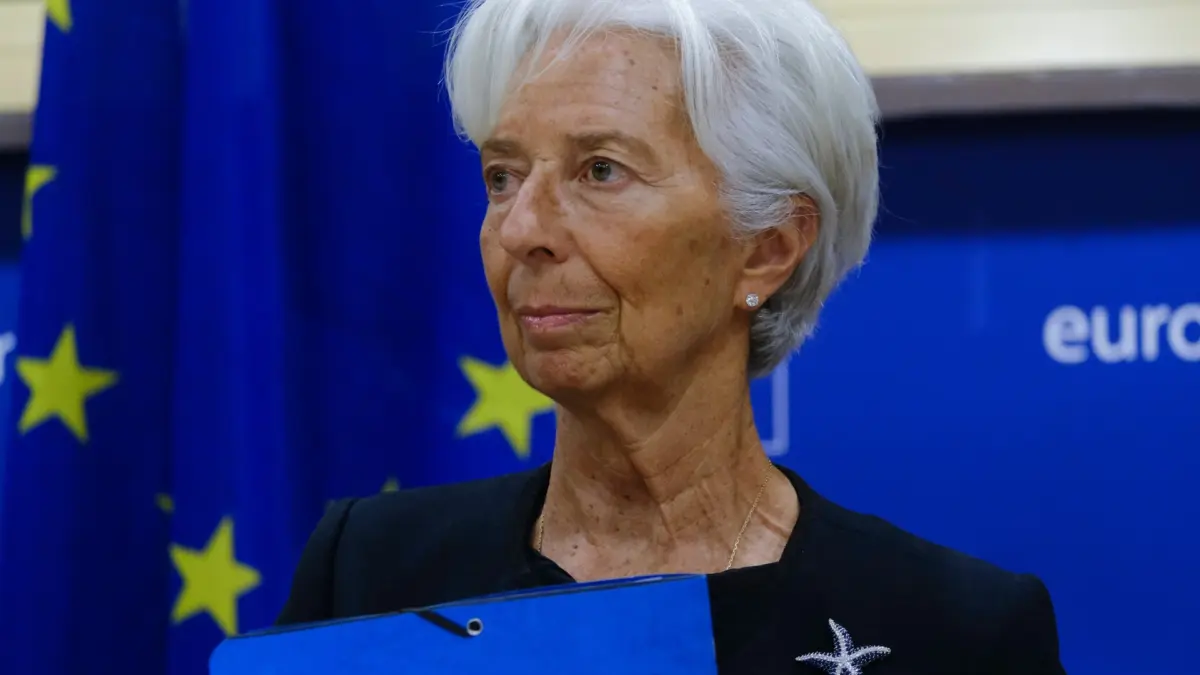
European Central Bank President Christine Lagarde personally stepped in to prevent Binance, the world’s largest cryptocurrency exchange, from establishing a major operational foothold within the European Union, according to a report published by The Wall Street Journal. Citing interviews with officials familiar with the discussions, the newspaper reported that the global digital asset platform was on the verge of securing entry into the 27-nation trading bloc, only to be blocked after the central bank chief directly intervened in the process. The decision highlights the intense scrutiny top central bankers are applying to private digital asset platforms attempting to navigate international regulatory boundaries and operate within European borders.
According to the details outlined in the newspaper report, Lagarde waded into the matter specifically to keep the controversial cryptocurrency exchange out of the European Union. Officials interviewed for the report indicated that Lagarde’s decisive opposition stemmed in large part from Binance’s extensive legal troubles in the United States, where the platform had previously pleaded guilty to federal financial-crime violations. Beyond the company’s criminal record, officials noted that Lagarde was deeply concerned that permitting Binance to establish a firm operational presence would significantly embed and accelerate the dominance of U.S. dollar-based stablecoins across Europe, running directly counter to efforts aimed at encouraging euro-denominated digital currency alternatives.
Under current European Union law, any entity seeking to operate as a local Crypto-Asset Service Provider must obtain official authorization under the landmark Markets in Crypto-Assets regulatory framework. Known as MiCA, this legal regime sets comprehensive rules for digital asset issuers and service providers across all member states, requiring platforms to maintain strict compliance standards to service European consumers. Binance currently does not hold a MiCA license. In June, the cryptocurrency exchange formally withdrew its MiCA license application in Greece, marking a notable setback in its efforts to establish a regulatory launchpad within the bloc. Despite that withdrawal, Binance stated in June that it was still actively working to pursue MiCA authorization through another EU member state in an effort to bring its services into full compliance with European standards.
The central bank’s firm stance against Binance comes in the wake of historic legal enforcement actions taken against the exchange by federal prosecutors and regulators in North America. In late 2023, Binance and its founder, former chief executive officer Changpeng Zhao, reached a massive legal settlement with the United States government after pleading guilty to criminal anti-money-laundering and sanctions violations. As part of the resolution, Binance agreed to pay a record-breaking $4.3 billion fine, while Zhao stepped down from his position as chief executive and personally pleaded guilty to related financial crime charges. The severity of those federal violations and the resulting criminal guilty plea significantly heightened concerns among European regulators and central bank leaders regarding the platform’s suitability for market access.
Lagarde’s active role in blocking Binance reflects her long-standing, outspoken skepticism toward unbacked decentralized cryptocurrencies and the broader private digital asset ecosystem. Throughout her leadership at the European Central Bank, Lagarde has repeatedly voiced stark warnings regarding the risks that unbacked private crypto assets pose to financial stability and consumer protection. Back in 2021, the ECB president publicly described Bitcoin, the market’s leading cryptocurrency, as a "highly speculative asset" that had been utilized to facilitate illicit activities, including money laundering. During those same public remarks, Lagarde offered a sweeping critique of cryptocurrencies as a whole and declared firmly that central banks would never hold Bitcoin or similar volatile digital assets as part of their balance sheets or foreign exchange reserves.
In stark contrast to her critical stance on private cryptocurrencies, Lagarde has emerged as one of the most prominent international advocates for central bank digital currencies. A CBDC represents a digital version of sovereign fiat money—such as the euro or the U.S. dollar—that is issued, backed, and managed directly by a nation’s central bank. Monetary authorities across the globe are currently in various stages of exploring, testing, and developing their own CBDCs to modernize national payment systems and maintain public access to central bank money in an increasingly cashless world.
Under Lagarde’s direction, the European Union has moved aggressively forward with plans to introduce a digital euro. The European Central Bank president has consistently described the digital euro as a vital strategic initiative necessary to safeguard Europe’s monetary sovereignty and long-term financial autonomy. In her advocacy for the digital euro, Lagarde has frequently taken aim at privately issued stablecoins, emphasizing that a public, sovereign digital payment option is essential to prevent private entities and foreign stablecoin issuers from controlling the digital payments architecture within the single market.
The central bank’s apprehension regarding Binance was deeply tied to the monetary dynamics of the stablecoin market. Binance stands as the largest digital asset exchange on the planet, with billions of dollars in stablecoin transactions cleared on its trading platform on a daily basis. However, the vast majority of stablecoin trading volume globally is concentrated in tokens pegged directly to the U.S. dollar, such as Tether and USD Coin. According to the reporting, Lagarde grew concerned that allowing Binance to expand its footprint across Europe would solidify the widespread usage of dollar-backed stablecoins among European market participants, thereby marginalizing euro-denominated counterparts and weakening the influence of European monetary policy in digital finance.
While central bankers like Lagarde view CBDCs as a natural and necessary evolution of sovereign money, the push for state-backed digital currencies faces significant global criticism and resistance. Industry participants, Bitcoin advocates, and privacy proponents have repeatedly raised alarms over CBDCs, warning that digital fiat currencies issued directly by central authorities could provide governments with unprecedented tools for financial surveillance and central control over individual citizen transactions. This philosophical and political opposition has manifested prominently in international politics. In the United States, President Donald Trump signed an executive order banning the creation and issuance of central bank digital currencies upon taking office, reflecting deep political divisions over the role of government-managed digital money.
The revelations surrounding Lagarde’s intervention underscore the tough regulatory climate facing global digital asset platforms as European authorities enforce stricter financial standards. By acting to halt Binance’s expansion plans, European Central Bank leadership signaled a clear determination to protect the bloc’s monetary autonomy, enforce strict compliance with financial crime laws, and restrict the market penetration of unauthorized platforms. As Binance continues its search for a MiCA license in another EU member state, the exchange remains constrained by top policymakers who remain intent on prioritizing regulatory oversight and sovereign monetary control over rapid corporate expansion.