
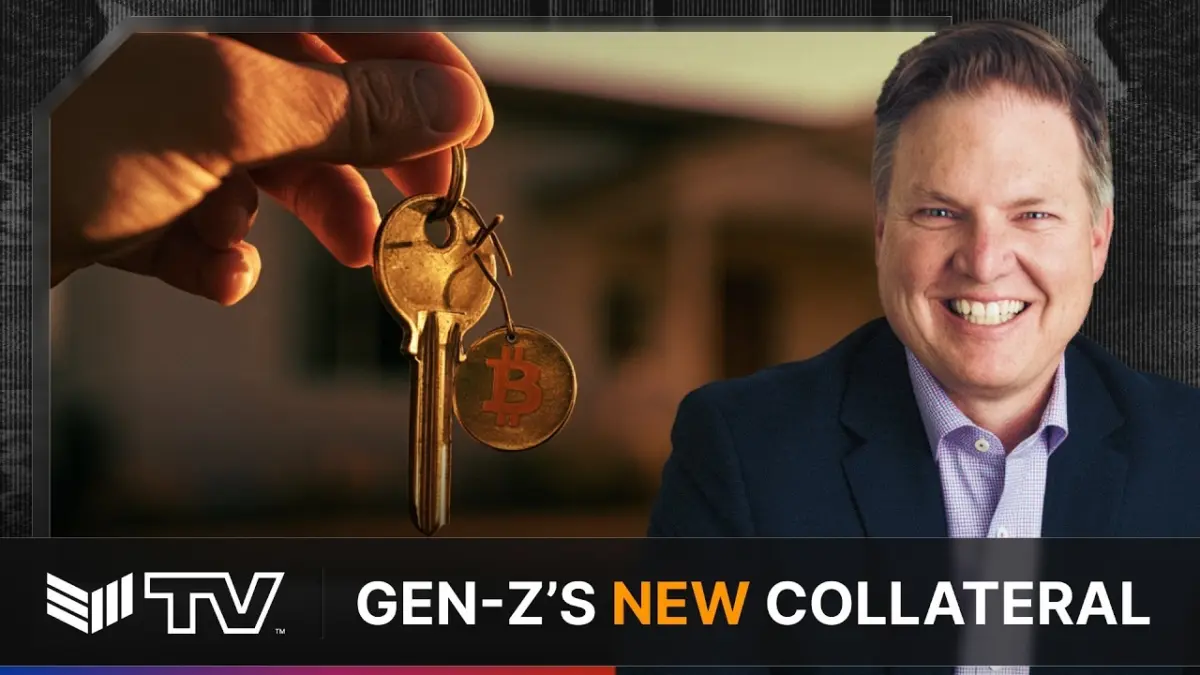
The relationship between younger generations and traditional real estate is undergoing a fundamental transformation as economic realities alter how young adults build wealth. According to industry observations highlighted by Hunter Albright of SALT Lending, Generation Z currently accounts for less than five percent of the new home market. This stark statistic underscores an expanding structural divide in real estate, where elevated property valuations, elevated borrowing costs, and rigid mortgage qualification standards have combined to create an unprecedented barrier to entry for young buyers. As traditional homeownership slips out of reach for a vast majority of young adults, the fundamental ways in which an entire generation approaches wealth building, equity accumulation, and long-term financial management are shifting away from conventional real estate toward sovereign digital assets like Bitcoin.
Historically, residential real estate served as the primary wealth-building tool for past generations. Purchasing an entry-level home and accumulating equity over a standard thirty-year mortgage term was widely considered the most reliable and accessible mechanism for middle-class financial security. Today, however, the macroeconomic backdrop facing Generation Z presents a starkly different landscape. Wage growth has largely failed to keep pace with skyrocketing residential property prices across major metropolitan areas, while central bank interest rate adjustments have pushed monthly mortgage obligations far beyond the reach of entry-level income earners. As a result, the traditional pipeline that allowed young adults to transition smoothly from renting to homeownership has broken down, forcing them to re-evaluate how and where they deploy their savings.
Rather than attempting to save cash for standard real estate down payments—a process that can take a decade or longer in the current high-cost economic climate—many young individuals are seeking alternative vehicles for capital preservation and appreciation. Albright points out that this environment has accelerated the adoption of digital assets as primary tools for long-term wealth creation. For Generation Z, Bitcoin represents a borderless, highly liquid, and supply-capped store of value that offers asymmetric growth potential that traditional financial instruments and overheated real estate markets simply cannot match. Consequently, wealth accumulation for younger demographics is increasingly starting in the digital realm long before ever manifesting in physical assets.
This dynamic creates a distinct financial challenge for digital asset holders who eventually seek to purchase physical property or make major life investments. Traditionally, an investor holding digital currency who wanted to purchase real estate would be required to liquidate their positions to raise cash for a down payment. However, outright liquidation carries significant financial drawbacks. Selling digital assets typically triggers substantial capital gains tax liabilities, drastically reducing the net capital available for the real estate transaction. Moreover, selling Bitcoin forces investors to exit their positions entirely, forfeiting any potential long-term price appreciation that the underlying asset might experience in subsequent market cycles.
To resolve this dilemma, financial innovators are pointing toward collateralized debt mechanisms. Albright emphasizes that borrowing against Bitcoin offers a compelling alternative to outright asset liquidation. By utilizing Bitcoin as underlying collateral to secure a loan, prospective home buyers can generate the immediate cash required for a real estate down payment without triggering a taxable sale or liquidating their digital holdings. This approach allows borrowers to bypass the traditional burden of locking up capital in conventional fiat savings for decades, enabling them to maintain full long-term exposure to their Bitcoin while simultaneously acquiring equity in physical real estate.
The concept of leveraging digital assets within real estate transactions is gaining additional momentum as major institutional players begin to acknowledge cryptocurrency holdings. Albright highlights notable shifts within the broader housing finance architecture, including early recognition of Bitcoin by government-sponsored mortgage entities Fannie Mae and Freddie Mac. The inclusion of digital assets within financial frameworks by major housing finance organizations marks a crucial evolutionary step for the real estate market. For decades, traditional mortgage underwriting guidelines viewed digital assets with skepticism, often requiring borrowers to convert crypto into fiat currency and hold it in traditional bank accounts for extended periods before recognizing it as verified reserve capital.
The formal recognition of Bitcoin within institutional mortgage frameworks by entities like Fannie Mae and Freddie Mac signals a growing realization that digital wealth can no longer be ignored by mainstream lending institutions. As government-backed secondary mortgage market giants update their perspectives on digital asset holdings, the integration between decentralized wealth and traditional financial infrastructure is expected to deepen. This structural evolution provides greater legitimacy to digital collateral, paving the way for standard mortgage originators to accept Bitcoin-backed liquidity in loan qualification processes and borrower evaluations.
As the infrastructure around crypto-backed lending matures, specialized financial services firms are designing tailored debt products to meet the unique needs of digital asset holders. Within this emerging sector, SALT Lending, where Albright serves, has focused on offering structured loan products such as five-year loan terms. These medium-term loan structures stand in sharp contrast to the standard thirty-year mortgage arrangements that have dominated consumer real estate finance for nearly a century. A five-year loan term provides borrowers with a predictable horizon to manage debt, plan around Bitcoin’s price cycles, and adjust capital structures without tying up equity in multidecadal repayment commitments.
These financial mechanics underpin a broader cultural and economic shift described as living a "Bitcoin-powered life." In practice, living a Bitcoin-powered life does not mean abandoning traditional economic activity or operating entirely outside existing legal frameworks. Instead, it represents a strategic model where individuals treat Bitcoin as their primary reserve currency and foundational collateral base while using collateralized debt mechanisms to interface with real-world financial needs. Under this operational paradigm, an individual can finance real estate, acquire assets, or fund lifestyle needs using borrowed funds secured by digital equity, thereby retaining long-term ownership of their core wealth.
The broader implications of this emerging model were explored in a recent detailed conversation hosted by Patrick Green, Assistant Producer and Channel Manager on the multimedia team at Bitcoin Magazine. In his role overseeing production, content distribution, and channel strategy across the platform’s network, Green has tracked the intersection of emerging financial technologies, housing affordability, and macroeconomic policy. The dialogue highlights how persistent economic pressures on younger generations are accelerating the adoption of novel financial structures, forcing both regulators and market participants to rethink traditional asset-backed lending.
To fully understand why Generation Z makes up less than five percent of the new home market, it is essential to analyze the compounding economic pressures facing young households today. Over the past several years, median residential property prices have reached historic highs relative to average entry-level compensation. Combined with elevated interest rates, first-time buyers face monthly housing costs that absorb an unprecedented percentage of net income. For young adults trying to save for a twenty percent down payment using traditional high-yield savings accounts or low-yield fiat instruments, the target continuously shifts further out of reach as housing price inflation outpaces conventional interest earnings.
These economic realities have fostered a distinct mindset shift among Generation Z professionals. Rather than viewing real estate as the sole foundational pillar of personal finance, younger investors view property ownership through a pragmatic, multi-asset lens. Recognizing the illiquidity, ongoing maintenance overhead, property taxes, and long-term interest burdens associated with traditional real estate debt, many young adults prefer to prioritize sovereign digital assets that offer high liquidity, global portability, and protection against inflation. By building a substantial base in Bitcoin first, these individuals create a flexible financial foundation that can later be leveraged across various real-world applications.
When digital asset holders decide to buy a home, the traditional homebuying process often presents a friction-heavy bottleneck. Traditional mortgage originators typically enforce strict documentation requirements regarding the source of down payment funds, often discriminating against liquidity derived from digital assets. By utilizing specialized digital asset lending solutions, prospective buyers can eliminate these friction points. Pledging Bitcoin as collateral allows buyers to draw liquid funds directly, satisfying cash-at-closing requirements while preserving their long-term digital asset positions.
While borrowing against digital assets offers clear advantages, it also necessitates disciplined risk management and structured financial products. Bitcoin’s historical price volatility requires lending protocols and borrowers to maintain conservative loan-to-value ratios to protect against sudden market movements. Albright’s emphasis on structured five-year terms highlights how thoughtful loan design can help borrowers navigate these market dynamics. By aligning loan durations with broader digital asset market cycles, borrowers can manage risk profiles effectively, avoid premature liquidations, and systematically pay down debt while retaining the long-term appreciation potential of their underlying collateral.
The intersection of shrinking youth participation in real estate, institutional recognition of Bitcoin by entities like Fannie Mae and Freddie Mac, and the rise of collateralized crypto lending points toward a broader reorganization of housing finance. As digital assets continue to secure acceptance across regulatory and institutional frameworks, the traditional distinction between digital wealth and real-world equity is dissolving. For Generation Z, leveraging Bitcoin to overcome housing entry barriers offers a pragmatic solution to a systemic affordability crisis, reshaping how future generations build wealth, acquire property, and secure their long-term financial independence.