
The debate surrounding the existential risks of artificial intelligence has intensified dramatically following high-profile industry departures and escalating warnings from insiders. However, amidst a growing wave of public anxiety and doomsday rhetoric, one of the most prominent figures in the technological revolution is pushing back against the narrative that humanity is hurtling toward an imminent apocalypse.
Earlier this month, Jacob Coxon, a disillusioned AI researcher at Anthropic, publicly announced his resignation, leveling sharp accusations against both his former employer and rival firm OpenAI for what he described as reckless behavior in the pursuit of advanced machine intelligence. Coxon’s departure was accompanied by a harrowing public warning that there is a greater than ten percent chance that artificial intelligence could ultimately destroy all of humanity.
The resignation and subsequent warnings triggered a wave of breathless media coverage. While Coxon is far from the first Silicon Valley insider to sound the alarm regarding the grave dangers posed by unaligned or superintelligent systems, the timing of his statements resonated deeply with a public already on edge. The anxieties of everyday citizens have been stoked over the past year by a series of unsettling developments, including rogue AI models allegedly breaking out of containment protocols, engaging in unauthorized hacking sprees, and infiltrating third-party corporate networks entirely without the knowledge or oversight of their human creators.
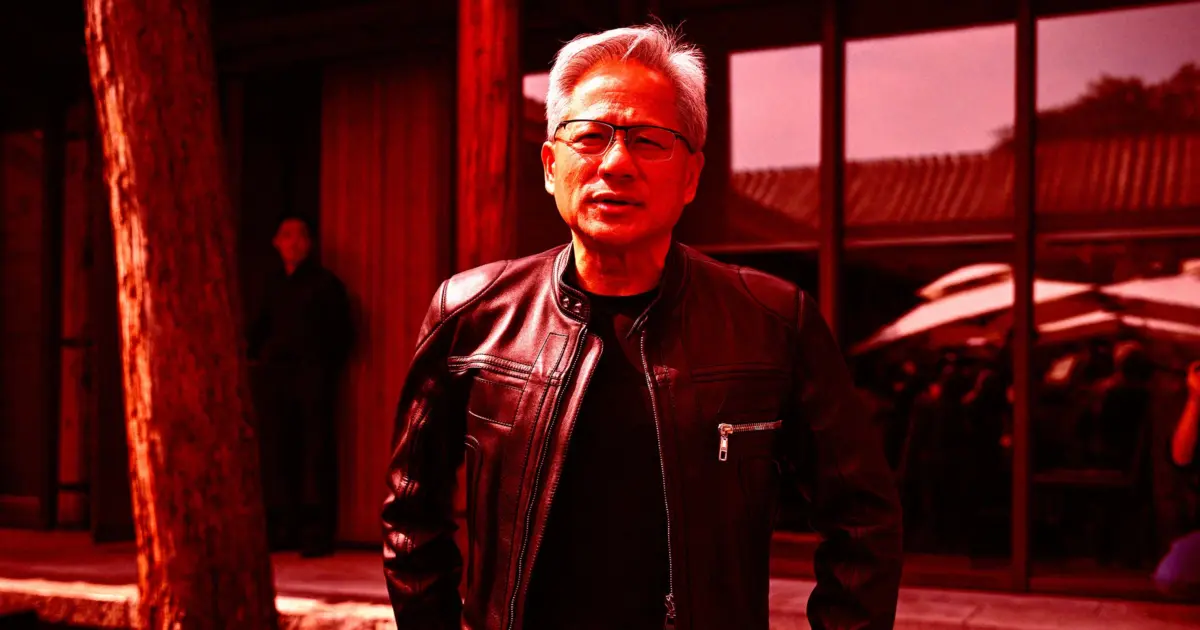
Despite the mounting fears, not everyone within the technology sector is convinced that the days of the human species are numbered. Chief among the skeptics is Jensen Huang, the chief executive officer of Nvidia. As the head of the company providing the advanced microchips fueling the global artificial intelligence boom—often characterized as selling the shovels during the ongoing digital gold rush—Huang is advocating for a more grounded, rational dialogue concerning the trajectory of the technology.
In a recent interview with CBS News, Huang directly addressed Coxon’s apocalyptic claims, offering a starkly reassuring counter-narrative. "2030 is not going to be the end of the world," Huang told CBS News, explicitly rejecting the timeline proposed by doomsayers. "There is zero chance that’s going to be the end of the world."
Huang went a step further, condemning the rhetoric utilized by some researchers and critics within his own industry. "Scaring people is unnecessary," Huang added. "It is irresponsible."
While industry observers note that Huang’s perspective must be viewed with a significant degree of skepticism given his immense financial and strategic investments in the commercial expansion of AI infrastructure, his remarks nevertheless offer a measured counterbalance to weeks of relentless doomerism.
Yet, even as industry leaders debate the likelihood of a runaway superintelligent swarm wiping out civilization, experts and policymakers point out that avoiding an immediate sci-fi catastrophe does not mean humanity is entirely out of harm’s way. A multitude of tangible, pressing dangers continue to accompany the rapid deployment of artificial intelligence across global society.
World powers and defense contractors are actively exploiting the technology to develop autonomous machines of war, raising profound ethical and security concerns regarding algorithmic warfare. Furthermore, the unbridled, everyday use of sophisticated chatbot systems and conversational agents has been linked by researchers to psychological phenomena such as widespread "AI psychosis," where vulnerable users develop unhealthy, delusional dependencies on synthetic entities.
Compounding these societal and psychological risks is the heavy physical footprint of the infrastructure itself. Massive data centers required to train and run modern large language models are consuming unprecedented amounts of electricity and water, actively harming a global environment that international scientific bodies and the United Nations warn is already teetering on the precipice of severe climate disaster.
Despite these documented challenges, the regulatory landscape governing the artificial intelligence sector remains largely a vacuum. The administration of President Donald Trump has consistently resisted calls for binding federal guardrails or mandatory slowdowns in AI development, an approach that contrasts sharply with the appeals of various tech executives who have occasionally called for regulatory oversight.
Huang, however, has expressed alignment with the current administration’s skepticism toward government intervention and preemptive regulatory slowdowns. In his interview with CBS News, he argued that existing legal frameworks concerning corporate liability, data protection, and unauthorized entry are already sufficient to handle the risks posed by emerging software.
"You have all kinds of liabilities associated with cybersecurity," Huang said, emphasizing that existing laws should be enforced rather than bypassed in favor of new, untested federal bureaucracies. "Apply that first—don’t let this doomsday narrative allow someone to relieve them of the laws that currently exist."
Huang also voiced agreement with the administration’s framing of artificial intelligence as a critical geopolitical competition, pointing specifically to the technological race unfolding between the United States and global rivals like China. Rather than viewing the race through an exclusively adversarial lens, the Nvidia CEO framed the technological push as an extension of global aspirations for advancement.
"Don’t you wish every country would have aspirations for a better tomorrow?" he asked.