
There has been a notable wave of confusion and anxiety across the tech industry this week concerning reports of severe financial penalties, drastic regulatory measures, and sweeping new artificial intelligence mandates rolling out within the European Union. In practice, the reality of these regulations is much more targeted, practical, and focused on a fundamental goal: making the presence of artificial intelligence clearly recognizable to the public whenever it is actually necessary, especially when dealing with artificially generated or manipulated content.
Beginning August 2, 2026, formal AI labeling becomes a strict legal requirement for any enterprise that offers digital services, products, or content to citizens within the European Union. Much like the European Accessibility Act that preceded it, this mandate is not restricted solely to companies headquartered inside member states. Instead, it casts a wide global net, affecting any business anywhere in the world that maintains EU operations, provided that their artificial intelligence outputs interact with or are consumed by individuals living within the EU. Understanding the practical boundaries of these rules is vital for modern product teams, developers, and compliance officers.
What Actually Needs Labelling
The overarching objective of these new transparency requirements is to ensure that anyone exposed to artificial intelligence content can effortlessly and unmistakably recognize that the material has been artificially generated or substantially altered. Under Article 50, paragraph 4, of the landmark European Union Artificial Intelligence Act, these explicit labeling obligations apply directly to specific categories of digital artifacts and interactive scenarios.
Both providers—the organizations that engineer or supply the underlying AI systems—and deployers—the entities that integrate and utilize those systems in practical environments—carry direct legal responsibilities. Similar to established frameworks like the General Data Protection Regulation and the European Accessibility Act, a company cannot evade its transparency duties under Article 50 simply by licensing an external AI capability from a third-party vendor.

However, this statutory requirement does not mean that every single instance of AI-assisted work or automated output must feature an explicit label. The vast majority of everyday AI-supported productivity tasks fall entirely outside the scope of these new transparency rules.
Not All AI-Generated Content Must Be Labelled
Outside of the strictly designated use cases, most AI-assisted workflows are exempt from the transparency mandates. Most notably, the disclosure obligation does not apply in situations where AI-generated text has undergone genuine review and editing by a human being, with a designated individual or corporate entity taking formal editorial responsibility for the final publication.

Some initial uncertainty has circulated regarding the precise legal boundaries of what constitutes matters of "public interest." On its own, the term encompasses vital societal pillars such as public health, safety, environmental protection, economic and financial stability, politics, science, and culture. If artificial intelligence systems generate product claims, public communications, or informational assets that touch upon these sensitive domains, the disclosure rule is triggered.
Legal experts and regulatory advisory firms recommend that organizations proactively label realistic AI-generated illustrations, photographs, and digital imagery as a precautionary measure for advertising, public relations, and other commercial communications. Any artificial intelligence-generated product illustrations, promotional posters, or realistic photos require a clear disclosure as long as they closely resemble a real person, physical place, tangible object, or authentic historical event.

The Fine Line Between Edited and AI-Generated Content
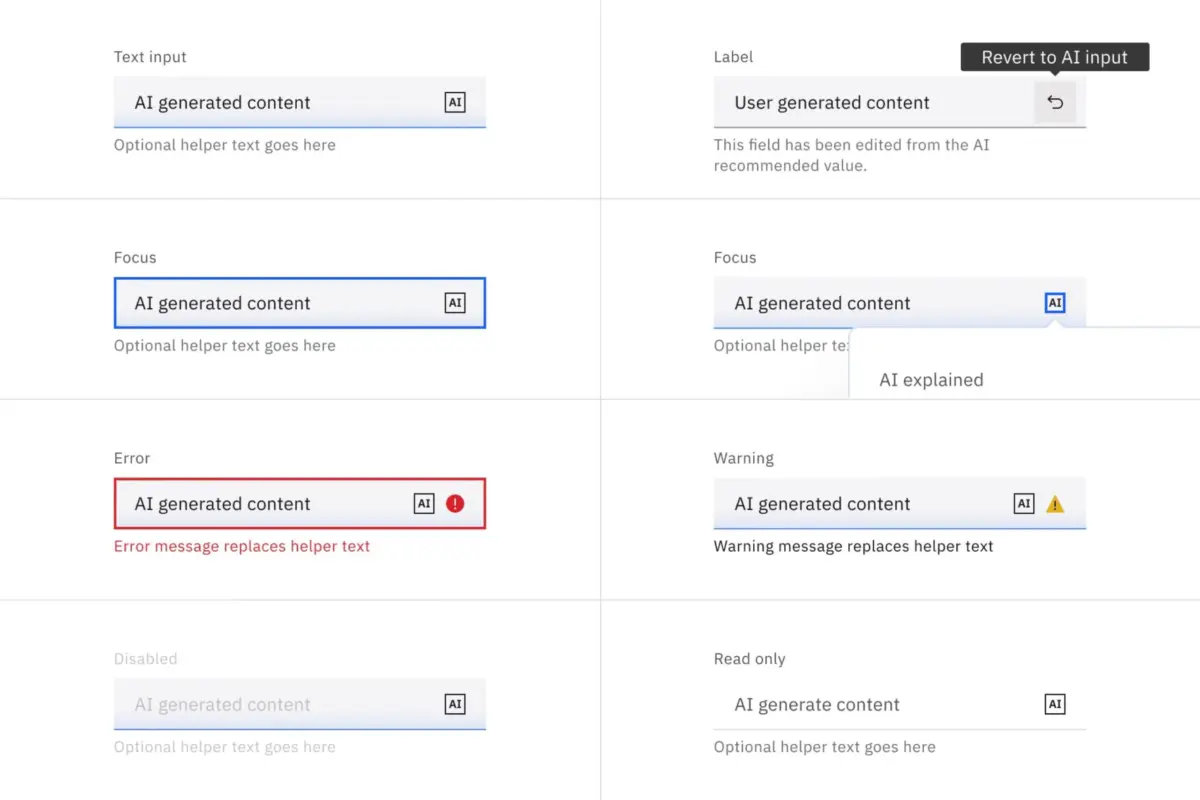
A critical question facing digital creators is determining the exact threshold where edited artificial intelligence content ceases to be classified as raw AI content. For instance, when a digital form field is pre-populated by an AI engine and a human user subsequently modifies the text, does the output retain its AI classification? The guidance issued by the European Commission provides nuanced distinctions.
Small, assistive edits—such as automated spellchecking, basic grammar corrections, text formatting, image cropping, color adjustments, and machine-generated language translations—do not constitute autonomous AI generation. Conversely, more substantive alterations are classified firmly as artificial intelligence generation. These include automated text summarization, composite image creation, substantial structural rewrites, or the programmatic addition and removal of visual elements from a photograph. In practical terms, fine-tuning a sentence originally written by a human is generally permissible without a label, whereas generating an independent sentence from scratch requires a formal public disclosure.

Furthermore, a superficial editorial workflow where a human simply skims a fully automated text before publication does not fulfill the legal threshold for editorial review. The European Commission explicitly requires substantive human oversight, backed by a named person who assumes accountability for the editorial control of the output. The fundamental division lies between intentional manual intervention and automated generation, with the latter always requiring clear disclosure unless operating within closed business-to-business environments.
Why AI Sparkles Are Probably Not Enough
As part of the supporting Code of Practice, the European Commission has introduced an official EU artificial intelligence icon set. This includes a standardized, dedicated "AI" mark designed to provide a clear and distinguishable visual signal rather than relying on the generic sparkle symbols that many consumer software products traditionally use to indicate artificial intelligence features.

The standard sparkle icon is increasingly viewed by regulators as too ambiguous for compliance purposes. This ambiguity stems largely from the fact that sparkles have historically been used across consumer software to signify that a feature is "AI-powered," rather than explicitly stating that a specific piece of visible content was generated by a machine. The European guidelines actively discourage ambiguous symbols in favor of direct communication.
Regulatory authorities have emphasized that deploying an icon alone does not automatically establish legal compliance. A barely discernible icon, a regulatory notice buried deep within a webpage footer, or a label that flashes momentarily on screen fail to meet the legal standards. Instead, the icon must remain clearly visible, accompanied by plain-language text labeling, and fully accessible to assistive technologies used by individuals with disabilities. Pairing any visual icon with explicit plain text, such as an "AI-generated" tag, represents a much safer compliance approach, and this identification must persist even if the content is downloaded or reshared across other platforms.

A Global Regulatory Pattern
While these transparency requirements originate from European legislative bodies, they reflect a broader worldwide regulatory shift rather than an isolated legal development. Similar disclosure frameworks and legal expectations have recently emerged across various international jurisdictions, signaling an industry-wide pattern rather than a temporary coincidence.
These parallel global developments demonstrate that digital product teams shipping artificial intelligence features must carefully evaluate their approach to content labelling and user interface design. Establishing a comprehensive strategy for identifying which outputs require disclosure and which do not has become an essential operational priority for modern technology companies.

Ultimately, these transparency mandates are rooted in a straightforward principle: when artificial intelligence content can easily be mistaken for human-created work, creators and platforms must state so clearly, obviously, and unambiguously. Parts of a user interface that rely on generative models must disclose their nature, helping users distinguish between authentic human creation and automated outputs to the mutual benefit of the entire digital ecosystem.