
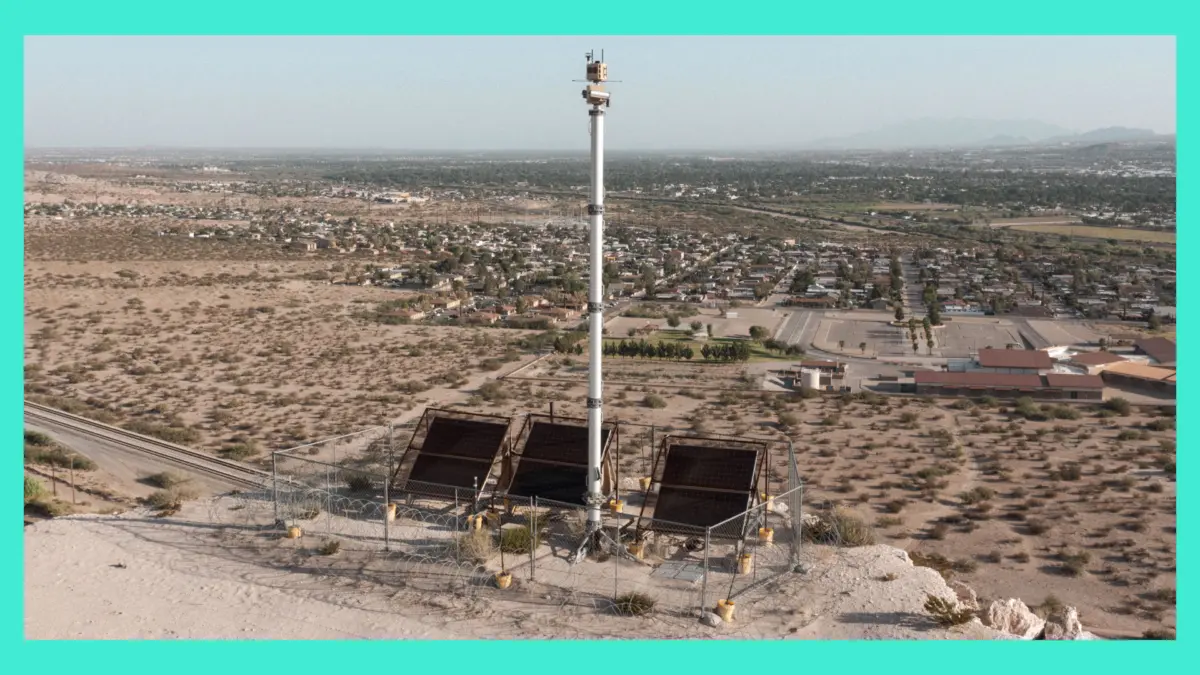
Over the past twenty-five years, the United States government has invested billions of dollars into constructing what officials have frequently described as a “virtual wall.” Stretching across the rugged terrain of the southern border, this expansive network of surveillance towers, high-powered optics, infrared cameras, and radar systems was pitched to the American public as a technological marvel. The core promise made by successive administrations and defense contractors was clear and reassuring: these advanced systems would significantly enhance national security, dramatically improve the detection and apprehension of unauthorized border crossers, and ultimately save lives by giving federal agents the ability to respond swiftly to individuals in distress.
However, a groundbreaking and exhaustive investigation published by MIT Technology Review has shattered these long-standing official claims, exposing a devastating reality on the ground. The investigation has meticulously documented more than a thousand instances where individuals successfully moved through remote areas directly watched and monitored by these surveillance towers, only to be left entirely unreached and unapprehended by authorities. Tragically, many of these individuals ultimately perished in the harsh, unforgiving environments of the borderlands, dying in places where technology was ostensibly keeping watch.
Perhaps most alarming is that this failure is not limited to older legacy equipment. The investigation revealed that some of these tragic deaths occurred directly under the watch of newly installed, state-of-the-art, artificial intelligence-powered towers. These newer systems were specifically designed to autonomously spot people, analyze movement patterns in real-time, and alert border personnel without human delay. Yet, despite the infusion of cutting-edge machine learning and advanced automation, the fundamental disconnect between detection and humanitarian rescue remains dangerously broken.
The findings uncovered by the MIT Technology Review reporting team expose a humanitarian crisis along the southern border that is far more visible, measurable, and systemic than previously understood. Rather than serving as a life-saving safety net or an efficient enforcement mechanism, the virtual wall has repeatedly failed to deliver on its basic security and humanitarian promises. The technology detects movement, but the promised intervention often fails to materialize, leaving vulnerable human beings to face extreme elements alone under the quiet gaze of automated lenses.
In response to these profound findings, the editors and reporters behind the investigation are hosting a special, in-depth conversation to examine the systemic failures of border surveillance technology and to bring the human stories of the borderlands to light. This exclusive event offers a vital platform for the journalists to discuss their months of reporting, analyze the structural flaws in how border technology is deployed and managed, and honor the memories of those who lost their lives in areas supposedly under constant observation.
The live discussion features a panel of prominent journalists from the publication, including Editor in Chief Mat Honan, Senior AI Reporter James O’Donnell, and Senior Features and Investigations Reporter Eileen Guo. Together, these speakers will unpack the complex intersection of artificial intelligence, federal policy, border enforcement, and human rights, providing subscribers with an unfiltered look at how billions of dollars in technology have interacted with one of the most pressing humanitarian and political challenges of our time.
For readers and subscribers interested in attending this critical conversation, registration is currently open through an online event portal, allowing participants to engage directly with the investigative team as they break down the implications of their reporting. As the debate over border security, technological spending, and humanitarian obligations continues to evolve in Washington and across the country, this investigation serves as a stark reminder of the human cost hidden behind the promises of modern surveillance.