

Every time a player unleashes a blazing meteor in Diablo 2 or casts a sweeping cloud of daggers across the battlefield in Baldur’s Gate 3, they are engaging in a cultural tradition deeply rooted in an unexpected historical continuum. Long before modern fantasy role-playing games introduced tactical area-of-effect spells, the conceptual framework behind these mechanics was being forged by sweeping socio-economic shifts, mid-century literature, and the iterative rules of early tabletop wargaming.
Tracing the arc of history from the twilight of the agrarian age to digital spellcasting reveals a fascinating Rube Goldberg machine of cause and effect. It connects the smoke-choked factories of eighteenth-century England directly to the digital battlefields of modern PC gaming, illustrating how societal anxieties about technology and industry ultimately transformed how we imagine magic.
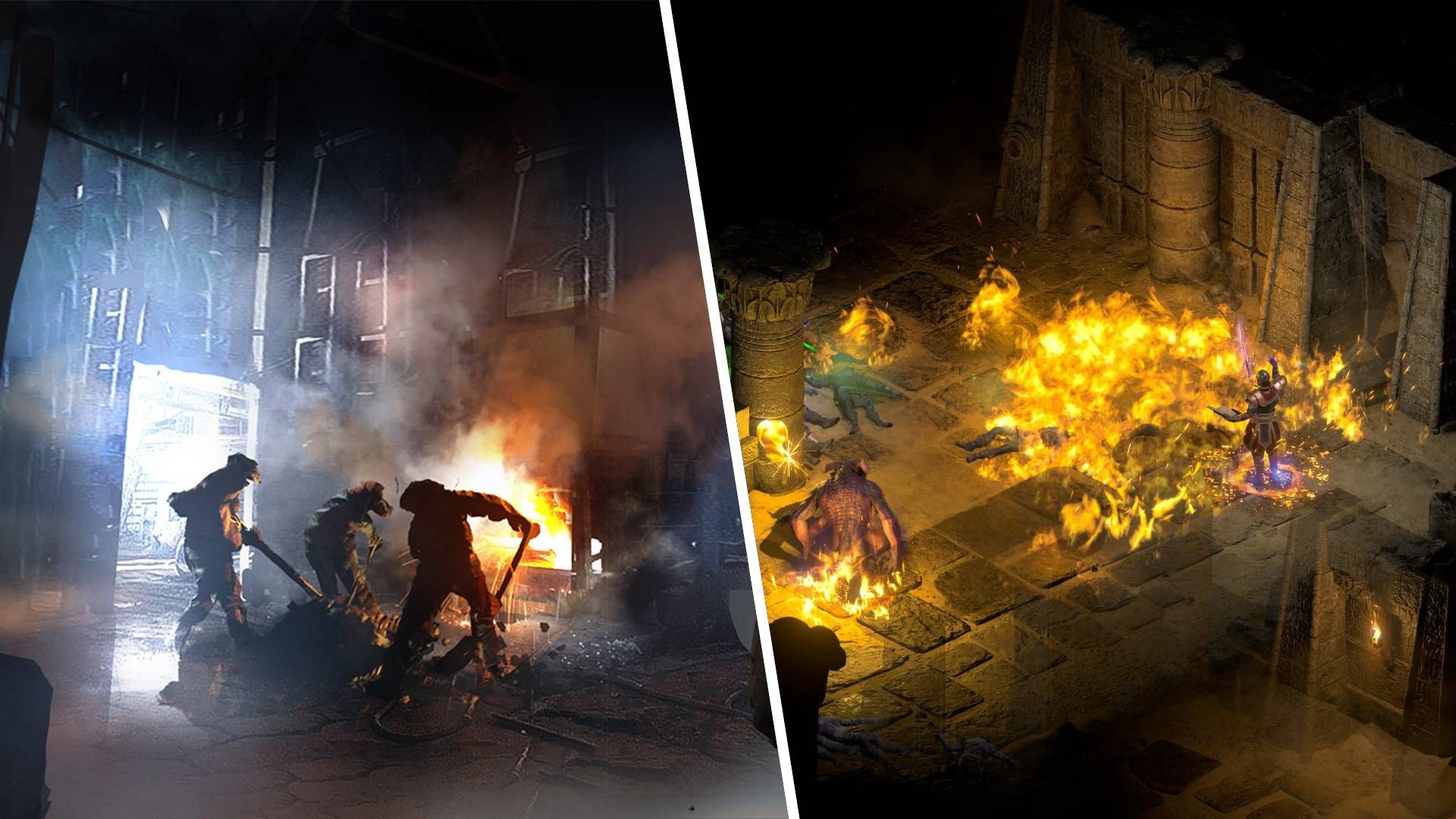
The Industrial Revolution and Area-of-Effect Spells in RPGs
Rise of Industry
Between 1760 and 1840, daily life for much of the Western world underwent a radical transformation driven by the Industrial Revolution. Technological innovations, most notably improvements to the steam engine and the adoption of coke instead of traditional charcoal in larger blast furnaces, completely reshaped manufacturing and society. Alongside broader economic and social factors, these advancements gradually replaced skilled independent craftsmen with machine tools, cementing the dominance of the factory system.
For the contemporary observer, these shifts unlocked entirely new chapters in societal development, paving the way for heavy industrialization, mass transit, and mechanization. Yet the physical and environmental consequences of this transition were profound, turning verdant landscapes into centers of mass production and forever altering humanity’s relationship with the natural world.
The Black Country
In 1896, a young J.R.R. Tolkien moved with his family from industrial Birmingham to rural Worcestershire. Just four years old at the time, Tolkien developed a deep, formative affection for the English countryside that would profoundly influence his later literary creations. Elements of this landscape left permanent marks on his mythology: his aunt’s farm, Bag End, provided the name for the ancestral home of the Baggins family, while local landmarks such as Moseley Bog in Shire Country Park inspired the atmospheric Old Forest.
Tolkien would later look back on this era as a "lost paradise." The tranquility of his childhood environment, however, was short-lived. In the introduction to the second edition of The Lord of the Rings, he reflected on the rapid destruction of the world he knew: "The country in which I lived in childhood was being shabbily destroyed before I was ten, in days when motorcars were still rare objects (I had never seen one) and men were still building suburban railways. Recently I saw in a paper a picture of the last decrepitude of the once thriving corn-mill beside its pool that long ago seemed to me so important."

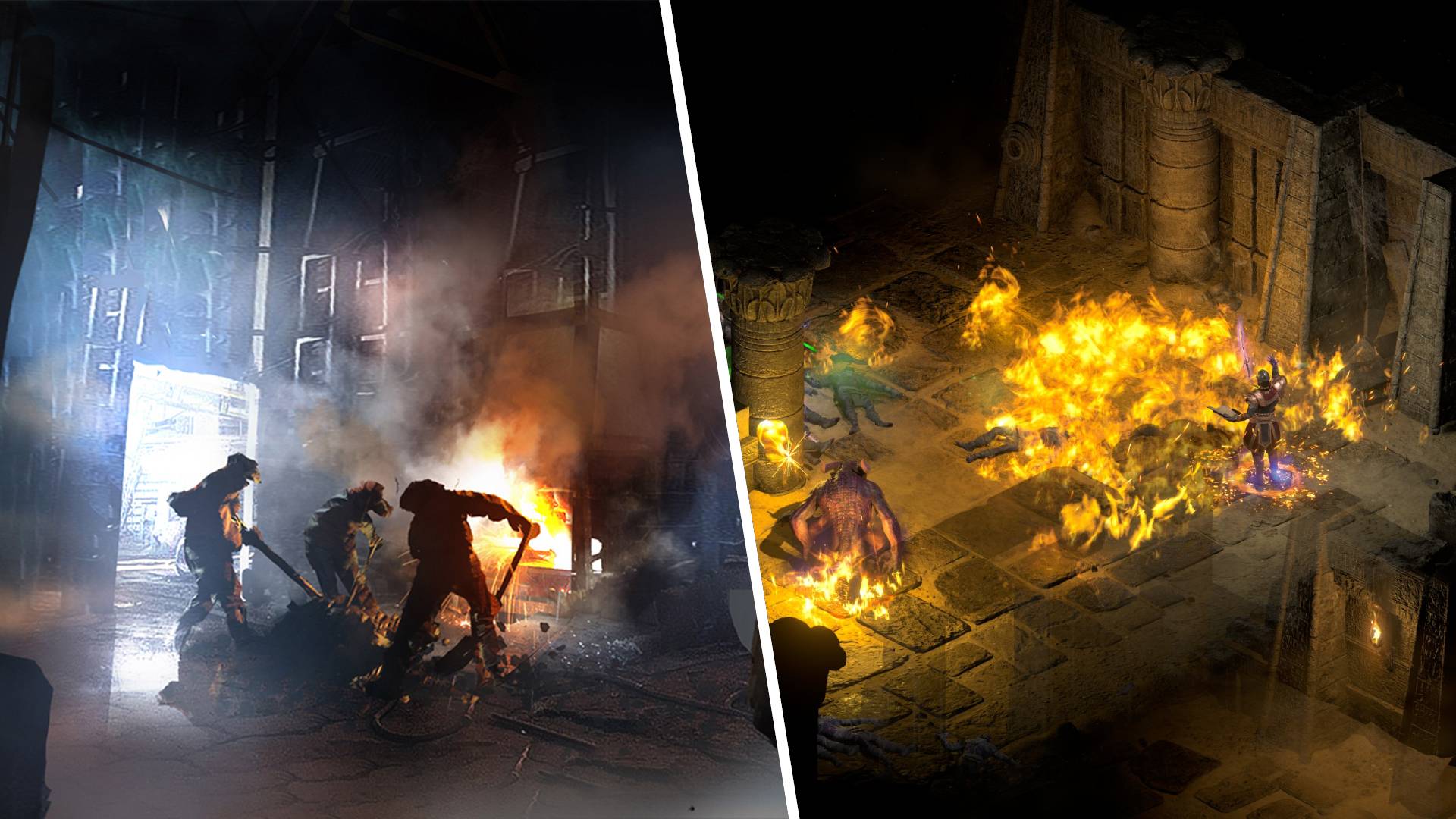
The soot-darkened region of the English Midlands that emerged from this industrial boom remains known as the Black Country to this day. Author Caitlin Moran illustrated this historical transformation in her novel How to Build a Girl, recounting how a working-class Midlands father explained the landscape to his daughter. Describing the valley as a place that once glowed with the fires of foundries, forges, and ironworks, he noted that the perpetual flames and towering sparks looked like hell itself—and ultimately served as the blueprint for Mordor. Fittingly, in Tolkien’s invented language of Sindarin, Mordor translates directly to "the Black Land."
The Devilry of Saruman
When The Lord of the Rings was published in 1954, Tolkien’s depiction of magic and industry closely mirrored his personal anxieties about the modern mechanical age. His wizards served as physical embodiments of these conflicting philosophies. Saruman, who ultimately turns to evil, erects smoke-belching industrial complexes around the tower of Orthanc and later extends his devastation to Hobbiton. He utilizes magical fire to manufacture powerful explosives capable of breaching stone fortifications, an industrial deployment of arcane energy noted by Aragorn during the Battle of the Hornburg when he warns that enemies have lit the fires of Orthanc.
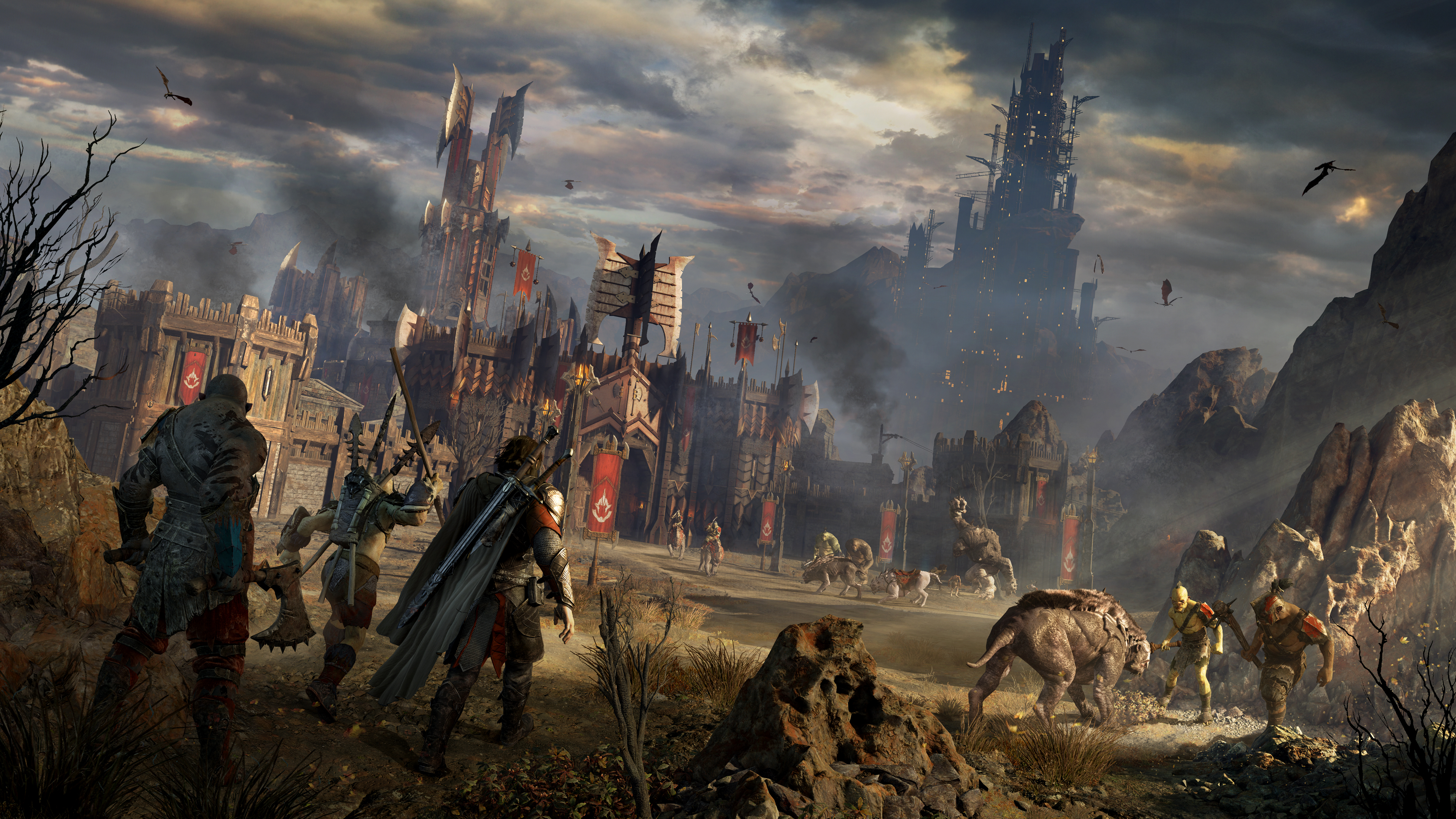
In contrast, Gandalf employs his magical abilities with deliberate restraint, often favoring subtle illusions and bright fireworks over destructive force. While Gandalf is certainly capable of greater displays—reminding the Balrog that he is "a servant of the Secret Fire, wielder of the flame of Anor"—he exercises caution. Although he uses burning pine cones to deter wolves in The Hobbit and summons magical flames to protect the Fellowship during their journey toward Moria, these overt displays of power consistently bring unintended consequences and regret.
Fire of Wrath
Despite Gandalf’s generally sparing and dramatic use of magical fire, his occasional outbursts left a lasting impression on the imaginations of early wargamers. In 1970, Leonard Patt’s Rules for Middle Earth, developed for the New England Wargamers Association and published in their zine The Courier, introduced mechanics that would profoundly shape game design for decades.
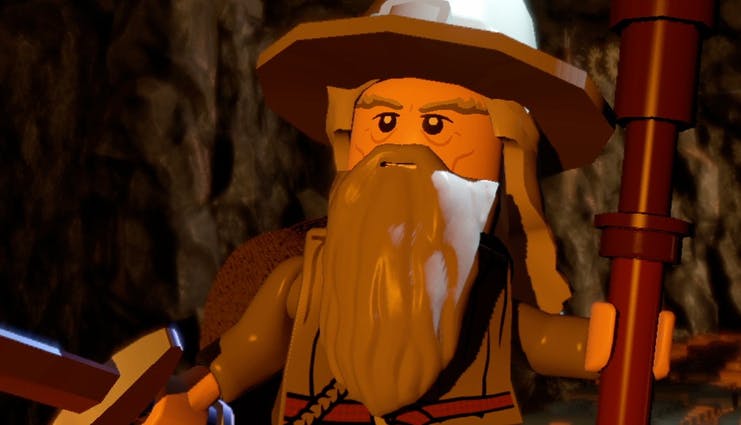
Patt modeled Gandalf’s magical fire using principles borrowed directly from military artillery. His description of the "fire ball" marked the first recorded instance of a magical spell utilizing an area-of-effect rule, while also introducing the concept of the saving throw to tabletop gaming. According to Patt’s rules, wizards could cast a fireball every other turn over a specific distance, with hits determined by a grid and a designated burst circle. Any miniature figures caught within the blast radius were instantly eliminated, save for designated heroes and anti-heroes who could avoid destruction through a successful die roll.
Backdraft
The foundational work of wargaming soon birthed modern tabletop role-playing. In 1974, Gary Gygax and Dave Arneson published Dungeons & Dragons through TSR. The rules expanded upon the fantasy supplement for the Chainmail wargame, which had itself drawn inspiration from Patt’s Rules for Middle Earth.

In original editions of Dungeons & Dragons, the iconic fireball spell featured a specific burst radius that conformed to the physical geometry of enclosed spaces. This meant that casting the spell within a cramped subterranean chamber could cause the magical blast to recoil back toward the caster, a perilous mechanic that brought an abrupt and fiery end to many low-level magic users throughout early campaigns.
Screen Burn
As computing technology advanced through the mid-1970s, developers began translating tabletop rules into digital formats. In 1975, university student Daniel Lawrence adapted Dungeons & Dragons into a digital environment on a PDP-10 mainframe computer. Initially titled DND and later renamed Telengard for commercial distribution, it stood as one of the earliest computer role-playing games and included a fireball spell. However, because early combat encounters in Telengard were strictly structured around one-on-one engagements, the spell lacked an area-of-effect component.
Throughout the 1980s, early video games experimented with various methods to simulate broader magical damage. Titles like Wizardry introduced spells capable of targeting portions or entire groups of enemies, while Ultima 3 featured spells that allowed players to cast multiple individual fireballs at separate targets. By 1985, Ultima 4 introduced a tremor spell capable of affecting every enemy visible on the screen, and subsequent installments continued to refine directional and geometric spell shapes.
A major milestone arrived in 1988 when Strategic Simulations, Inc. (SSI)—the developer behind the tactical role-playing game Wizardry’s Crown—secured the official license to develop digital Dungeons & Dragons titles. Their subsequent release, Pool of Radiance, utilized the rules of Advanced Dungeons & Dragons 1st Edition. Crucially, the game incorporated a faithful area-of-effect fireball spell, complete with the genuine risk of incinerating the player’s own party members if mismanaged—fulfilling, in digital form, the cautionary themes Tolkien had established decades prior.