

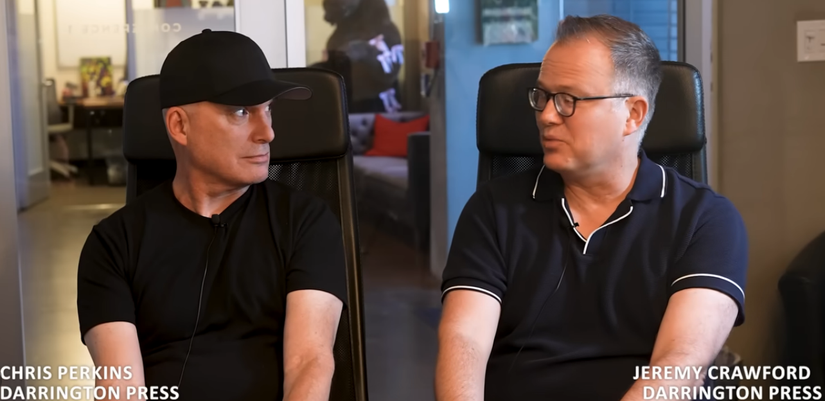
For over a decade, Chris Perkins and Jeremy Crawford defined the modern era of Dungeons & Dragons. As two of the lead designers for the game’s fifth edition, they collaborated with Mike Mearls and other industry veterans to forge the visual identity, rule architecture, and mechanical flow of contemporary tabletop roleplaying games—work that later extended seamlessly into the updated 5.5 edition of the legendary franchise. Their imprint extends far beyond the core rulebooks; they also authored some of the most iconic, critically acclaimed, and enduringly popular adventures published by Wizards of the Coast over the past ten years, including Curse of Strahd, which stands as the best-selling D&D adventure of all time.
Given that deeply entrenched legacy, it marks a profound turning point in the tabletop roleplaying game (TTRPG) landscape that both Perkins and Crawford made the leap to join Critical Role’s publishing division, Darrington Press. Stepping into unfamiliar territory to work on Daggerheart—a fully realized, standalone TTRPG system whose foundational rules they did not originally create—demanded a complete shift in creative perspective. Yet, as the industry veterans explain, the transition has not only been smooth, but it has also offered an invigorating breath of fresh air for designers who spent decades refining a single, codified ruleset.
Chris Perkins and Jeremy Crawford Discuss Leaving D&D for Daggerheart

Stepping away from the world’s most dominant roleplaying game to help shape a major challenger is no small feat, but Perkins and Crawford view the transition as a natural evolution in their professional lives. In a video interview with Polygon, Perkins reflected on the ease of building upon existing collaborative frameworks, noting that even within the walls of Dungeons & Dragons, they were always leaning on the contributions of past editions and the enduring labors of the creators who came before them. The process, he suggests, was never about crafting a game entirely out of a vacuum.
Crawford echoed that sentiment, describing his current work on Daggerheart as a sheer delight. He points out that the system strikes a delicate and powerful balance: it features enough flexible, modular parts for designers to easily manipulate and build new mechanical offerings, yet it remains fresh enough that an enormous amount of untapped design space lies open for future expansions and sourcebooks.
Much like every successive iteration of Dungeons & Dragons draws inspiration from decades of tabletop history, Daggerheart has been visibly shaped by the broader TTRPG ecosystem, including D&D itself. Many of the mechanics baked into Daggerheart mirror house rules that organically evolved across kitchen tables over many years. For instance, the Syndicate Rogue class feature known as "Well-Connected" directly translates to the popular community house rule affectionately referred to as "I know a guy," a piece of table lore that Crawford famously addressed during his tenure at Wizards of the Coast.
Crawford emphasizes that this web of creative lineage extends far beyond any single publisher or system. The modern TTRPG landscape is characterized by a vibrant community of designers and players constantly exploring innovative ways to interact and construct fictional worlds. He credits the original Daggerheart design team with capturing a rare kind of creative lightning in a bottle, successfully synthesizing the scattered experiments of countless gaming groups and independent designers into a cohesive, polished standalone product.

Collaborative Storytelling is in Daggerheart’s DNA
The concept of collaborative storytelling is frequently invoked to describe the core experience of playing TTRPGs, whether players sit down for a session of Dungeons & Dragons or any other system. It encapsulates the dynamic interplay where the Game Master or Dungeon Master introduces obstacles, environments, and narrative stakes, while the players’ choices actively dictate how the overarching story unfolds in real-time. While a skilled DM might always leave room for improvisation, that collaborative philosophy is rarely embedded explicitly into the core rule architecture of D&D. Instead, it has historically relied upon the interpersonal dynamics and good habits of individual tables.
Daggerheart approaches this dynamic differently by hardcoding collaborative storytelling directly into its structural DNA. Both Perkins and Crawford have fully embraced this design philosophy, viewing it as a logical evolution of how people actually play at the table. Crawford explains that the foundational ethos of the game is about taking the intuitive practices that gaming groups have naturally gravitated toward for years, validating them, and codifying them into official game rules.
This philosophy extends far past basic mechanics and permeates the creation of published supplements, campaign frames, and structured adventures. Perkins points out that within the official Daggerheart campaign frames, the text frequently breaks the fourth wall to address the players directly or instructs the Game Master to turn to the players and prompt them to contribute world-building details on the spot. As Perkins and his colleagues develop upcoming adventures for the system, they are deliberately baking this participatory design into the narrative framework. There are designated moments in every adventure where the players are explicitly handed the steering wheel. For Perkins, who has spent a literal lifetime authoring traditional adventure modules, this represents a fundamental and deeply refreshing shift in how adventures are conceptualized and written.
Traditional adventure paths have long functioned primarily as linear or branching toolkits for the Dungeon Master, who then translates that material for the players. While exceptional DMs have always found ways to incorporate player input into the narrative fabric, providing system-level mechanics and narrative prompts that force players to actively shape the world during play represents a monumental design shift. While indie publishers have experimented with similar narrative structures in various indie games over the years, Daggerheart possesses the platform and resources to execute this philosophy at a scale that could permanently influence how mainstream commercial adventures are designed across the entire industry.
Daggerheart is Set to Revolutionize the TTRPG Industry
As Perkins spearheads the development of a massive upcoming anthology containing over more than 100 Daggerheart adventures, he experiences a creative climate that must feel somewhat akin to what Gary Gygax and his peers felt in the late 1970s while assembling the foundational modules that defined Dungeons & Dragons for generations. The freedom to chart entirely new territory without the heavy burden of decades of established dogma is uniquely liberating.
Perkins notes the sheer excitement of discovering what a true Daggerheart adventure looks like when there are only a handful of published examples currently circulating in the wild. It serves as a delightful thought exercise unlike anything he encountered during his decades working on codifying D&D content, where conventions were already deeply entrenched. With Daggerheart, the team starts with a blank slate, giving them the freedom to take bold creative risks, experiment wildly, and discover what resonates best with players.
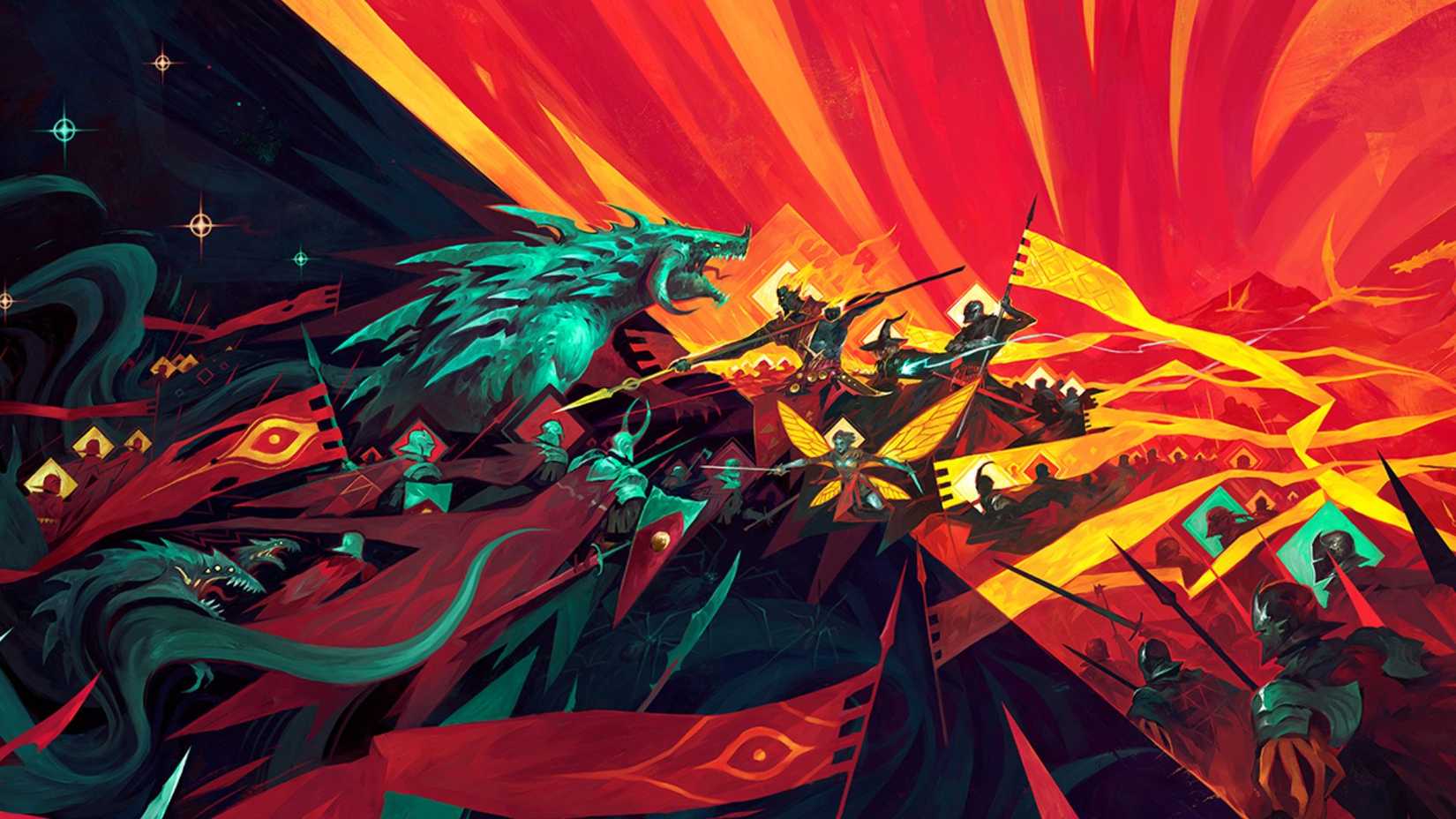
Meanwhile, Crawford is quietly developing a distinct, spooky campaign setting, though official details remain tightly under wraps. He hints that the setting delivers a rich dark fantasy realm that balances genuinely frightening elements with inviting hooks capable of engaging players who might not typically gravitate toward traditional horror themes. Having already teased the inclusion of the Blood Hunter and Summoner classes, Crawford adds that keen-eyed fans can trace conceptual roots of the setting back to elements teased during Matt Mercer’s recent Age of Umbra: Sallowlands streaming series.
While the initial rollout of Daggerheart featured a relatively measured debut, the publishing schedule is poised to accelerate significantly. With plans for roughly two major tentpole releases each year, Darrington Press is actively positioning Daggerheart as the most substantial commercial competitor to Dungeons & Dragons in decades. Yet, for the designers steering its course, the horizon represents something much larger than a mere corporate rivalry or a fractured fandom.
Crawford frames the current moment not as a zero-sum culture war between competing game systems, but as a collective endeavor shared by the entire tabletop community. He reflects that as the industry matures, his primary concern remains the health and progression of role-playing games as a unique artistic medium. Because TTRPGs offer such an irreplaceable avenue for human connection and shared entertainment, seeing the art form advance through experimentation in any game system remains a cause for genuine excitement.