

A data science notebook dies the exact moment its creator or a colleague clicks "Restart Kernel and Run All" and the workflow grinds to a halt. Often, nobody notices for a week. The analysis was finished, the primary chart made its way into a presentation deck, and the file was successfully pushed to a repository. Then, weeks later, an auditor or a team member asks where a specific baseline number originated. You open the notebook, execute it from the very top, and cell twelve abruptly throws a key error on a data column that was renamed in cell thirty-one and entirely deleted in cell forty-four. Because the output cells still display the old numbers from the previous session, the notebook retains a deceptive appearance of health while being entirely unrunnable.
The underlying habits that prevent this catastrophic drift in data workflows are remarkably inexpensive in terms of time and effort. Industry practitioners are increasingly looking at ways to apply these defensive programming habits to real datasets while keeping the entire script concise. By examining a common historical dataset used in technical evaluations—specifically an Olympic athlete events record—developers can learn how to structure notebooks that remain resilient, verifiable, and reproducible over long periods.

The Data and the Hidden Pitfalls
The dataset frequently used to demonstrate these principles is structured around Olympic athlete events, capturing granular details where every individual row represents a single athlete competing in a specific event. In typical extracts containing several hundred rows covering numerous historical games and events, various athletes appear multiple times across different competitive cycles, while others appear only once. Missing values in performance metrics, such as unawarded medals, often manifest as blank entries or null values, which can easily skew downstream aggregations if they are misinterpreted as missing data rather than non-medal outcomes.
When exploring such data, initial inspections using standard summary statistics or preview commands often fail to reveal structural anomalies. For instance, data extracts can sometimes harbor duplicate entries or artificially planted test records introduced during pipeline testing. If an analyst relies solely on superficial checks, these anomalous rows go entirely unnoticed, subtly shifting statistical baselines, medal distribution rates, and demographic averages. Establishing robust habits for configuration, validation, and testing helps catch these discrepancies before they corrupt final reports.

Establishing Strict Configurations and Scoped Functions
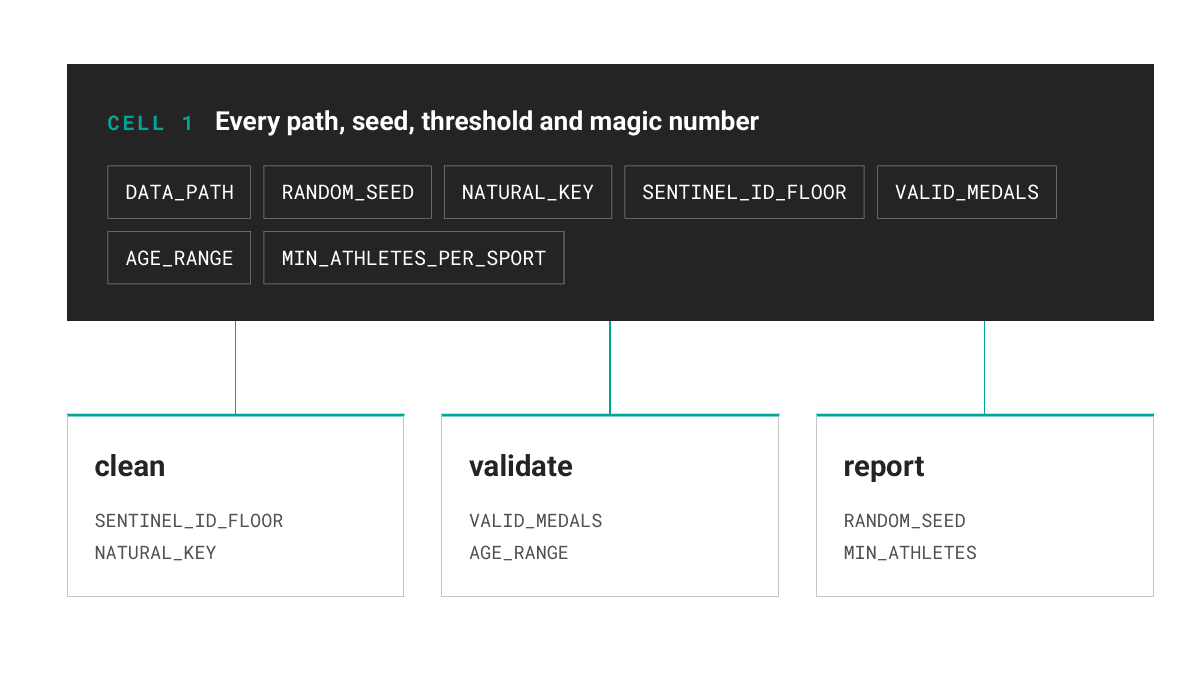
The first line of defense against fragile notebooks involves strict configuration management. Every file path, random seed, threshold value, and magic number should be consolidated cleanly into the very first cell of the notebook, with nothing else included. This practice ensures that anyone reviewing the notebook months later can inspect every underlying assumption within seconds without scrolling through endless blocks of code. Furthermore, when source files shift locations or analytical thresholds require modification, there is exactly one designated place to implement the change.
Setting a consistent random seed is equally critical, even in workflows where direct sampling is not immediately apparent. Operations such as train-test splits, internal data permutations, or clustering initializations draw directly from the global random state. A notebook that yields fluctuating outputs on different days of the week quickly erodes stakeholder trust.
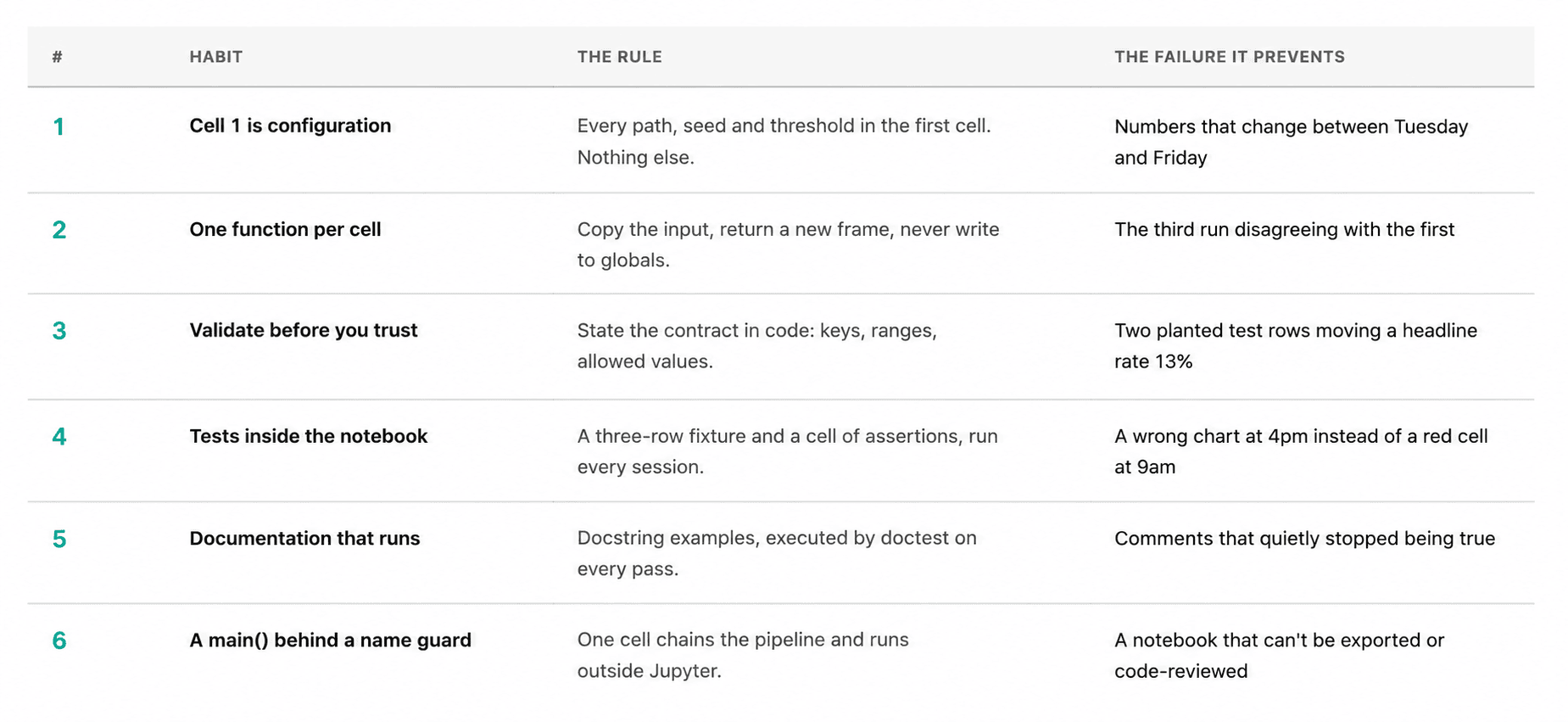
To prevent execution order from breaking the notebook, analysts should adopt a functional programming approach where each cell either defines a single function or calls one, but never does both. Crucially, these functions must never mutate variables created by other cells. By incorporating explicit data copying at the beginning of each transformation function, cell execution order stops mattering. Re-running a feature engineering function multiple times consistently yields the exact same data frame, preventing the classic notebook failure mode where repeated executions produce conflicting results.
Data Validation, Embedded Testing, and Documentation
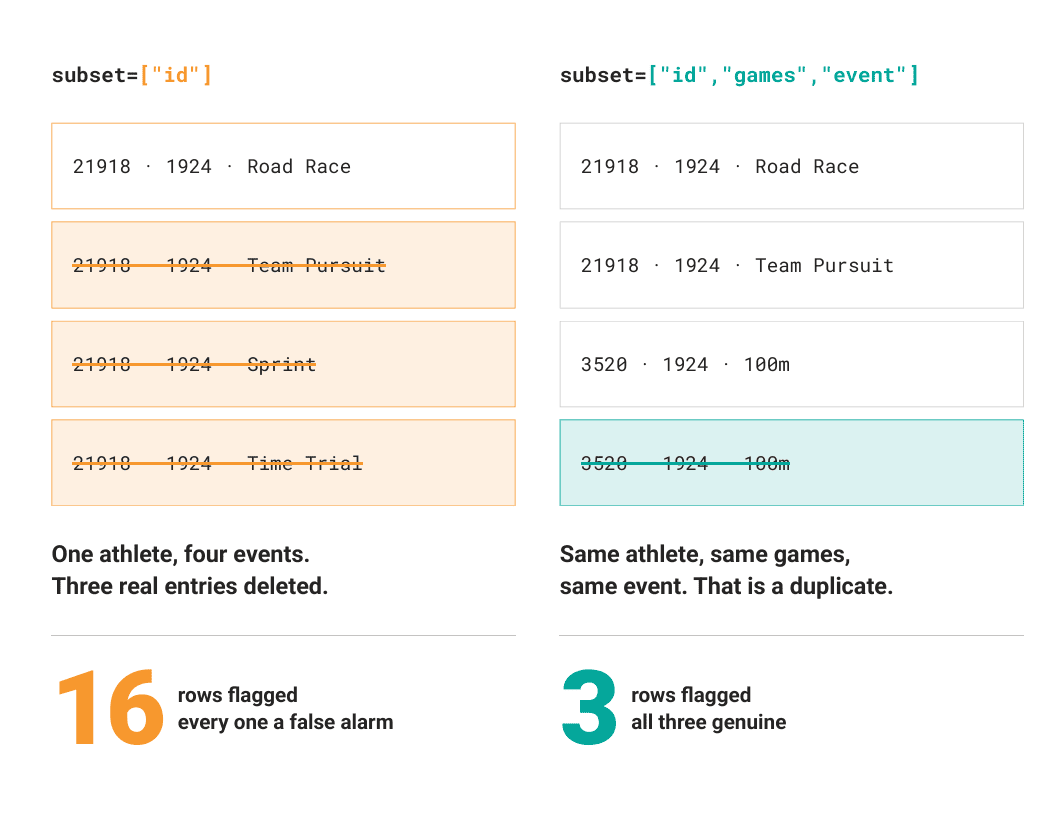
Before trusting any incoming dataset, analysts must formally write down their baseline assumptions about the data schema and allow the notebook to verify them automatically. This involves checking for expected columns, identifying duplicate rows based on natural keys rather than unique identifiers, and flagging unexpected values in categorical or numerical ranges. Proper validation can immediately uncover subtle data corruption, such as misplaced test records or erroneous formatting that would otherwise bypass standard visual inspections.
Rather than relying on external testing frameworks, analysts can embed lightweight verification routines directly within the notebook environment. Using small, controlled data fixtures and standard assertions, developers can continuously verify that cleaning routines drop duplicates correctly, handle missing categorical values appropriately, and preserve input immutability. Running these checks at the start of every analytical session ensures that code regressions are caught immediately.
Documentation also benefits from a rigorous, executable approach. Traditional comments tend to rot over time because no automated system checks their validity. By embedding functional examples within docstrings and executing them programmatically, documentation and actual behavior remain permanently synchronized. If a developer alters an underlying formula, any mismatch in the documented expectations surfaces immediately during execution.
Ensuring Script Portability and Long-Term Reproducibility
The ultimate test of a robust data science notebook is its ability to run seamlessly as a standalone script from the command line. By structuring the final sections of the notebook to chain analytical functions together cleanly under standard execution guards, practitioners ensure that the code can be easily converted, peer-reviewed, and integrated into larger automated pipelines. Without this careful structuring, top-level execution statements can trigger unintended side effects upon import.
Incorporating randomized spot checks alongside aggregate metrics provides a vital qualitative safeguard, allowing analysts to visually verify actual record values alongside statistical summaries. Ultimately, adopting these disciplined habits requires only a modest initial investment of time during the creation of the first notebook, yielding massive dividends in efficiency and reliability for every subsequent project. By enforcing strict configuration, functional purity, embedded validation, and automated testing, data scientists can ensure their notebooks survive the test of time and remain trustworthy long after the initial analysis is complete.