
In a newly published letter from behind bars, Keonne Rodriguez, co-developer of the privacy-focused Bitcoin application Samourai Wallet, has documented what he described as the "absolute worst 30 days of my life." Writing from Federal Correctional Institution (FCI) McKean in Pennsylvania, Rodriguez detailed the grueling, month-long ordeal of being transported through the Federal Bureau of Prisons (BOP) transit system—a journey that was originally intended to be a straightforward four-hour drive between facilities.
The dispatch, titled "Samourai Letter #7: Notes From The Inside 1," breaks a silence of several months. Rodriguez explained that between June and July, he was completely cut off from writing materials, postage, and the rudimentary prison email network while in BOP custody. Upon arriving at FCI McKean, the severe psychological and physical strain of the transfer left him shell-shocked, requiring weeks to decompress before he could process the experience into a coherent report.
Rodriguez’s account provides an unvarnished look at the internal logistics of prisoner transportation within the United States federal prison system, detailing crowded holding cells, intense physical restraint, open drug use, security misclassifications, and severe administrative disorganization.
"I finally put pen to paper to document […] the absolute worst 30 days of my life"
The process began on June 5, when Rodriguez was notified at Federal Prison Camp (FPC) Morgantown—a minimum-security facility in West Virginia—that he was being transferred to participate in a residential drug and alcohol treatment program. The program, which spans nine to ten months, offers inmates who successfully complete it up to a one-year reduction in their prison sentences. Considering the substantial reduction in time, Rodriguez determined that moving to a new institution was worth the transition.
Because the BOP keeps transit dates and destinations secret from inmates for security reasons, prisoners are typically forced to rely on word-of-mouth estimates. Transfers routinely involve being placed on planes operated by the United States Marshals Service, flown to the BOP’s central transit hub in Oklahoma City, held for several days or weeks, and then flown to their final destination. Other inmates informed Rodriguez that the process usually took one to two weeks.
Knowing that transporting a prisoner through the Oklahoma City hub costs the government approximately $10,000 per inmate, Rodriguez attempted an alternative route. Given his minimum-security classification, nearly two years spent on pre-trial release without infraction, his history of self-surrender, and a clean disciplinary record while incarcerated, he formally requested a "transfer furlough." This program allows qualifying low-risk inmates to transport themselves to a new institution at their own personal expense.
Rodriguez submitted his official request for a transfer furlough on June 5. On June 8, prison authorities denied the request without providing an explanation, forcing him into the standard BOP transit pipeline.
At 6:00 AM on June 10, Rodriguez was called to Receiving and Discharge (R&D) at FPC Morgantown to begin the journey. He was stripped, searched, and provided with ill-fitting institutional clothes consisting of elastic-waist khaki trousers, a brown cotton shirt, threadbare underwear, mismatched socks, and blue canvas slip-on shoes. Six inmates from Morgantown were lined up to be restrained. Officers attached heavy metal shackles to their ankles, secured handcuffs to their wrists, and bound a chain around each man’s waist, anchoring the handcuffs so that their arms could not be raised above waist level. The ankle restraints restricted their movement to short, painful shuffling steps. Each man was handed a brown paper bag containing a breakfast of bread, peanut butter, and bologna before being marched to a waiting bus.
"We were each lined up and called forward so that the officer could fasten shackles to our ankles and cuffs to our wrists."
The transport vehicle was a hybrid between a traditional yellow school bus and a long-distance coach, already occupied by prisoners collected from other facilities across the region. The bus held inmates from every security level, ranging from non-violent offenders bound for minimum-security camps to individuals serving 20-year sentences originating from maximum-security U.S. Penitentiaries (USPs). Despite the stark difference in security backgrounds, the atmosphere on the bus remained generally civil, with higher-security inmates inquiring about life at minimum-security camps and the costs of illicit contraband like cellular phones and e-cigarettes. At the front of the bus, separated by a heavy metal grate, sat the driver and three armed officers equipped with body armor, handguns, and long guns.
Departing Morgantown, Rodriguez noted the brief novelty of looking at the outside world for the first time in six months, observing local scenery such as trailer parks, gas stations, and roadside stores. However, the travel itinerary quickly ground to a halt. Roughly an hour into the drive, the bus pulled off the highway and idled on a rural road for over an hour while officers took turns buying breakfast biscuits from a local Tudor’s Biscuit World establishment. Shortly after resuming the journey, the bus pulled over a second time so guards could individually enter a gas station to purchase energy drinks and cigarettes.
During these extended stops, the physical discomfort grew acute. The metal restraints cut into Rodriguez’s ankles, his wrists cramped from the awkward angle, and his paper bag breakfast fell to the floor of the bus, rendering it inedible. Additionally, the interior noise level of the vehicle was overwhelming. The deafening rattle of loose metal over road bumps combined with inmates shouting conversations from opposite ends of the bus created a chaotic environment.
After approximately five hours on the road, the bus arrived at Greenbriar Valley Regional Airport in West Virginia, where several other prison transport buses were parked near the tarmac. For over an hour, officers engaged in a prolonged shuffling process, shouting out names and moving prisoners between different buses.
Once the reorganization concluded, inmates were instructed to disembark and line up before a team of U.S. Marshals stationed beside an unmarked white aircraft featuring only a small American flag on its tail fin. Marshals subjected each inmate to a physical search, inspecting their mouths and feet, before crowding them tightly onto the runway tarmac. The prisoners watched as another group of inmates exited the aircraft and boarded the buses that had just been vacated.
Rodriguez was eventually ordered to climb the boarding stairs while heavily shackled, a task rendered difficult by his constrained gait. Upon entering the cabin, he observed that Air Operations Marshals fulfilled the role of flight attendants, directing prisoners to fill the rows from the rear of the plane forward.
Rodriguez was placed in a window seat beside an inmate covered in facial tattoos who disclosed that he had been incarcerated for 15 years and was being transferred out of a maximum-security penitentiary for violent fighting. The rear two-thirds of the cabin were filled with chained prisoners, while the front section was occupied by more than 30 armed U.S. Marshals.
"This was the first taste of the outside world I had in 6 months."
The aircraft itself appeared to be an outdated model dating back to the Cold War era. Operational and safety placards fixed to the interior—including instructions regarding smoking and emergency life vest deployment—were printed exclusively in German and Russian.
Roughly an hour into the flight toward Oklahoma City, Marshals distributed a second bag meal consisting of four slices of bread, a pouch of peanut butter, two slices of turkey, and a small package of standard prison-issued "Cream 4 Fun" cookies. Due to his wrist restraints, opening supplies proved difficult; Rodriguez spilled his small water bottle over his clothing while attempting to open it. The sandwich meat was frozen solid with visible layers of ice, forcing him to eat only the packaged cookies.
As the plane approached its destination, the flight crew announced that temperatures in Oklahoma City were 88 degrees under clear skies. However, as Rodriguez noted, none of the transferred prisoners would see the sun during their stay at the facility.
Upon landing at Will Rogers World Airport, the aircraft taxied past the main passenger terminal toward a six-story, windowless concrete structure: the Federal Transfer Center (FTC) Oklahoma City. Inmates were marched row by row through a jetbridge that connected the tarmac directly into the secure airport prison building.
Inside, Marshals removed the waist chains, handcuffs, and ankle shackles. After another round of physical inspections, the prisoners were directed into a cramped, dark concrete holding cell equipped only with a single stainless-steel combination toilet and sink.
Despite undergoing multiple searches, several inmates immediately produced concealed lighters and smoked K2—a synthetic cannabinoid commonly made by spraying toxic chemicals like rat poison or insect spray onto paper. As the fumes filled the small holding room, users experienced sudden physical paralysis, freezing in place for extended periods.
"You quietly wonder if Dante got it all wrong and all the circles of hell happen to be within the BOP’s Oklahoma City airport transfer facility."
Rodriguez described the administrative processing at FTC Oklahoma City as extraordinarily disorganized, noting that correctional staff appeared completely overwhelmed by the routine arrival of the transport plane.
Over 100 men were held in the tight concrete room for four hours without clear direction. Eventually, an officer unlocked the door and announced that inmates would be processed in groups of five. The announcement triggered a surge toward the exit as prisoners attempted to escape the overcrowded room. Rodriguez chose to remain near the back to avoid the crush of people, observing his surroundings until the room gradually cleared.
When his turn arrived, Rodriguez entered a processing line where staff ordered inmates to strip completely for a second physical search. Following the inspection, prisoners were handed damp, stained institutional clothing and directed to a body scanner designed to detect metal and contraband. The operator sat behind a protective lead barrier, while inmates were instructed to stand immediately adjacent to the whirring device.
From the scanner, prisoners were paraded past a medical station where staff processed paperwork before routing them into another holding cell that mirrored the first. Inside this second holding room, inmates waited several more hours while synthetic drug transactions continued uninterrupted.
Eventually, officers called out small groups of names to assign inmates to their permanent transit housing units, known as "ranges."
"All I could think of was getting out of this claustrophobic concrete box."
Rodriguez was escorted to an elevator alongside nine other inmates, seven of whom possessed extensive facial and head tattoos depicting tribal symbols, Celtic knots, and Norse iconography. It became immediately apparent that minimum-security inmates were not being segregated from violent, high-security offenders.
The group was taken to Range 4D. Upon arrival at the range entrance, the escort officer struggled with his keys, dropping them on the floor while being mocked by the waiting inmates. Another officer eventually opened the heavy door from the inside to let them in.
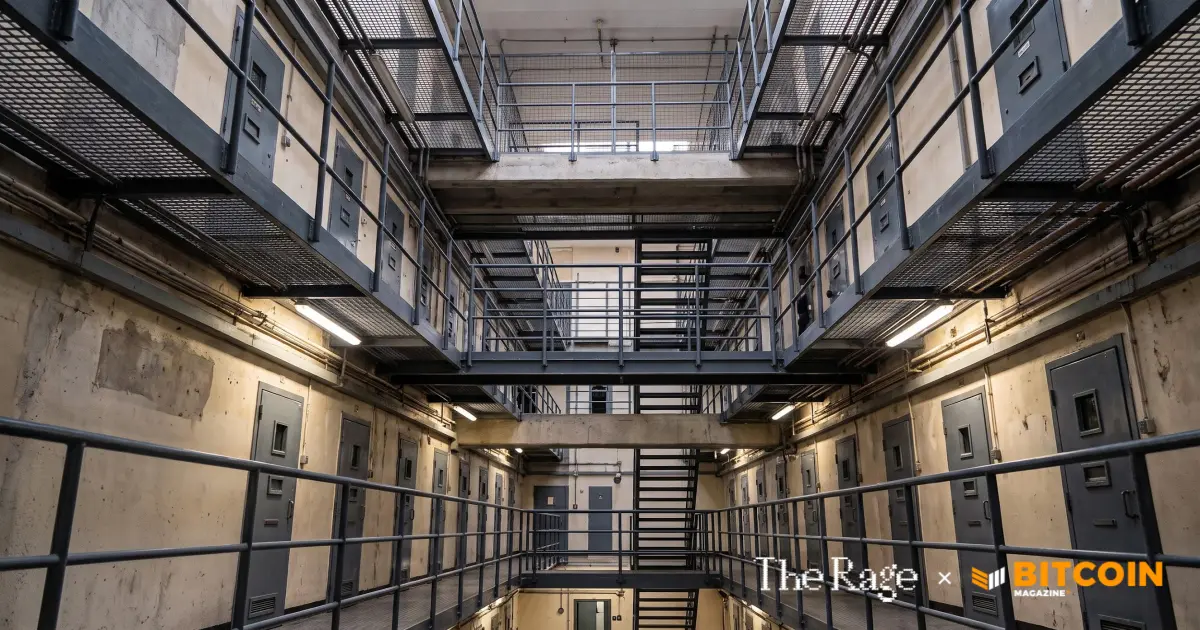
Range 4D was a triangular, multi-level housing unit painted in grey and pink, featuring 30 two-man cells on the main floor and another 30 cells along an upper internal balcony, housing a total of 120 men. Upon entering, Rodriguez observed numerous inmates intoxicated on synthetic drugs collapsed on the floors and stairwells. Immediately after crossing the threshold, multiple inmates approached him to offer various illicit drugs for sale, including methamphetamines and synthetic cannabinoids.
The range officer informed the new arrivals that the facility had run out of basic hygiene supplies, including toilet paper. When Rodriguez was assigned his cell, he requested a mattress, but the officer explained that full mattresses were also out of stock, returning minutes later with only half of a torn foam pad.
"This isn’t fucking Guantanamo!"
When the officer handed over the half-piece of foam, Rodriguez protested, pointing out that sleeping on half a mattress would leave his legs and lower body resting directly on the bare steel bunk frame. He argued that the facility had a basic obligation to provide adequate bedding, exclaiming, "This isn’t fucking Guantanamo!" The officer dropped the piece of foam onto the floor, responded, "Welcome to prison," and walked away.
Inside the cell, Rodriguez met his assigned cellmate—a Native American man named Shadow who was serving a 20-year sentence for murder and was en route to a high-security U.S. Penitentiary.
Shortly thereafter, staff manually locked each of the range’s 60 cell doors individually to prepare for the evening head count. After the 10:00 PM count concluded, Rodriguez climbed onto the steel bunk and waited for the overhead lights to be extinguished. By 11:00 PM, his cellmate informed him that the harsh fluorescent lights in the transit unit were kept on 24 hours a day.
Covering his head with an institutional sheet that smelled of motor oil and sawdust, Rodriguez lay on the metal frame in the lit cell, overwhelmed by the harsh reality of the transit system and questioning whether the sentence reduction was worth the severe distress of the journey.
Rodriguez noted that his account of the transit process will continue in a forthcoming second part.