
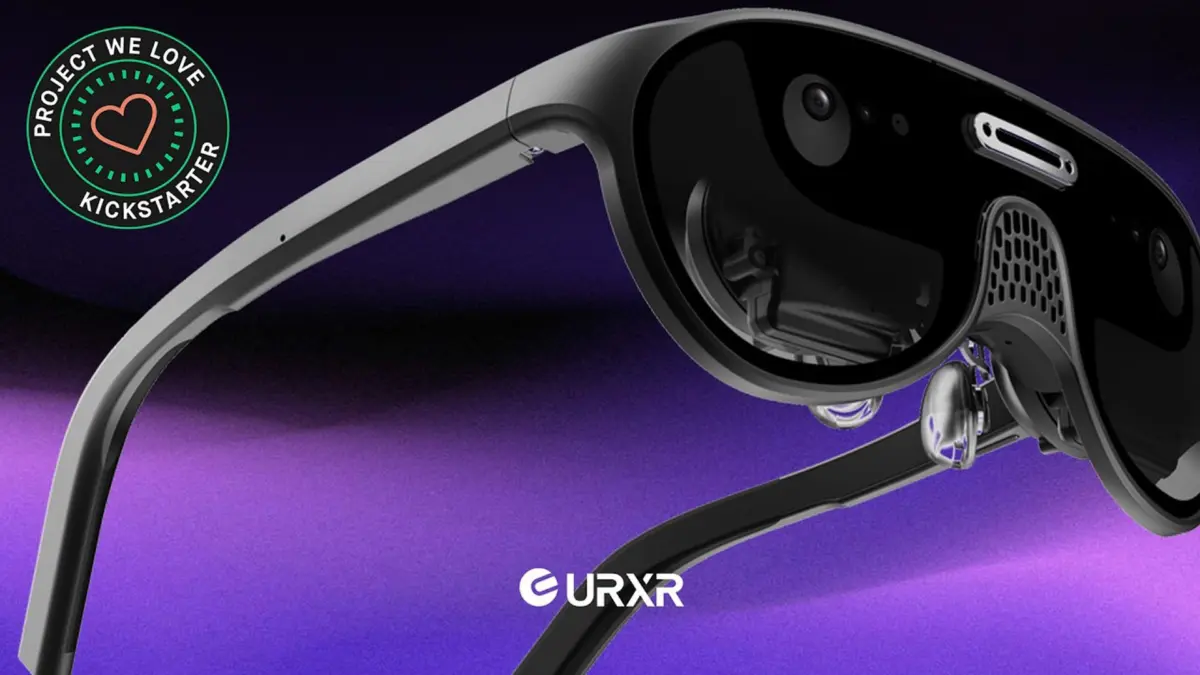
Unseen Reality’s ambitious bid to redefine personal computing and mobile display tech has officially crossed a major milestone. The company’s Kickstarter campaign for the URXR One—a monitor-replacing mixed reality headset designed to bridge the gap between bulky standalone virtual reality units and lightweight augmented reality glasses—has officially concluded after pulling in more than $1.2 million from eager tech backers.
When the crowdfunding initiative first kicked off on August 4th, it immediately captured the attention of early adopters, tech enthusiasts, and mobile professionals. The campaign famously blasted past its initial, modest $50,000 funding goal in a matter of just minutes, signaling robust market demand for a wearable display that could serve as a legitimate, portable workstation and entertainment screen. By the time the campaign officially wrapped up, it had amassed a total of $1,288,712, providing Unseen Reality with a formidable war chest as the company transitions from product development to manufacturing and fulfillment.
Unlike birdbath-style augmented reality glasses popularised by brands like Viture and Xreal—which typically project a transparent overlay into the user’s field of view using optical combiners—the URXR One takes a fundamentally different design approach. It is structurally akin to a lightweight virtual reality headset equipped with full-color passthrough video capabilities, bearing a passing resemblance to standalone platforms like the Meta Quest. However, unlike those self-contained units, the URXR One intentionally avoids packing heavy internal computing hardware and bulky onboard batteries. Instead, it relies on a physical tether to external host devices, striking a balance between wearing comfort and processing power.
By shifting the heavy computational lifting to laptops, smartphones, tablets, and handheld gaming consoles, Unseen Reality has managed to keep the URXR One remarkably slim, portable, and easy to toss into a backpack. The hardware is fundamentally positioned as a versatile display replacement for traditional content consumption and productivity tasks. Whether a user wants to dive into flatscreen video games, stream high-definition films on the go, browse the web across virtual monitors, or manage complex spreadsheets while traveling, the device aims to replace physical screens with a private, high-fidelity spatial workspace.
Weighing in at a mere 93 grams, the URXR One achieves its featherlight profile thanks to two primary engineering choices: the integration of exceptionally thin mini pancake optics and the complete omission of internal batteries and primary processors. The headset connects seamlessly to any USB-C DisplayPort-compatible device, drawing power directly from the host hardware or via an included modular power accessory.
Under the hood, the hardware is built around a sophisticated array of advanced optics and sensors. It features dual 1.03-inch micro-OLED displays—one dedicated to each eye—delivering a crisp 5K dual-eye retinal resolution of 2,448 by 2,064 pixels per eye. This configuration yields a pixel density of approximately 36 pixels per degree, a smooth 90 Hz refresh rate, and a 90-degree diagonal field of view, breaking down to roughly 80 degrees horizontally and 56 degrees vertically. In-eye brightness ranges comfortably between 120 and 140 nits, while the virtual image is calibrated to sit at a comfortable viewing distance of about 1.1 meters.
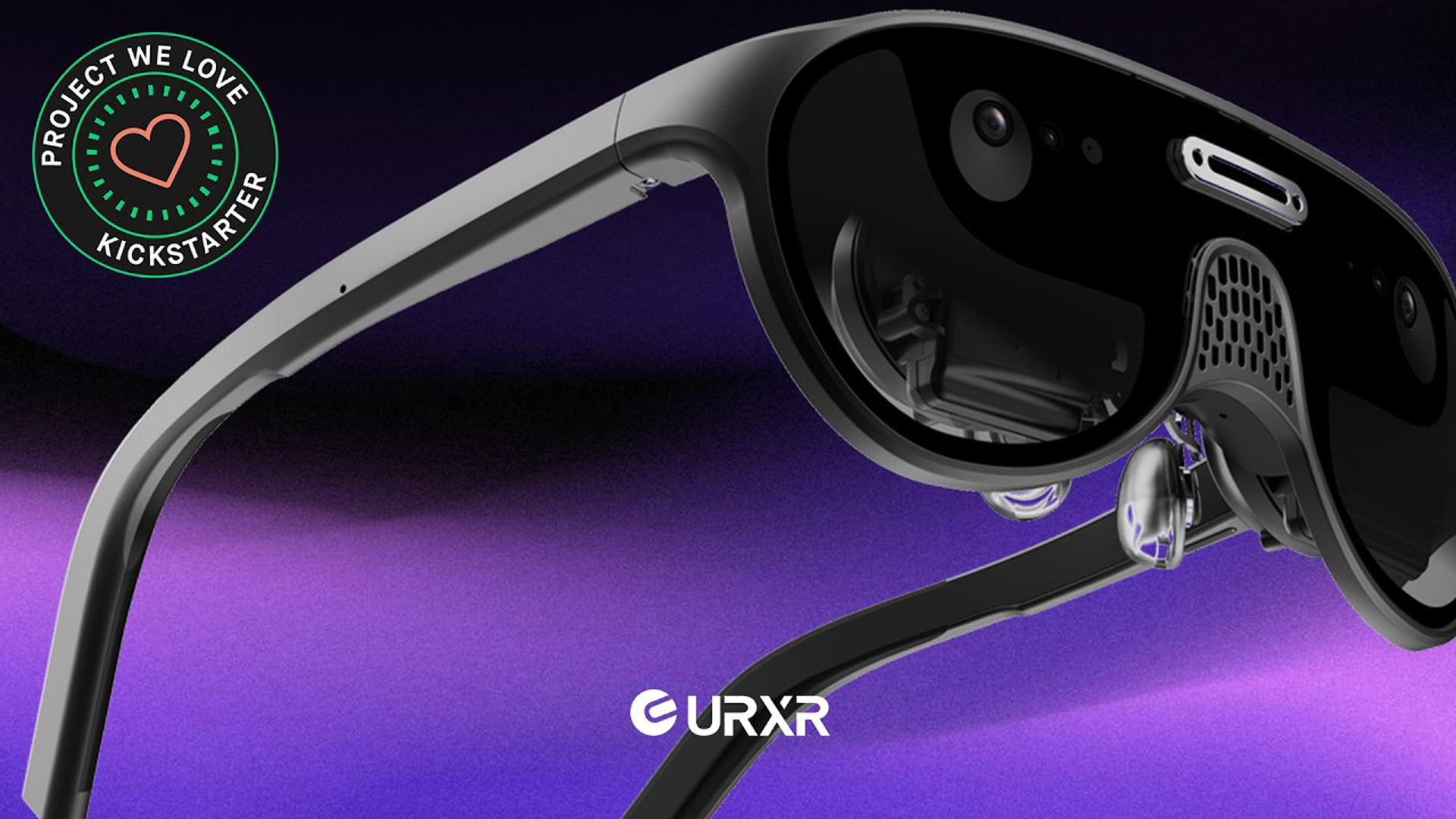
For spatial positioning and environmental awareness, the headset incorporates an onboard spatial processing unit paired with a dedicated neural processing unit to handle native six degrees of freedom tracking. The 6DoF tracking system relies on a dual-camera simultaneous localization and mapping setup backed by a 1,000 Hz inertial measurement unit. The device also features four forward-facing cameras that manage both video pass-through and positional tracking, alongside an array of sensors including a six-axis IMU, a magnetometer, an ambient light sensor, and wear-detection technology.
Users can interact with their digital environments through multiple input methods, including hand tracking, spatial gestures, and traditional physical peripherals like a mouse and keyboard. The headset also features a built-in four-microphone array to facilitate voice commands and communication, though it intentionally leaves out integrated speakers, encouraging users to rely on their own headphones or audio gear connected to the host device.
The physical dimensions of the headset have been carefully engineered for ergonomics and portability. When unfolded, the device measures 150.01 millimeters wide, 71.06 millimeters high, and 170.83 millimeters long. When folded for travel, it shrinks down to a compact 149.54 by 62.99 by 50.17 millimeters. The frame includes hinged and flexible temples that fold inward while flexing outward to comfortably accommodate a wide variety of head widths. Furthermore, manual Interpupillary Distance adjustment ranging from 58 to 68 millimeters ensures users can dial in optimal visual clarity.
To support mobile setups where host devices might struggle to power the headset continuously, Unseen Reality has also detailed an accompanying power bank module. Weighing 215 grams and measuring 108 by 70 by 18 millimeters, the flat, pocketable power hub packs a 10,000 mAh battery capacity and features multiple USB-C ports, designed specifically to supply power to phones, tablets, and handheld gaming consoles while driving the display.
For backers who supported the crowdfunding campaign early, the hardware carried a special discounted price tag of $800, with initial shipments initially targeted to begin rolling out in mid-October 2026. While the company has outlined plans to transition to regular retail sales at an MSRP of $900, exact shipping timelines for orders placed outside of the Kickstarter campaign remain to be confirmed as production ramps up.