
While the high-profile launch of the Garmin Fenix 9 smartwatch has justifiably dominated tech and fitness headlines, it has also inadvertently overshadowed a quieter, yet significant, software rollout from the company. Amid the excitement surrounding new hardware iterations, Garmin has quietly introduced a new digital logging and journaling feature called Garmin Epic—and industry observers note it deserves far more attention than it is currently receiving.
Marketed primarily as a shareable digital travel journal designed to showcase major outdoor adventures, hikes, or races, the Epic feature functions essentially as an interactive scrapbook for an athlete’s milestones. However, fitness analysts and experienced runners argue that this initial framing significantly undersells its actual utility. Beyond serving as a post-adventure social media highlight reel, Epic doubles as a powerful, macro-level training analysis tool. For athletes deep into preparation cycles for major endurance events, the feature provides a fresh mechanism for reviewing performance trends over extended periods.
To avoid early confusion among consumers, it is worth noting a minor nomenclature detail: Garmin Epics should not be confused with the company’s older, distinct line of smartwatches known as the epix, which is spelled with an "x" and lowercase styling. The new feature is spelled Epic with a "c." Because the names sound identical and share a visual similarity, online searches for one frequently surface the other, making careful spelling essential for users navigating the Garmin ecosystem.

What is a Garmin Epic?
At its core, a Garmin Epic is a comprehensive digital travel journal that aggregates a user’s logged activities, geographical maps, personal photographs, and key health and performance metrics into a single, interactive timeline. This timeline can be easily revisited, analyzed, and shared. For those who purchase the newly released Fenix 9 smartwatch, the interface allows users to create and initiate an Epic directly from the wrist. However, owners of older Garmin watch models are not left out; the feature is fully accessible and can be created directly within the Garmin Connect companion application.
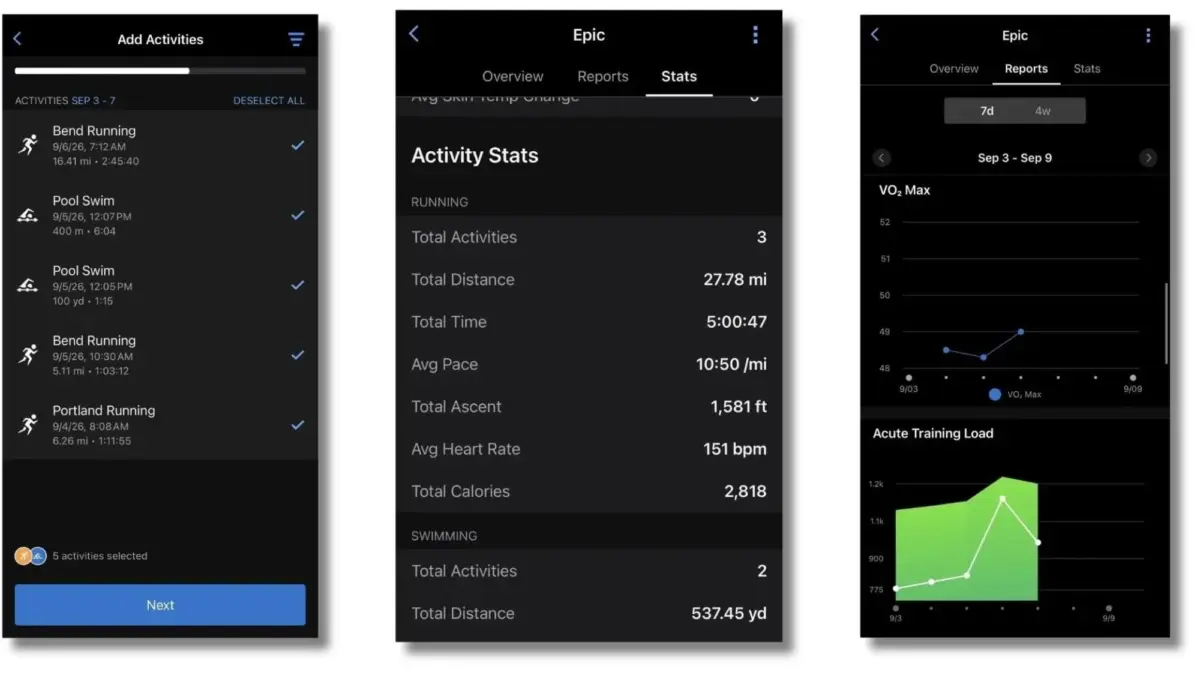
Once an Epic is established, users gain access to a consolidated view that displays all associated activities mapped onto a single interface. It integrates media uploads, an interactive activity feed, daily personal notes, and curated performance and health reports spanning the entire duration of the project. During early product demonstrations, Garmin highlighted a dedicated Reports tab capable of tracking comprehensive recovery and physiological indicators, including daily sleep scores, resting heart rate baselines, and heart rate variability (HRV) status across the exact same date ranges.
Crucially, users do not need the latest hardware to take advantage of the capability within the Garmin Connect app, where the tool is conveniently located under the core Activities menu. Furthermore, the platform permits users to group past, historical activities into a newly minted Epic retroactively. It is this specific retroactive grouping capability that unlocks the tool’s unexpected potential as a training analytics hack.

A Broader Lens for Endurance Training
A single Garmin Epic timeline can span up to 92 continuous days, accumulating total distance metrics, active calorie expenditures, sleep trends, recovery tracking, and HRV statuses over roughly a 13-week window. This timeframe neatly mirrors a standard, highly intensive training block typically prescribed for half-marathon or marathon build-ups, allowing athletes to view their entire preparatory phase through a single consolidated lens.
While the feature was not explicitly engineered by Garmin as a comprehensive, clinical-grade training-analysis suite—meaning it does not replace specialized coaching software—it nevertheless offers a valuable perspective. While Epic was initially conceived as a place for users to relive outdoor exploits and vacation expeditions, fitness enthusiasts are finding that its true utility lies in zooming out to identify broader patterns, fatigue accumulation, and recovery consistency over weeks of sustained physical output.