
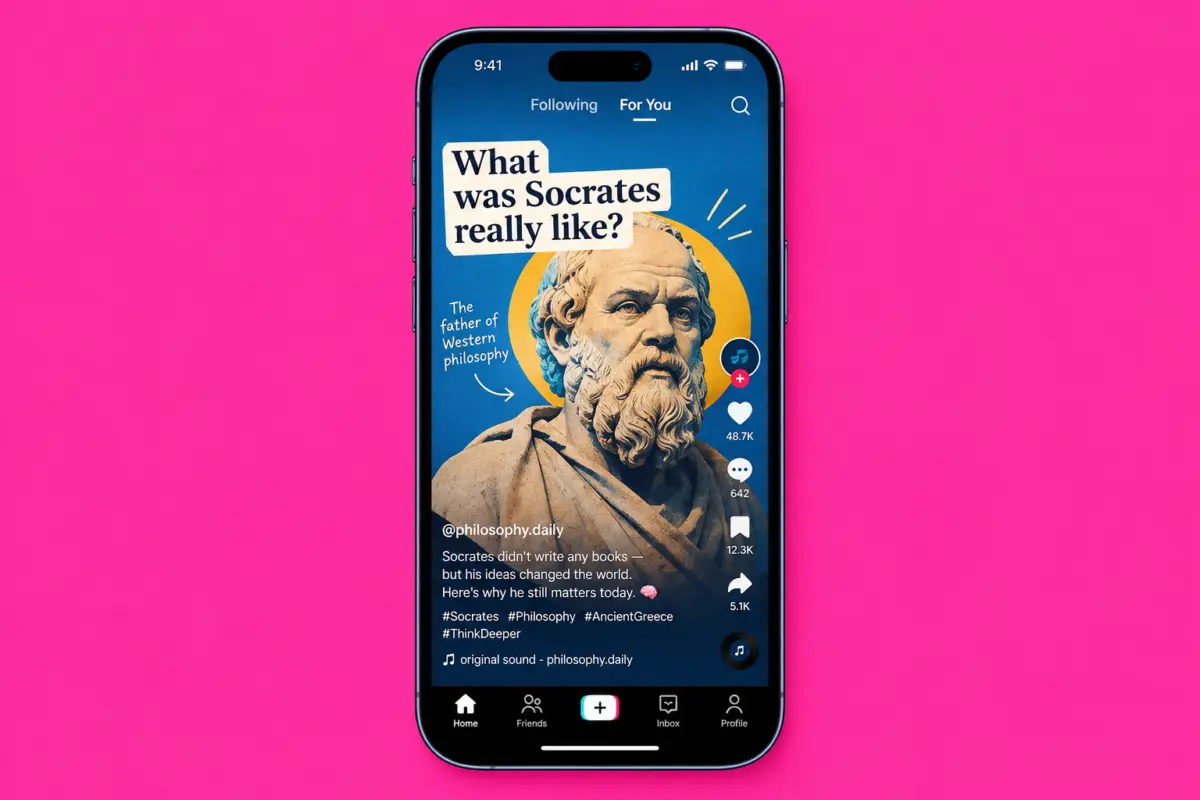
For years, modern society has engaged in a collective lament over the state of the human mind, pointing an accusing finger at digital fatigue, dwindling attention spans, and the endless trap of doomscrolling. Critics routinely blame apps like TikTok and Instagram Reels for our collective inability to sit down with a physical book, focus on a dense academic paper, or adequately prepare for upcoming exams. The diagnosis is always the same: screens are rotting our attention spans, and the only cure is to log off.
But what if the prevailing wisdom has it backward? What if the solution isn’t trying to force tired, distracted minds to stop scrolling entirely, but rather fundamentally rethinking what we are scrolling through in the first place?
That is the ambitious bet being placed by ScrollEd, an emerging Palo Alto-based startup that is stepping into the spotlight to pitch its novel concept at the TechCrunch Disrupt Startup Battlefield 200 competition. The core thesis behind ScrollEd is as simple as it is disruptive: if modern students refuse to open a traditional textbook, then the textbook needs to find a way to open itself up to them—transforming into the format they already consume day in and day out, which is a vertical scroll.
Founded to bridge the widening gap between traditional educational material and modern consumption habits, ScrollEd has developed a specialized application that allows users to seamlessly ingest any text file. Whether it is a dry academic PDF, a lengthy corporate manual, or a dense textbook chapter, the app ingests the material and reformats it into a dynamic, interactive feed that feels remarkably similar to the user interfaces of popular social media platforms.
As users scroll through the feed, educational content is no longer presented as walls of daunting text. Instead, it comes alive through a blend of AI-generated video, immersive audio, concise text summaries, and interactive quizzes designed to test comprehension on the fly. The navigation mimics familiar digital habits: swiping up instantly surfaces a brand-new topic or sub-concept, while swiping sideways encourages the learner to go deeper into the specific subject they are currently exploring, culminating in a short quiz to solidify retention before moving forward.
The inspiration for the platform stems from a very modern frustration shared by its creators. ScrollEd was bootstrapped earlier this year by co-founders and spouses Utsav Gupta and Rebecca Neff, who found themselves experiencing a familiar sense of dissatisfaction and mental exhaustion after engaging in late-night doomscrolling before bed. Crucially, both founders bring a unique insider perspective to the problem as active students themselves: Gupta is currently studying artificial intelligence and human purpose at Stanford University, while Neff is pursuing a computer science degree at the University of Pennsylvania.
Reflecting on the shifting habits of their peers, Gupta explained in an email to TechCrunch that the younger generation is migrating almost exclusively toward short-form, vertical video feeds. This stark demographic shift, particularly prominent among 18-year-olds the co-founders have spoken with, poses an existential challenge for any medium or industry that requires depth, nuance, and critical thinking.
Rather than fighting this cultural tide, ScrollEd chose to lean into it with intentional guardrails. The goal, according to Gupta, is to meet young learners precisely where they already spend their time, while maintaining a strict ethical boundary regarding how engagement is handled.
The strategy hinges on sparking genuine curiosity rather than fostering mindless addiction. A short video can spark a flash of curiosity, but in traditional social media ecosystems, following that curiosity usually requires abandoning the app to search for external explanations. ScrollEd was designed to make diving deeper into a subject just as frictionless as swiping to the next entertaining video clip, keeping the user engaged in a productive loop of learning.
As the startup looks to scale its operations, it is targeting multiple distinct markets, including traditional educational institutions, corporate training and development programs, and individual consumers who are simply looking for a more intellectually nourishing alternative to conventional social media feeds. The company is officially launching its consumer-facing business at TechCrunch Disrupt, with Gupta joking about their aspirations to truly "disrupt" social media and short-form content.
To sustain and grow its operations, ScrollEd has adopted a classic freemium business model. This approach pairs a free, accessible consumer feed with a premium tier known as ScrollEd Pro, alongside annual institutional licenses. Under this enterprise model, schools and corporate clients pay to deliver their custom educational curricula directly through the platform. In exchange, these institutions receive valuable analytical reports detailing student engagement levels, individual lesson progress, and other vital metrics to track learning outcomes.
Looking ahead over the coming months, the startup’s roadmap is clear. ScrollEd intends to maintain a sharp focus on its consumer launch, steadily expanding its internal library of lessons, refining its rigorous source-checking workflow, and developing pilot programs with select educational institutions. Furthermore, the company is actively building the underlying technical infrastructure that will eventually enable educators to accurately assess individual learners and dynamically adapt educational content to meet their unique needs.
For Gupta, Neff, and the rest of the growing team, the long-term vision extends far beyond a clever productivity tool or a novel study aid. The ultimate ambition is nothing less than building a brand-new type of social network—one that is fundamentally better for human well-being, cognitive health, and lifelong learning.