
The landscape of artificial intelligence is experiencing a notable decentralization as a growing number of developers, researchers, and everyday users pivot away from cloud-dependent services in favor of local AI deployments. Rather than routing sensitive queries, personal notes, and proprietary code through external cloud servers, individuals are increasingly choosing to host large language models directly on their own personal computers.
This movement is driven by a combination of compelling factors, chief among them being heightened data privacy, granular system control, and long-term cost efficiency. For users who possess hardware equipped with a capable graphics processing unit, running surprisingly powerful open-source models locally eliminates the financial burden of managing multiple concurrent commercial AI subscriptions.
Crucially, adopting a local setup no longer requires sacrificing the polished user experience popularized by industry-standard platforms like ChatGPT. The open-source community has rapidly matured, producing sophisticated interfaces that offer rich chat experiences, file attachment support, integrated tools, autonomous agents, and multi-model switching. These platforms bridge the gap between heavy enterprise software and simple command-line tools, bringing the sophisticated utility of cloud applications directly to local machine environments.
To navigate this expanding ecosystem, industry observers and technical practitioners are evaluating seven prominent open-source ChatGPT alternatives designed to address a wide array of computing requirements. From lightweight local chat utilities and document-centric research assistants to multi-user team deployments and complete self-hosted AI workspaces, these tools cater to diverse technical needs.
Open WebUI
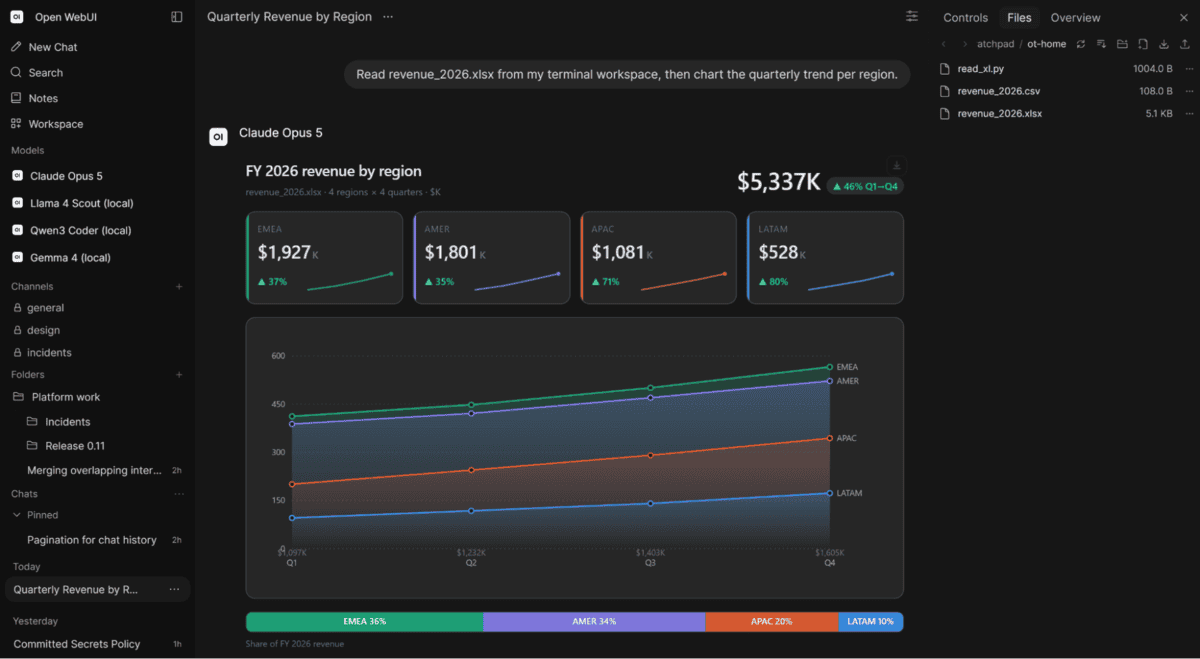
Among the earliest and most enduringly popular interfaces for local model management is Open WebUI, a project that established a benchmark for self-hosted AI interaction. Designed with a high degree of visual polish, the platform delivers an experience remarkably close to commercial offerings like ChatGPT. Users can engage in fluid conversational streams, upload documents for context, seamlessly switch between different underlying models, execute integrated tools, and connect to a broad spectrum of local or remote inference endpoints.
The deployment process remains streamlined, supporting containerized installation via Docker or standard execution through Python. Once active, Open WebUI interfaces naturally with backends like Ollama, llama.cpp, or any OpenAI-compatible API, frequently auto-detecting local Ollama instances upon startup. Rather than functioning as a rudimentary chat frontend, it positions itself as a comprehensive local AI workspace capable of managing complex, day-to-day productivity tasks.
llama.cpp WebUI
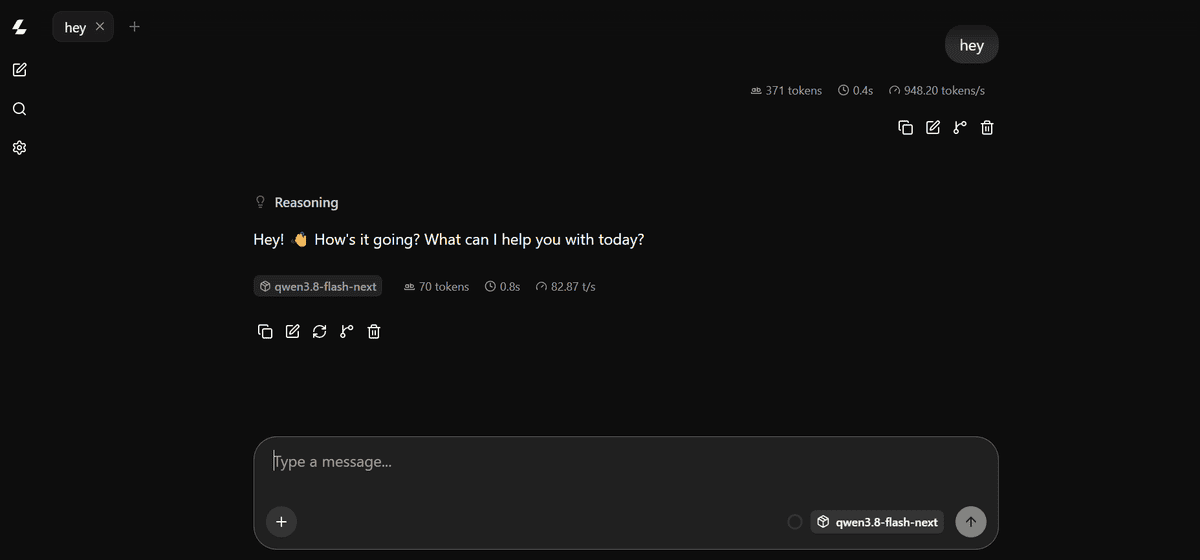
For technical users already leveraging the high-performance capabilities of llama.cpp, its integrated web interface offers perhaps the most lightweight solution available. This approach bypasses the need to install a separate, resource-intensive chat application. Executing the core server binary simultaneously spins up a fully compliant OpenAI API alongside a clean, browser-based user interface for model interaction.
The built-in web panel incorporates essential conversational functionalities, including multi-thread conversation management, real-time response streaming, reasoning output visibility, granular model parameter tuning, file attachments, and persistent history tracking. The primary advantage of this ecosystem lies in its radical simplicity. Users can load GGUF format models and converse with them directly through the native server architecture without introducing additional software layers into their computing environment.
LobeHub
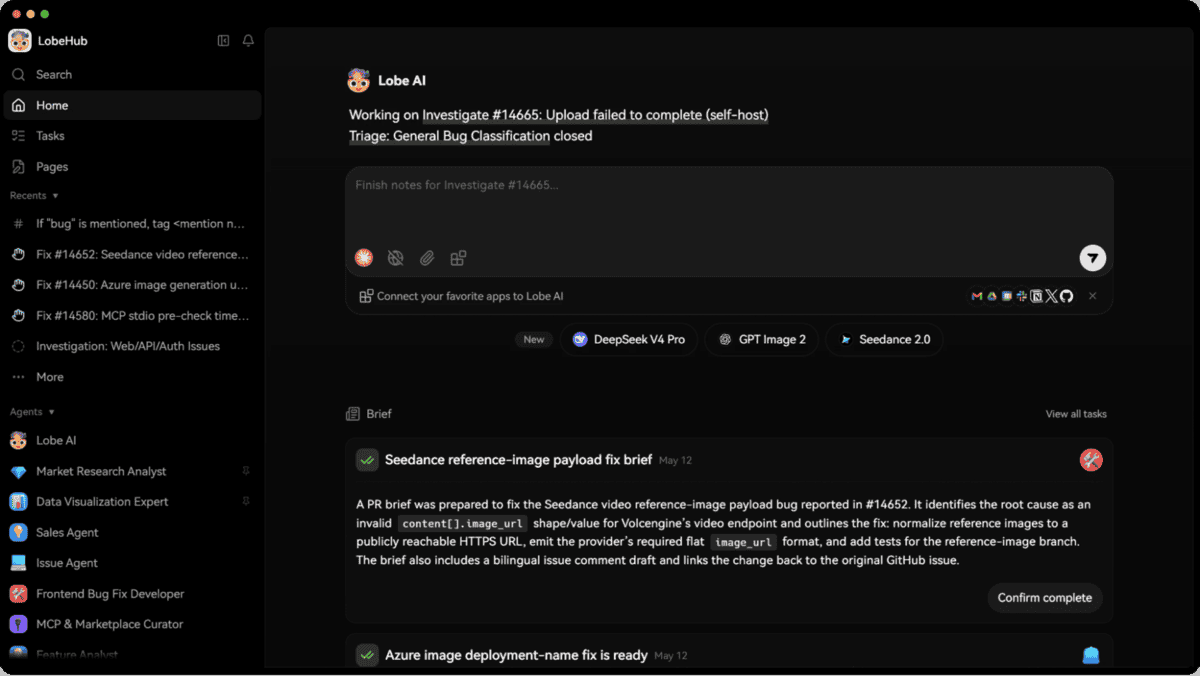
Expanding beyond the paradigm of simple text-based chat, LobeHub provides a highly refined open-source alternative designed for broader productivity workflows. When deployed locally and linked with inference engines like Ollama, it functions as a clean interface for daily conversational needs while maintaining an aesthetic that rivals commercial software products.
LobeHub distinguishes itself through its robust support for autonomous agents. Users can construct specialized digital assistants tailored for software development, technical research, creative writing, or administrative chores, each configured with dedicated system instructions and specialized tooling. This structural flexibility allows individuals to gradually transform a basic chat interface into a multifaceted local AI environment.
AnythingLLM
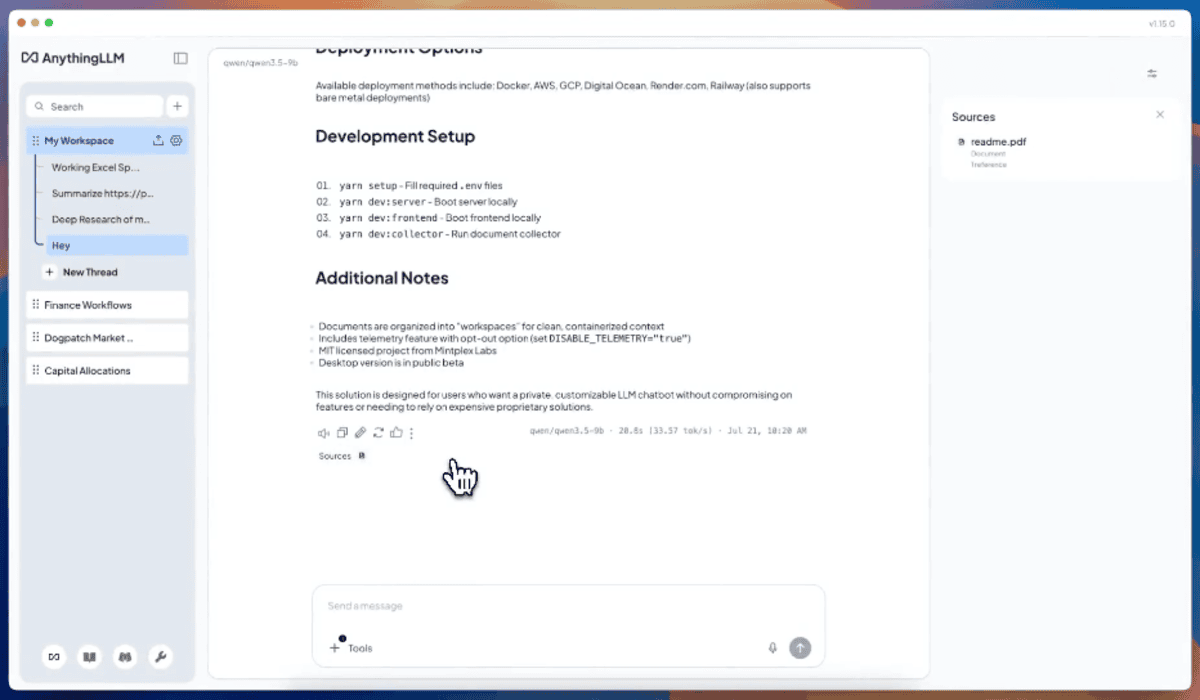
For professionals whose primary objective involves interacting directly with private document repositories, AnythingLLM offers a specialized workspace architecture. The platform operates locally, integrates with both local and cloud-based models, and segments information into isolated knowledge bases. This isolation enables users to segregate academic research papers in one workspace, complex technical documentation in another, and internal corporate files in a separate environment.
The platform streamlines retrieval-augmented generation by baking essential pipelines directly into the application. Document ingestion pipelines, vector database management, agent execution frameworks, and workspace controls are pre-configured, sparing users the complexity of constructing custom backend pipelines from scratch. Consequently, the software functions less like a conventional chatbot and more like a dedicated, private research assistant.
Jan
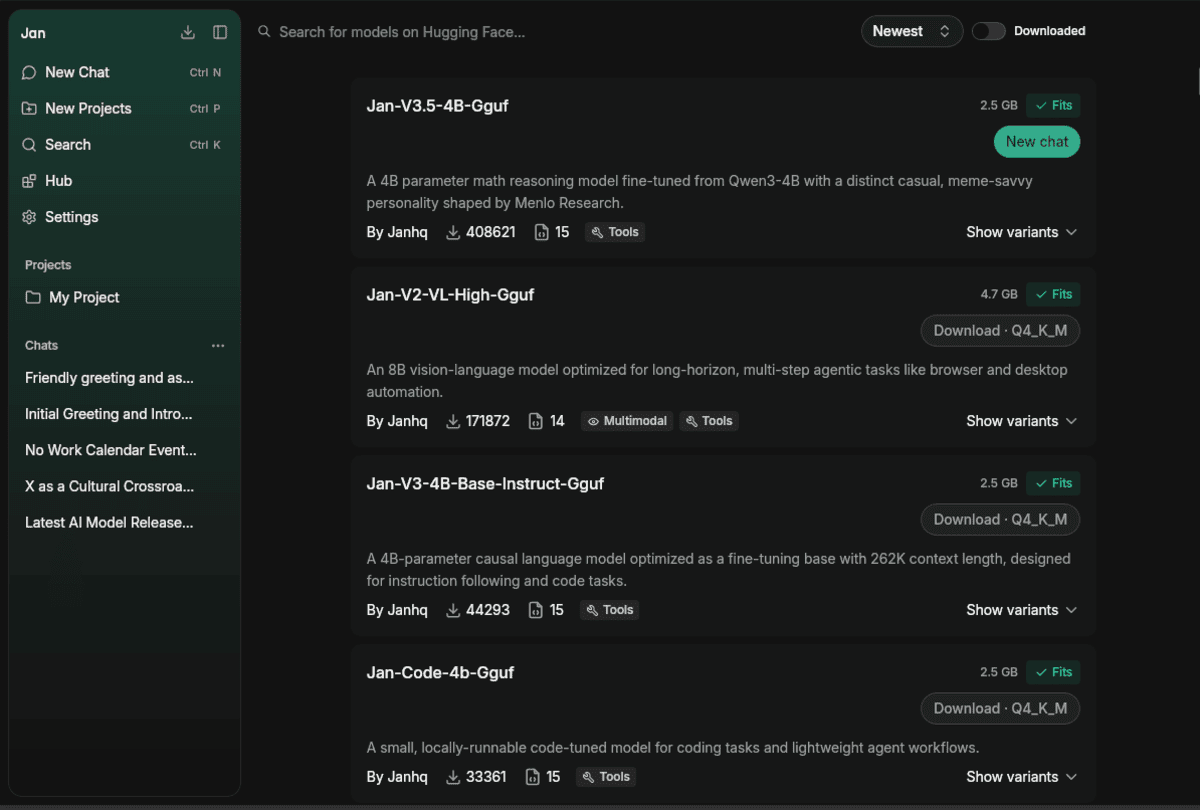
Addressing the barrier of technical complexity, Jan provides an accessible entry point for users seeking to execute large language models offline. Structured as a native desktop application, it eliminates the necessity for Docker containers, external server configurations, or intricate installation procedures. Users simply download the application, acquire a model of their choice, and establish an offline conversational environment directly on their hardware.
The application’s primary appeal lies in its ability to abstract away underlying infrastructure management. While it allows individuals to initiate local AI workflows with minimal friction, it retains advanced configuration options for power users who require deeper system control. By prioritizing ease of use, Jan widens access to local AI technology for non-technical practitioners.
LibreChat
Positioned as one of the most feature-complete platforms in the open-source ecosystem, LibreChat extends far beyond standard conversational paradigms. The platform incorporates advanced capabilities such as autonomous agent coordination, Model Context Protocol support, dynamic model switching, custom actions, code execution environments, conversation indexing, and robust user authentication schemes.
By connecting LibreChat to locally hosted inference servers, organizations and individuals can establish a private, multi-user AI platform capable of handling complex tool usage and diverse model providers. While its extensive feature set may exceed the requirements of users seeking only basic chat functionality, it provides an expandable foundation for advanced self-hosted deployments.
Hugging Face Chat UI
Rounding out the ecosystem is the Hugging Face Chat UI, a streamlined and developer-focused frontend designed for environments where a local inference server is already operational. Because it interfaces natively with OpenAI-compatible APIs, the frontend connects seamlessly to runtimes like llama.cpp or Ollama without locking users into a proprietary software stack.
The interface retains crucial conversational features, including streaming responses, multimodal input handling, model switching, tool integration, and user authentication. While it lacks the all-in-one workspace feel of platforms like Open WebUI, it delivers a minimalist, highly efficient presentation layer for developers who prefer to manage their own model inference infrastructure directly.
Ultimately, platforms like ChatGPT serve primarily as frontends linking users to sophisticated text generation, coding, and analysis models. The expanding array of open-source alternatives demonstrates that users can replicate, and often customize, these capabilities on their own hardware. By trading cloud reliance for local control, individuals and teams can tailor their AI workspaces precisely to their operational workflows.