
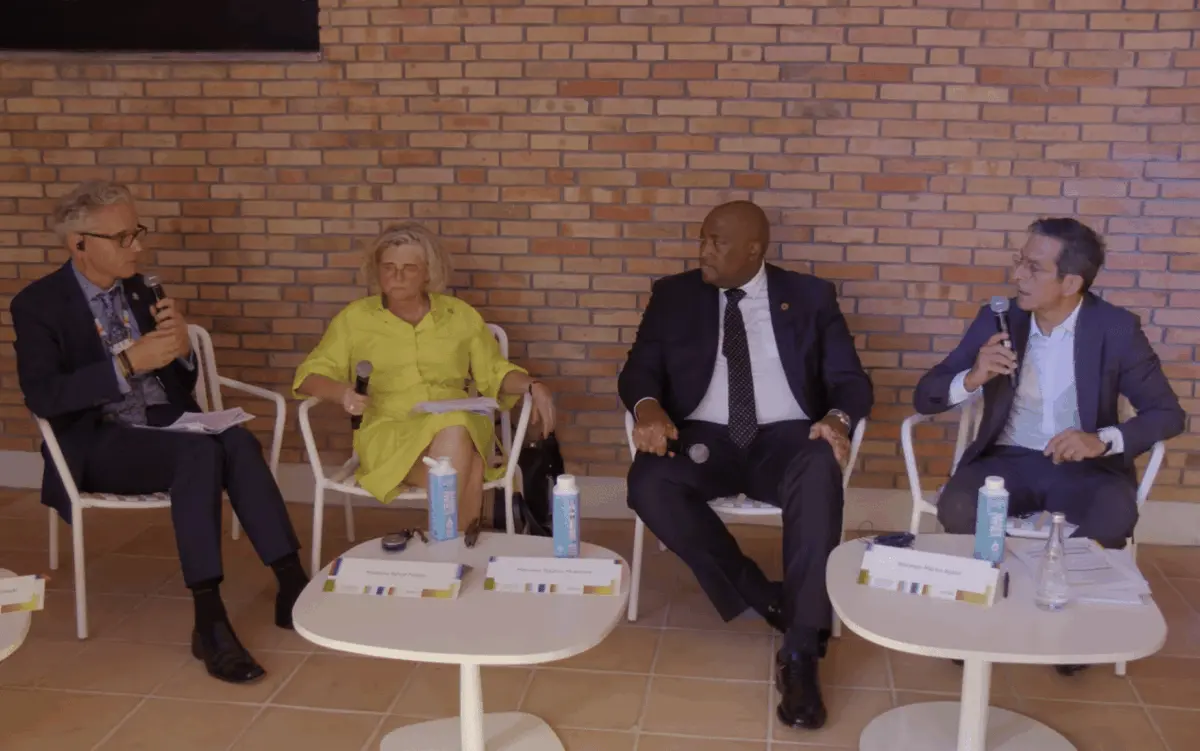
Earlier this month, global leaders of the film industry, high-ranking government ministers, and studio heads gathered in the south of France for a high-profile, one-day event hosted by French President Emmanuel Macron and South Korean President Lee Jae Myung. The inaugural Lumière Summit was designed to foster international cooperation and address some of the most pressing economic and structural challenges facing the modern entertainment landscape.
The gathering concluded with the ceremonial signing of several thematic declarations, including a prominent pact focused on global cooperation against digital piracy. Yet, despite the carefully choreographed proceedings and optimistic institutional messaging, the path to consensus was far from smooth. Tensions bubbled to the surface during a panel session on "the race against piracy," where South Africa’s Minister of Sport, Arts and Culture delivered a sharp critique of the entertainment industry’s contradictory attitudes toward unauthorized distribution.
The session was initially scheduled to feature a keynote address by Charles Rivkin, CEO of the Motion Picture Association (MPA), who represents major Hollywood studios. However, Rivkin was delayed due to an overlapping presidential meeting. While the MPA’s EMEA president, Emilie Anthonis, temporarily stepped in to fill the gap, the psychological tone of the debate had already been firmly established by government officials willing to question the standard industry narrative.
Gayton McKenzie, South Africa’s Minister of Sport, Arts and Culture, shared the stage with prominent international figures, including the chair of the French regulatory body ARCOM and a deputy director general of the World Intellectual Property Organization (WIPO). While these institutional leaders outlined their extensive anti-piracy track records and enforcement milestones, McKenzie took a distinctly different approach. As a representative of the South African government, McKenzie acknowledged the basic premise that piracy presents economic challenges, but he immediately took issue with almost everything else being presented by legacy studios and Western regulators.
"We need to define what is piracy," McKenzie told the audience, arguing that institutional figures tasked with combating unauthorized distribution have failed to establish a rigorous, universal definition. He quickly pivoted toward what he characterized as a glaring double standard deeply embedded within the global film community.
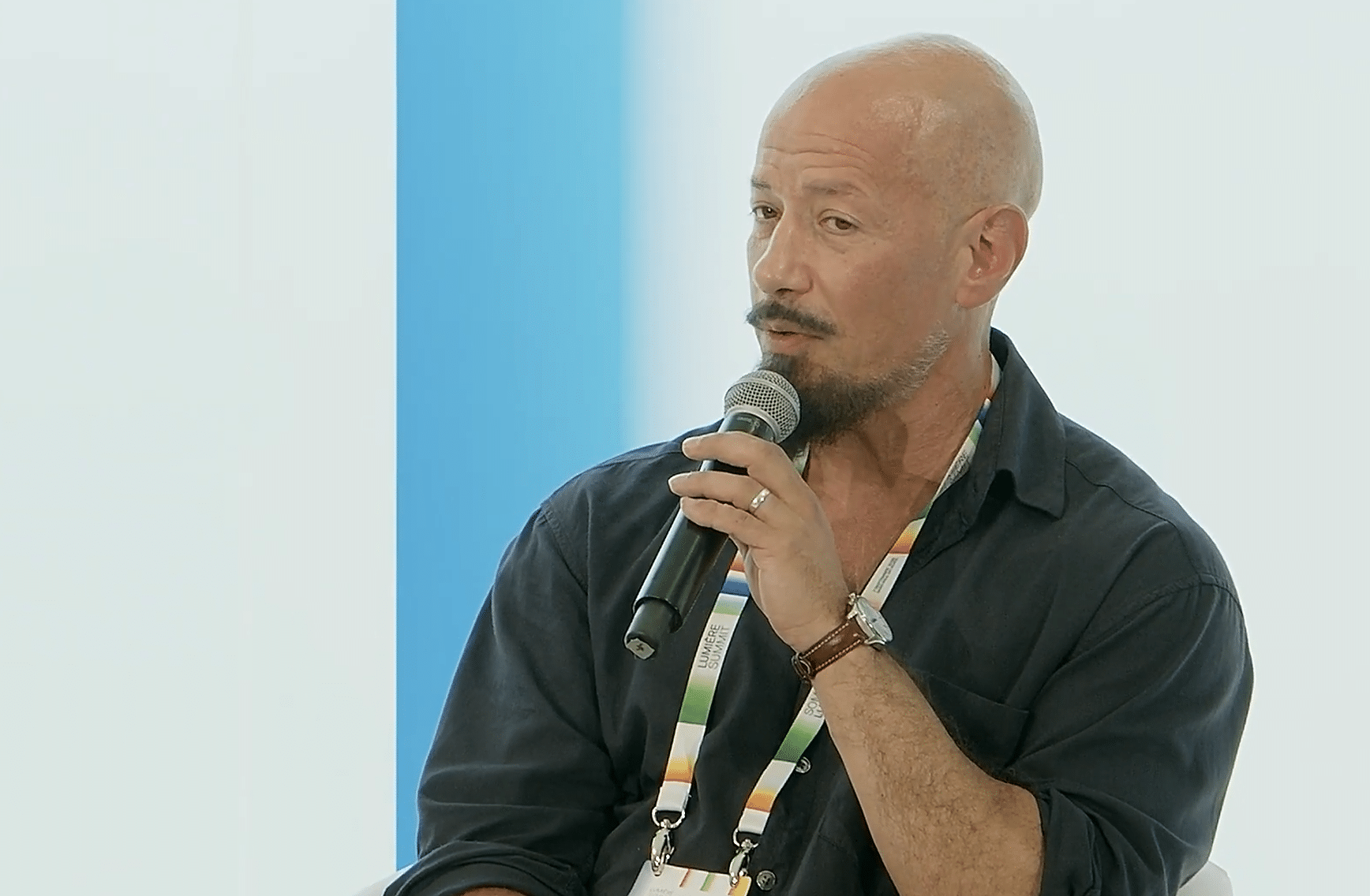
To illustrate his point, McKenzie referenced statements made earlier that very same day at the summit by a prominent filmmaker. During an opening panel, Swedish-Egyptian director Tarik Saleh had addressed the audience, explaining that his critically acclaimed movies—such as The Nile Hilton Incident and Cairo Conspiracy, which are deeply tied to Cairo—remain officially banned by authorities in Egypt. Despite these strict government restrictions, Saleh noted that local audiences are still able to watch his work thanks to widespread piracy. The director remarked that he was genuinely glad people could still access his films under the circumstances, a comment that was initially met with lighthearted amusement by attendees.

"The filmmaker said he was glad people could see it—and then people clapped," McKenzie observed during his turn on stage.
McKenzie provided a second example involving a Canadian production centered on a gay hockey player, which industry tracking suggests is the series Heated Rivalry. He pointed out that this series is currently being widely pirated in countries where its content has been banned or heavily restricted, and noted that industry insiders routinely celebrate these developments when censorship is bypassed.
Drawing from his own personal history, McKenzie recalled that during South Africa’s dark apartheid regime, several politically sensitive films were legally barred from public distribution. In that historical context, piracy served as the only viable lifeline for audiences seeking uncensored artistic expression. When dealing with banned content, political censorship, and authoritarian restrictions, the entertainment industry suddenly views piracy through a vastly different, sympathetic lens, often with filmmakers actively praising the practice. However, when economically disadvantaged populations engage in unauthorized streaming out of financial necessity rather than political defiance, they face aggressive legal actions, heavy fines, and criminal prosecution. McKenzie did not mince words, labeling the industry’s overarching approach as "a bit schizophrenic" and driven by glaring "dual standards."
‘Egyptians Love Piracy’
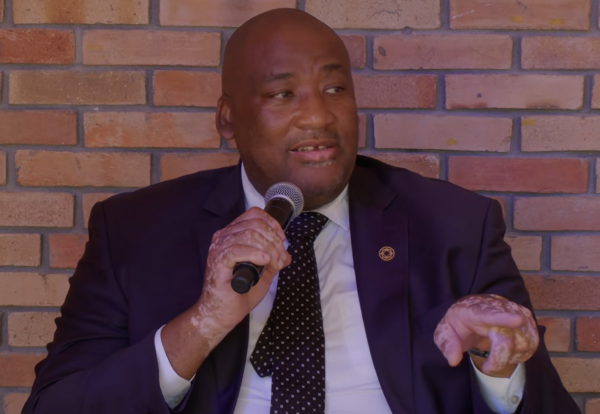
The filmmaker at the center of McKenzie’s first critique was indeed Tarik Saleh. The acclaimed director, whose works have frequently clashed with state authorities in the Middle East, spoke candidly during the summit’s opening session about the realities of working under authoritarian regimes. Saleh recounted how, prior to shooting his very first feature film, he was bluntly told by officials to leave Egypt.
"I was going to shoot my first film in Egypt and I was asked to leave. Uh, I’m putting it nicely. I mean, they said, ‘Get the f*ck out of here,’" Saleh told the audience, explaining that he ultimately had to relocate production to Morocco.
Despite the professional friction and political exile, Saleh acknowledged that unauthorized distribution channels have inadvertently solved his distribution dilemma in North Africa. "Here is where piracy comes into the picture in a little reversed way. Egyptians love piracy, which is working very well for me," he said with a laugh.
Notably, Saleh’s remarks did not generate immediate applause from the institutional leaders in the room. Instead, the panel moderator quickly stepped in to manage the awkward moment, suggesting that the regulatory experts scheduled for the afternoon’s dedicated piracy panel could be asked to weigh in. Ultimately, during the afternoon session, none of the attending journalists or delegates raised the topic with the regulators. It was Minister McKenzie who deliberately brought the contradiction back to the forefront of the discussion.
‘We’re Not Children’
McKenzie’s second major line of criticism was aimed directly at the institutional policymakers seated beside him on the panel. Earlier in the session, ARCOM chair Martin Ajdari had proudly reported that the French regulatory body had successfully issued more than 22,000 blocking and delisting injunctions over a five-year period, with approximately 10,000 orders issued in 2026 alone. Ajdari also noted that overall piracy viewership in France had been cut in half since 2018.
While McKenzie acknowledged that these enforcement metrics were undeniably impressive, he stressed that localized successes in wealthy Western nations mean very little if other regions of the world are left unsupported or structurally undermined. To drive his point home, he employed a nautical metaphor, comparing the global fight against digital piracy to two people sharing a boat that is actively taking on water on only one side.
"We are on the same boat. We both hate piracy," McKenzie said. "The boat is leaking on our side and you are praising, like, where we are sitting we’ve done this."
The South African minister also pushed back against what he perceived as heavy-handed diplomatic and economic pressure directed at developing nations to force regulatory compliance. This friction followed a presentation by WIPO deputy director general Sylvie Forbin, who outlined the strict intellectual property conditions that developing countries were compelled to adopt as part of joining the World Trade Organization (WIO) framework during the 1990s. The historical overview clearly struck a nerve with McKenzie, who rejected the paternalistic framing of global trade negotiations.
"Don’t try to punish us like we are children, because we are not children," he stated firmly, directing his comments at the broader systemic imbalances rather than a specific individual on the panel.
South Africa is no stranger to this specific strain of trade pressure. In 2020, influential U.S. copyright lobbying groups formally petitioned Washington to review South Africa’s preferential trade status, fiercely objecting to the broad fair-use provisions included in the country’s proposed copyright legislation, which American entertainment conglomerates argued were overly permissive.
‘We Are Not Beggars’
Toward the conclusion of the panel, McKenzie emphasized that South Africa’s hesitant stance toward foreign-led enforcement mandates has nothing to do with a lack of financial resources. He made it clear that South Africa possesses the economic capacity to fund comprehensive anti-piracy infrastructures on par with nations like Sweden or the United Kingdom. Instead, the core issue is a fundamental desire for mutual respect and a seat at the table.
"We don’t lack the money. There are countries that lack the money," McKenzie said. "Pero we don’t want to be treated like, here’s money for you, do one, two, three. We want you also to listen to our ideas."
"We are not beggars," he added, emphasizing the need for a collaborative framework. "We want a partnership of equals."
Highlighting ongoing domestic initiatives, McKenzie noted that the South African government is already actively engaged with commercial entities such as Canal+ to tackle the illegal broadcasting of live football matches, pointing out that anti-piracy warning messages now run prior to the kickoff of every major sporting match in the country. South Africa, he reiterated, is fully prepared to assist in the global effort to curb intellectual property infringement, provided that Western institutions and Hollywood bodies treat the nation as a serious and equal partner rather than a subordinate state.
The Lumière Summit officially concluded with the signing of a formal declaration aimed at strengthening international cooperation in the fight against film and audiovisual piracy. However, this voluntary agreement contains no binding legal commitments, and as of the close of the event, it has not been formally signed by any representatives from South Africa.