
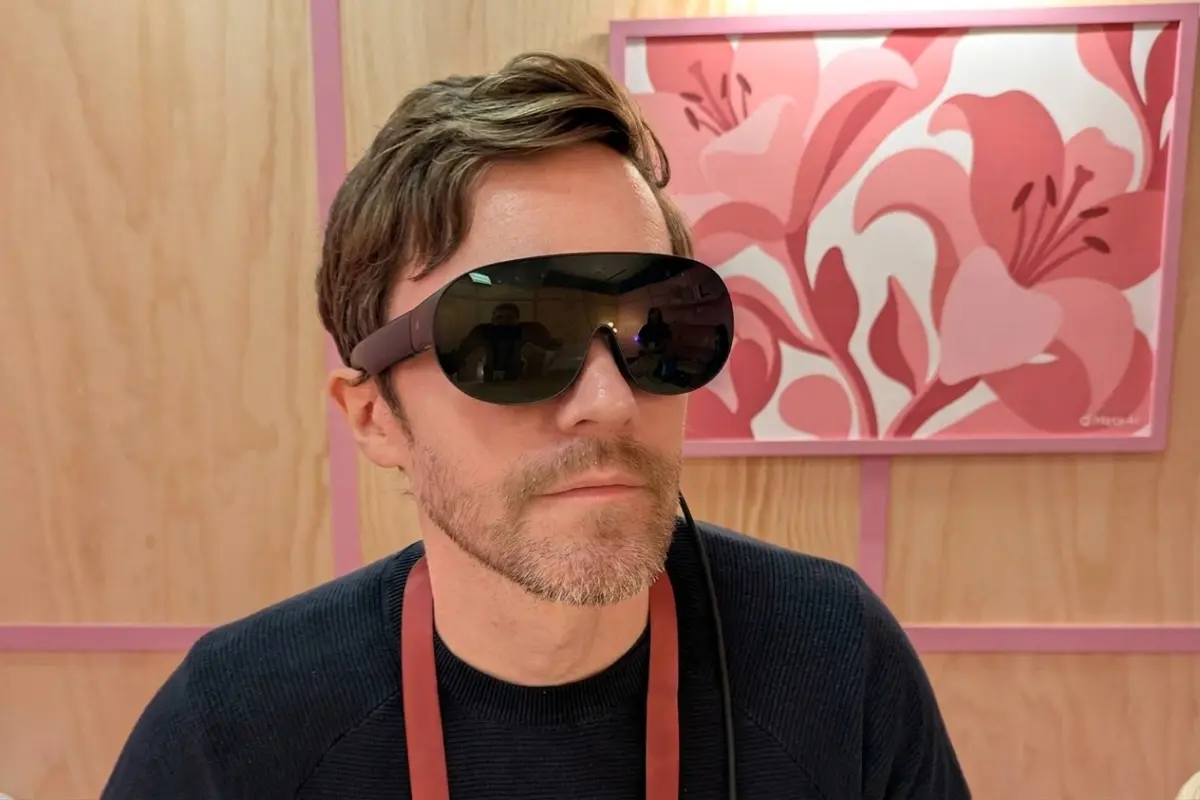
Meta has officially pulled back the curtain on its next-generation mixed reality device, simply titled the Meta VR Glasses. While the new hardware could technically find a home somewhere within the broader Quest product ecosystem, Meta is clearly making a concerted, strategic effort to bridge the widening gap between its highly experimental augmented reality research projects—such as the Orion prototype revealed at Connect 2024—and its much bulkier, standalone Quest gaming platform.
Previously known under the internal development moniker “Project Phoenix,” the Meta VR Glasses rely on a compute puck-tethered architecture. The device is scheduled to go on sale sometime in the spring of 2027 with a retail price of $1,300, targeting prosumers and productivity-focused users who want high performance without the substantial physical footprint typically associated with mixed reality hardware.
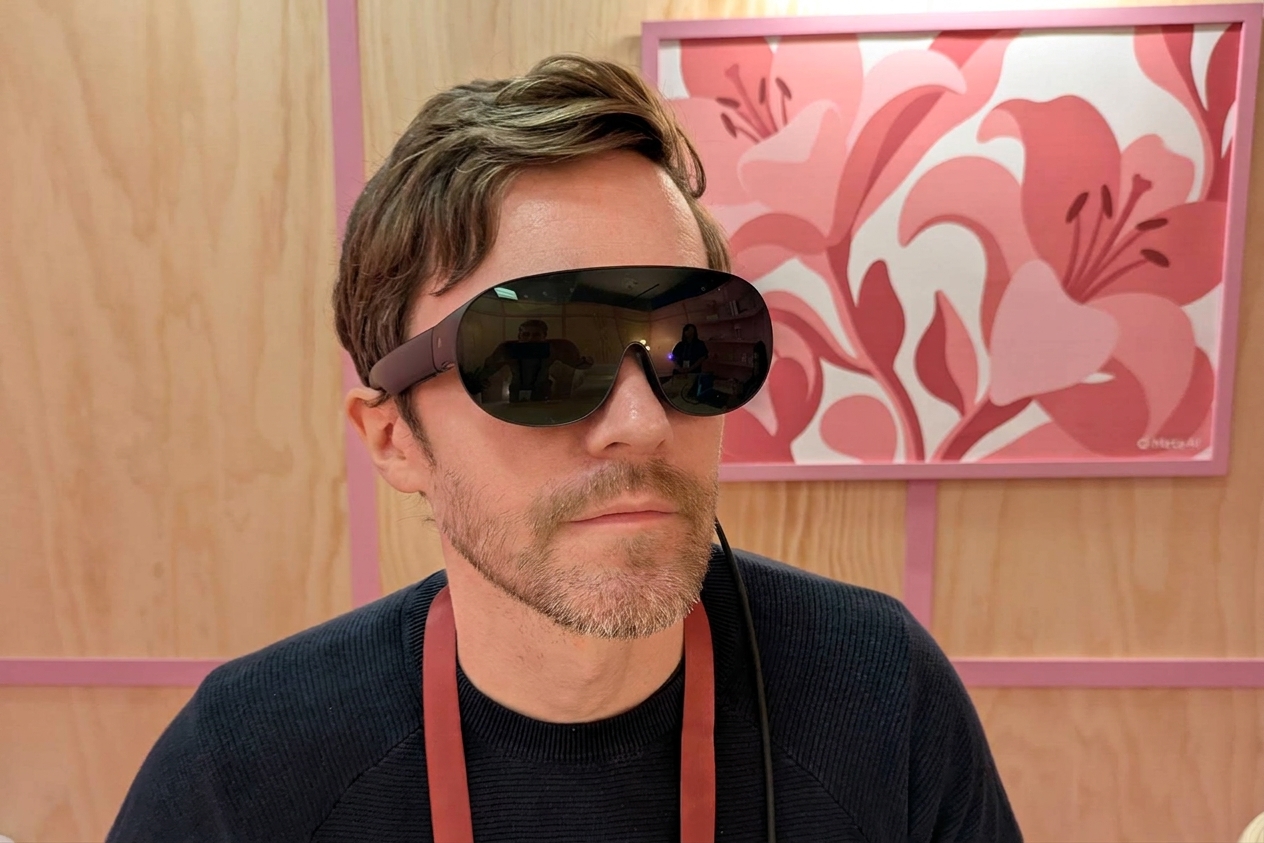
A hands-on preview of the Meta VR Glasses at Meta’s annual Connect developer conference provided an early opportunity to evaluate the device’s new gaze- and hand-gesture-based user interface, test its ergonomics, and experience what is easily the most pixel-dense display Meta has ever brought to market.
Meta VR Glasses Visual Experience
After a lengthy product cycle relying predominantly on standard LCD panels, Meta has finally transitioned to proper micro-OLED technology for this new tier of hardware. The visual specifications are immediately striking: the Meta VR Glasses deliver a resolution of 5.5 megapixels, translating to 2,412 by 2,288 pixels per eye at a sharp 37 pixels per degree, alongside a smooth refresh rate of up to 120Hz.
That class-leading pixel density, however, introduces a notable hardware tradeoff. The device features a 70-degree horizontal field of view, which is noticeably smaller than the expansive 110-degree field of view found on the Quest 3. For some users accustomed to wider vistas, this tighter window might initially prove frustrating, though it directly serves the goal of achieving superior pixel sharpness.

In practice, the micro-OLED panels deliver predictably deep black levels with no noticeable OLED smearing. The panels are also sufficiently bright, though ambient reflections and external lighting did steal a little bit of the perceived brightness during the demonstration. This minor issue will likely be mitigated when users pair the device with the optional light blocker accessory that Meta plans to ship alongside the hardware next year.
Perhaps most impressive is the color passthrough system, which stands as the finest execution yet seen on a standalone virtual or mixed reality device. Testing revealed no noticeable stitch lines, virtually no appreciable latency, accurate color reproduction, acceptable brightness, and seemingly zero of the strange environmental warping or bendiness near-field objects that typically plague traditional headsets.
This brings the technology remarkably close to the ultimate threshold of passthrough acting as a genuine, undistorted reproduction of the physical environment. Combined with the remarkably bright and sharp displays, the Meta VR Glasses appear streets ahead of competing AR hardware relying on birdbath optics, which attempt to achieve similar transparency by using the physical world merely as a passive backdrop for digital content.

The compact pancake optics provide exceptional optical clarity, though the sweet spot is somewhat less forgiving than that of the Quest 3. Users must take care to find an optimal fit by utilizing the array of supplied nose pads and choosing the correct physical device size, with Meta offering both "Standard" and "Large" variants to accommodate different head shapes. Interpupillary distance is easily adjustable by manually moving the lenses inward or outward independently, supporting an IPD range of 56 to 70 millimeters alongside prescription lens add-ons. This design makes the Meta VR Glasses the first headset from the company to support asymmetric IPD adjustment, though such a system can occasionally prove challenging to calibrate accurately compared to a standard external adjustment dial.
Performance
The pocketable compute puck—which relies on a visible mesh grill at the top for active cooling—houses a battery rated for up to three hours of continuous use. It is powered by a Qualcomm Snapdragon Reality Elite processor, designated as the XR2 Gen 3, which delivers up to an 11 percent higher maximum GPU frequency compared to the Snapdragon XR2+ Gen 2 found inside the Quest 3.
During the demonstration, an opportunity to test the hardware with a variant of Beat Saber revealed a brand-new hand-tracked mode called "Flux." Rather than traditional block-slashing with controllers, this mode reimagines the gameplay mechanics entirely, requiring players to punch and slice flying bars in half using an energy beam connected directly between both hands.

While the Meta VR Glasses do not ship with controllers in the box, the hardware is fully backward-compatible with the existing Touch Plus controllers used by the Quest 3 and Quest 3S today. By utilizing those controllers, the headset can access and play the entire library of existing content available on the Horizon store, including standard controller-based games.
The power of the new chipset was further demonstrated during a graphically demanding sequence featuring immersive film content. Meta is introducing specialized theatrical environments that render bespoke, fully realized virtual worlds which dynamically change in response to the events unfolding within the film. Watching a clip from Avengers: Infinity War—specifically the scene where Peter Dinklage’s character forges the Stormbreaker axe—showcased the hardware working near its full capacity. Set directly inside the forge itself, the environment featured active steam rising from grates, dynamic lighting, and countless particles flying through the air while maintaining smooth playback at high resolution.
Comfort and Audio
Evaluating long-term comfort from a brief thirty-minute demonstration is inherently difficult, even for a hardware platform that weighs roughly 100 grams on the head and aspires to function as an all-day productivity tool. Meta has summarized this philosophy with the bold promotional slogan: “the weight is over.”

Trying on both the small and large hardware SKUs revealed noticeable differences in ergonomics. The small variant clamped too tightly against the sides of the head, causing it to slip downward from the nose during use, whereas the large variant provided a secure and comfortable fit. Because both sizes ship with multiple interchangeable nose pads, clarity regarding sizing guidelines from Meta will be crucial prior to the official commercial launch to prevent consumer sizing friction.
A major ergonomic and functional surprise came from the downward-facing external sensors. When seated comfortably, users can rest their hands naturally in their lap while executing all primary user interface gestures without needing to hold their hands up in front of their face. Simple eye movements highlight interface elements, a quick finger pinch registers as a selection, and swiping an index finger against the thumb handles scrolling tasks with natural precision. Eye-tracking technology is currently utilized primarily for interface navigation, though further details regarding how eye-tracking integrates with the rendering and streaming technologies inside the compute puck are expected closer to release.
Audio delivery mirrors or slightly exceeds the experience found on the Meta Ray-Ban Display glasses, relying on open-ear speakers that carry inherent acoustic trade-offs. While mids and treble remain acceptable, bass performance is limited and audio bleed into the surrounding environment is inevitable. For use cases like air travel—where lightweight portability is paramount—users will likely prefer to pair the device with dedicated headphones and the optional light blocker accessory to ensure maximum immersion and privacy.

Value Proposition
With the introduction of the Meta VR Glasses, the company is consciously carving out a unique middle ground in the consumer technology landscape. Rather than slotting neatly into the existing Quest product family, the device represents an intentional bridge connecting lightweight, experimental augmented reality concepts like the Orion prototype with the established capabilities of heavy VR gaming platforms.
Priced at $1,300 and slated for release in the spring of 2027, the Meta VR Glasses occupy a strategic territory between the elusive, all-day AR glasses of the distant future and the heavier, more enclosed virtual reality headsets available today. By keeping the on-head weight down to approximately 100 grams and delivering some of the finest color passthrough performance in the industry, Meta is explicitly targeting prosumers and productivity-minded professionals. The hardware aims to provide a versatile, highly portable productivity and media consumption tool that avoids the excessive weight and bulk of major market competitors like the Apple Vision Pro and Samsung Galaxy XR.