
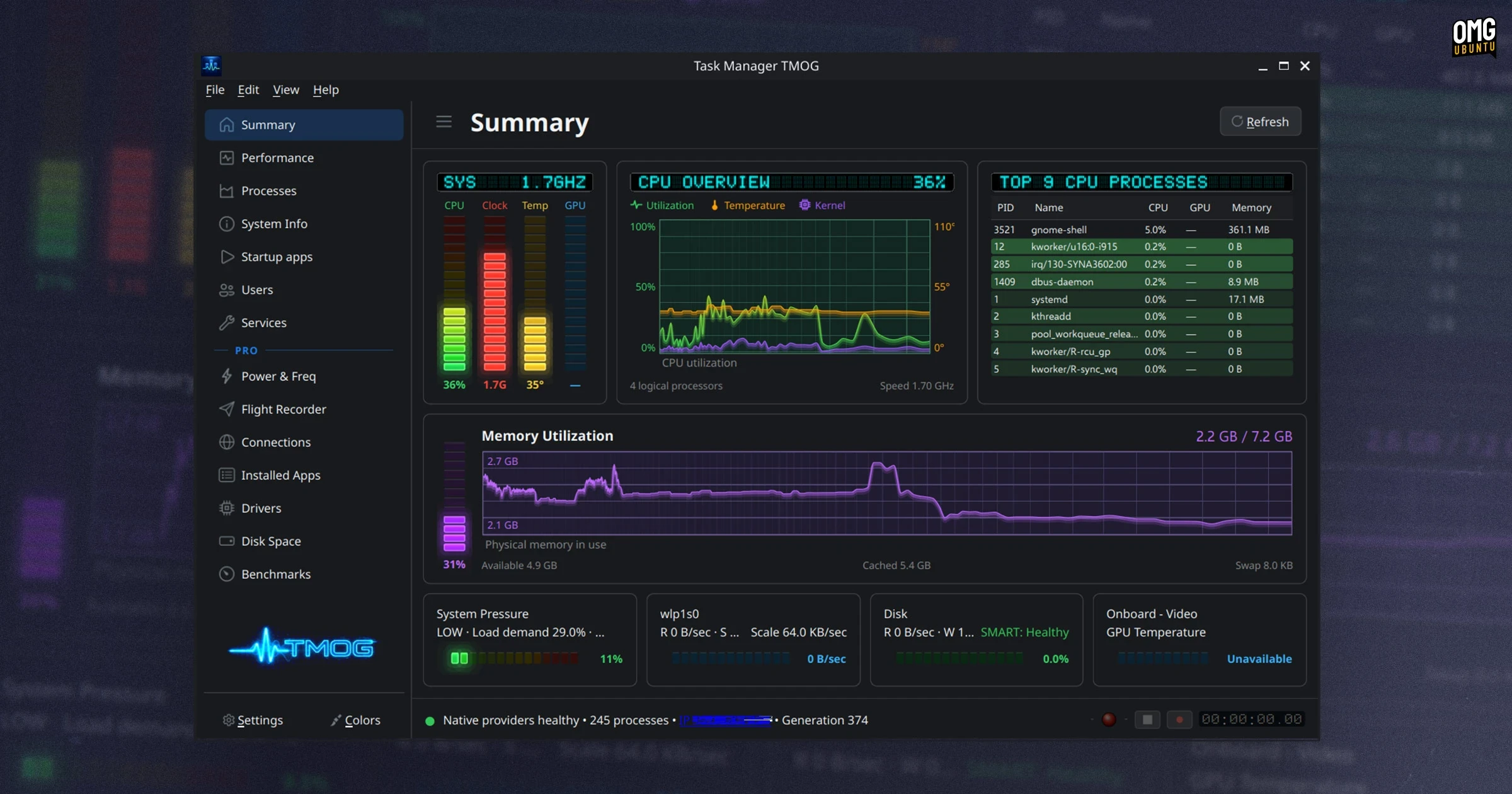
The developer behind the legendary Windows Task Manager application has returned with a brand-new system monitoring tool that bridges the gap between retro aesthetics and modern multi-platform compatibility, extending its reach far beyond the Windows ecosystem to Linux and macOS.
The software, formally known as TMOG or Task Manager OG, is the creation of David Plummer, a veteran software engineer who famously developed the original Windows Task Manager utility back in the 1990s. Decades after shaping how millions of desktop users monitor and troubleshoot their personal computers, Plummer has reentered the utility software space with a project built for the modern era, leveraging cutting-edge AI development tools while maintaining a distinctly nostalgic visual language.
At first glance, TMOG might easily be mistaken for a fictional computer interface plucked straight from the background of a 1990s science fiction film. It embraces a bold, vibrant aesthetic defined by bright neon accents and a collection of retro color themes. For anyone who grew up watching television and movies from that decade, the visual presentation carries a specific kind of nostalgic charm. However, despite looking like a stylistic gimmick or a futuristic prop, TMOG is a serious, fully functional utility designed to provide deep insight into modern computer hardware and operating system performance.
The journey of bringing TMOG from a concept to a tangible software product involved modern development methodologies, specifically utilizing AI coding assistants. To transform his vision into reality, Plummer turned to Claude Code. Rather than relying on simple prompts that often yield unstable results, he provided the AI assistant with a comprehensive specification document spanning more than one hundred pages. This massive blueprint detailed the exact architecture, user experience goals, and technical requirements of the application. Plummer noted on social media that simply asking an AI model to write a generic system monitor from scratch would inevitably result in substandard code, making the detailed specification an essential step in ensuring the utility’s reliability and performance.
Beneath its flashy exterior, TMOG is built on a robust, multi-platform architecture designed to respect the native design languages and performance standards of each operating system it supports. The core engine of the application is written in C++, ensuring efficient execution and a shared foundation across different platforms. On top of this core, the software branches out into native and framework-specific front ends. The Linux edition of the application is built using Qt 6, offering seamless integration and performance on desktop environments running distributions like Ubuntu. Meanwhile, the macOS version utilizes Swift and AppKit to deliver a native experience for Apple desktop users, and the Windows build harnesses Direct2D to ensure fluid graphics rendering.
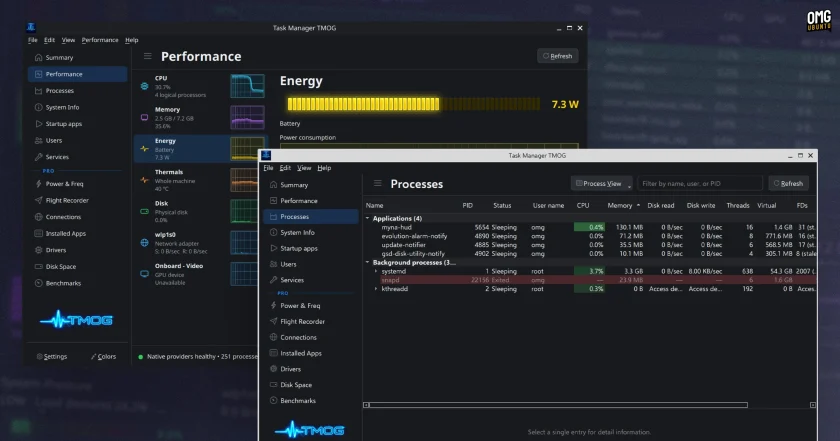
Once launched, TMOG presents users with a comprehensive, real-time dashboard tracking a wide array of vital system metrics. It monitors everything expected from a modern task manager or system monitor, including granular per-process resource consumption, power usage statistics, real-time CPU speeds, individual core statuses, active network connections, and available disk space.
In addition to the primary dashboard, the application includes a compact, popout mini-mode designed for users who want to keep a constant eye on their system resources without sacrificing screen real estate. This mini-mode supports various optional skins inspired by classic retro software, including a distinct design reminiscent of the iconic Winamp media player from the late 1990s and early 2000s.
Beyond its striking visual identity, TMOG aims to solve a fundamental frustration inherent in traditional system diagnostics. For most computer users, a system monitor is only opened reactively—typically when a machine begins to stutter, freeze, or experience a sudden drop in performance. Unfortunately, checking resource usage during or after a performance hiccup often makes it difficult to trace the root cause of the issue back to the specific application or process that triggered it, a limitation that typically forces administrators to dig through complex system logs.
To address this diagnostic challenge, TMOG incorporates an innovative feature called the Flight Recorder. This tool allows users to rewind system data, effectively acting as a digital time machine that helps identify anomalies and performance spikes after they have occurred rather than solely relying on real-time observation.
However, advanced features like the Flight Recorder, alongside other specialized tools such as an integrated CPU benchmarking utility, are restricted behind a paid tier. The developer has structured TMOG as a freemium application, offering the core live monitoring functionality as a free download while locking specific professional diagnostic tools behind a $39.95 Pro subscription plan.
Users running Linux distributions, including Ubuntu, can download and evaluate the beta version of the software across various packaging formats. TMOG is currently available as a traditional Debian installer package, a universal AppImage, and an executable binary. The application offers broad architecture support, catering to both 64-bit Intel and AMD systems as well as ARM64-based devices.
Because the project is still currently in its beta phase of development, early adopters should expect occasional bugs or unexpected behaviors during daily use. While live system monitoring remains free to download and utilize, prospective users looking to unlock the full suite of diagnostic capabilities will need to consider the software’s paid Pro tier as the platform continues to evolve.